

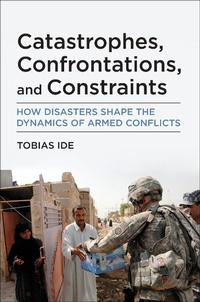
Catastrophes, Confrontations, and Constraints
How Disasters Shape the Dynamics of Armed Conflicts
Published on 6. June 2023
304 pages
978-0-262-37449-1 (ISBN)
Description

A ground-breaking study on how natural disasters can escalate or defuse wars, insurgencies, and other strife.
Armed conflict and natural disasters have plagued the twenty-first century. Not since the end of World War II has the number of armed conflicts been higher. At the same time, natural disasters have increased in frequency and intensity over the past two decades, their impacts worsened by climate change, urbanization, and persistent social and economic inequalities. Providing the first comprehensive analysis of the interplay between natural disasters and armed conflict, Catastrophes, Confrontations, and Constraints explores the extent to which disasters facilitate the escalation or abatement of armed conflicts-as well as the ways and contexts in which combatants exploit these catastrophes.
Tobias Ide utilizes both qualitative insights and quantitative data to explain the link between disasters and the (de-)escalation of armed conflict and presents over thirty case studies of earthquakes, droughts, floods, and storms in Africa, the Middle East, Asia, and Latin America. He also examines the impact of COVID-19 on armed conflicts in Iraq, Afghanistan, Nigeria, and the Philippines.
Catastrophes, Confrontations, and Constraints is an invaluable addition to current debates on climate change, environmental stress, and security. Professionals and students will greatly appreciate the wealth of timely data it provides for their own investigations.
Armed conflict and natural disasters have plagued the twenty-first century. Not since the end of World War II has the number of armed conflicts been higher. At the same time, natural disasters have increased in frequency and intensity over the past two decades, their impacts worsened by climate change, urbanization, and persistent social and economic inequalities. Providing the first comprehensive analysis of the interplay between natural disasters and armed conflict, Catastrophes, Confrontations, and Constraints explores the extent to which disasters facilitate the escalation or abatement of armed conflicts-as well as the ways and contexts in which combatants exploit these catastrophes.
Tobias Ide utilizes both qualitative insights and quantitative data to explain the link between disasters and the (de-)escalation of armed conflict and presents over thirty case studies of earthquakes, droughts, floods, and storms in Africa, the Middle East, Asia, and Latin America. He also examines the impact of COVID-19 on armed conflicts in Iraq, Afghanistan, Nigeria, and the Philippines.
Catastrophes, Confrontations, and Constraints is an invaluable addition to current debates on climate change, environmental stress, and security. Professionals and students will greatly appreciate the wealth of timely data it provides for their own investigations.
More details
Other editions
Additional editions
Tobias Ide
Catastrophes, Confrontations, and Constraints
How Disasters Shape the Dynamics of Armed Conflicts
Book
06/2023
MIT Press
€53.50
Shipment within 10-20 days
Person
Tobias Ide is Senior Lecturer in Politics and International Relations at Murdoch University Perth and a Director of the Environmental Peacebuilding Association.
Content
Acknowledgments xi
1 Setting the Foundation: Disasters and Conflicts 1
2 After the Disaster: Motives, Strategies, and Incentives for Conflict (De-)escalation 19
3 Cases, Conditions, and Qualitative Comparative Analysis 39
4 Disasters and Armed Conflict Dynamics: Evidence from 36 Cases 55
5 Armed Conflicts in the Aftermath of Disasters: Key Findings 139
6 Conflict Implications of the COVID-19 Pandemic 177
7 Conclusion 205
References 219
Index 281
1 Setting the Foundation: Disasters and Conflicts 1
2 After the Disaster: Motives, Strategies, and Incentives for Conflict (De-)escalation 19
3 Cases, Conditions, and Qualitative Comparative Analysis 39
4 Disasters and Armed Conflict Dynamics: Evidence from 36 Cases 55
5 Armed Conflicts in the Aftermath of Disasters: Key Findings 139
6 Conflict Implications of the COVID-19 Pandemic 177
7 Conclusion 205
References 219
Index 281
