

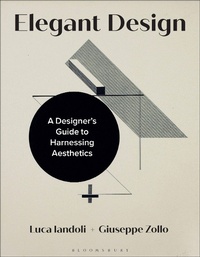
Elegant Design
A Designer's Guide to Harnessing Aesthetics
1st Edition
Published on 7. April 2022
200 pages
978-1-350-17427-6 (ISBN)
Description

Visual information is everywhere. We are constantly immersed in a flow of visual data that reshapes our social and inner world. Companies and individuals are competing to conquer the public's scarce attention by inventing distinctive visual formats to stand out from the crowd. How can designers, inventors, and product managers create designs that are quick to process as well as meaningful, unique and memorable in an age characterized by constant information overload?
The answer is to think aesthetically. Research insights at the intersection between cognitive science and art studies demonstrate that our minds can effectively process visual complexity by using aesthetic pleasure and judgement as a guide. Analysing the work of great artists and designers from the perspective of how our mind appreciates beauty, Elegant Design identifies actionable aesthetic strategies that will help you to design products and user experiences that are useful, beautiful and meaningful.
The answer is to think aesthetically. Research insights at the intersection between cognitive science and art studies demonstrate that our minds can effectively process visual complexity by using aesthetic pleasure and judgement as a guide. Analysing the work of great artists and designers from the perspective of how our mind appreciates beauty, Elegant Design identifies actionable aesthetic strategies that will help you to design products and user experiences that are useful, beautiful and meaningful.
More details
Edition
1. Auflage
Language
English
Place of publication
London
United Kingdom
Publishing group
Bloomsbury Publishing PLC
Illustrations
150 colour illus
ISBN-13
978-1-350-17427-6 (9781350174276)
Copyright in bibliographic data and cover images is held by Nielsen Book Services Limited or by the publishers or by their respective licensors: all rights reserved.
Schweitzer Classification
Other editions
Additional editions
Book
04/2022
Bloomsbury Visual Arts
€36.50
Shipment within 15-20 days
Persons
Luca Iandoli is Associate Dean for Global Programs and Research and a professor in the Department of Computer Science at St. John's University. Luca was a Fulbright Visiting Scholar at the MIT Center for Collective Intelligence and served as associate professor at the University of Naples Federico II, Italy, and as visiting professor at Stevens Institute of Technology, USA. His research focuses on collective intelligence, interaction design, and product aesthetics.
Giuseppe Zollo is Professor of Business and Management at the University of Naples Federico II, Schools of Engineering and School of Architecture, Italy. With a background in architecture and information science, Giuseppe's research focuses on complex systems, organizational learning and sense-making. His intellectual interests span from cognitive studies on art appreciation to history of science and technology.
Giuseppe Zollo is Professor of Business and Management at the University of Naples Federico II, Schools of Engineering and School of Architecture, Italy. With a background in architecture and information science, Giuseppe's research focuses on complex systems, organizational learning and sense-making. His intellectual interests span from cognitive studies on art appreciation to history of science and technology.
Content
Preface
Introduction
The age of aesthetics
Elegant decisions
The art of simplicity
Getting started
1. The Simplifying Machine
Impressions
Simple minds
What do you see is what do you get? Understanding as pattern recognition
The joy of guessing: ambiguity and emotions in understanding
The role of aesthetic pleasure in understanding
Too good to be true
Creativity Lab: how the mind simplifies reality and compresses information
2. Beauty as Effective Complexity
There is no recipe for creativity
The hidden workflow of the creative process
How does it feel? The roles of emotions in aesthetic experience
When good is good enough? Beautify as effective complexity
Strategies for effective complexity
Conclusions: the necessity of art
Creativity Lab: handling complexity in design
Part One: Search for Unity Strategies
3. Subtract Details
The art of concision
The case for abstraction
Subtracting the obvious, adding the meaningful
Small talks
The science of brevity
Conclusions
Creativity Lab: subtracting details from your design without loosing meaningful performance
4. Symmetry
Blood, sweat, and tears: what goes up, can't go down
The invention of the point of view: symmetry in art
Managing symmetry: checks and balances
The science of symmetry
Conclusions
Creativity Lab: how to handle symmetry and asymmetry in your design
5. The Power of Grouping
A stroll down the memory lane
The power of grouping in art: seeking as creating
What is your product? The danger of cognitive inertia and the wonders of creative categorization
The science of grouping
Conclusions
Creativity Lab: Effectively grouping information in your design
6. Split
Lizards, infinite lawns, and the invention of the hypertext
The devil is in the detail
The ergonomics of simplicity: the NEST thermostat
The science of split
Conclusions
Creativity Lab: how to design effective information layers and hierarchy
Part Two: Push for Variety Strategies
7. The Power of the Center
May the force be with you
The power of the center in art: equilibrium as dynamic tension
The power of obsession: how extreme focus can make your business thrive (or die)
The science of split: the eye of the beholder
Conclusion
Creativity Lab: identifying attention-structuring centers in your design
8. Emphasize
An umbrella on four wheels
Emphasize in art
Think different: emphasize in design and management
The science of emphasizing
Creativity Lab: how to make your design stand out by harnessing the power of emphasis
9. Remix
Mission Impossible
Metamorphosis or the Nature of Change
What's your story? A chairman walks into a lab
The science of remix
Conclusions
Creativity Lab: effectively reshuffling your design to search for novelty
10. Contrast and Balance
Chess and balance
Present, tense
Lost in transition
The science of contrast
Conclusions: keep on moving
Creativity Lab: How to creative effective visual weight dynamics
11. The Swinging Mind
Black holes and supernovas: navigating the design continuum
The critical role of granularity in design
When good is good enough: the swinging mind
Design as persuasion
Creativity Lab: everyday exercises to cultivate a swinging mind
Conclusion
Index
Introduction
The age of aesthetics
Elegant decisions
The art of simplicity
Getting started
1. The Simplifying Machine
Impressions
Simple minds
What do you see is what do you get? Understanding as pattern recognition
The joy of guessing: ambiguity and emotions in understanding
The role of aesthetic pleasure in understanding
Too good to be true
Creativity Lab: how the mind simplifies reality and compresses information
2. Beauty as Effective Complexity
There is no recipe for creativity
The hidden workflow of the creative process
How does it feel? The roles of emotions in aesthetic experience
When good is good enough? Beautify as effective complexity
Strategies for effective complexity
Conclusions: the necessity of art
Creativity Lab: handling complexity in design
Part One: Search for Unity Strategies
3. Subtract Details
The art of concision
The case for abstraction
Subtracting the obvious, adding the meaningful
Small talks
The science of brevity
Conclusions
Creativity Lab: subtracting details from your design without loosing meaningful performance
4. Symmetry
Blood, sweat, and tears: what goes up, can't go down
The invention of the point of view: symmetry in art
Managing symmetry: checks and balances
The science of symmetry
Conclusions
Creativity Lab: how to handle symmetry and asymmetry in your design
5. The Power of Grouping
A stroll down the memory lane
The power of grouping in art: seeking as creating
What is your product? The danger of cognitive inertia and the wonders of creative categorization
The science of grouping
Conclusions
Creativity Lab: Effectively grouping information in your design
6. Split
Lizards, infinite lawns, and the invention of the hypertext
The devil is in the detail
The ergonomics of simplicity: the NEST thermostat
The science of split
Conclusions
Creativity Lab: how to design effective information layers and hierarchy
Part Two: Push for Variety Strategies
7. The Power of the Center
May the force be with you
The power of the center in art: equilibrium as dynamic tension
The power of obsession: how extreme focus can make your business thrive (or die)
The science of split: the eye of the beholder
Conclusion
Creativity Lab: identifying attention-structuring centers in your design
8. Emphasize
An umbrella on four wheels
Emphasize in art
Think different: emphasize in design and management
The science of emphasizing
Creativity Lab: how to make your design stand out by harnessing the power of emphasis
9. Remix
Mission Impossible
Metamorphosis or the Nature of Change
What's your story? A chairman walks into a lab
The science of remix
Conclusions
Creativity Lab: effectively reshuffling your design to search for novelty
10. Contrast and Balance
Chess and balance
Present, tense
Lost in transition
The science of contrast
Conclusions: keep on moving
Creativity Lab: How to creative effective visual weight dynamics
11. The Swinging Mind
Black holes and supernovas: navigating the design continuum
The critical role of granularity in design
When good is good enough: the swinging mind
Design as persuasion
Creativity Lab: everyday exercises to cultivate a swinging mind
Conclusion
Index
