

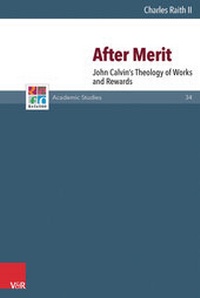
After Merit
John Calvin's Theology of Works and Rewards
1st Edition
Published on 11. July 2016
190 pages
978-3-647-55248-4 (ISBN)
Description

In this study Charles Raith II fills a gap in Reformation-era scholarship by analyzing Calvin's teaching on works and reward in light of medieval theological developments surrounding the doctrine of merit. While significant analysis has been given to Calvin's doctrine of justification, its relation to sanctification, the notion of union with Christ, and the role of participation, there is as yet no sustained analysis of how these teachings are shaped by the most hostile and pervasive of his polemics, namely, his confrontation with a merit-based framework for understanding Christian salvation. This volume, however, interprets Calvin's own theological constructions as contextually determined by the reigning polemics of his day. In addition, previous scholarship on these topics has largely failed to properly contextualize Calvin's own thought against the background of scholastic theological developments-developments that Calvin both accepts and rejects in the formulation of his own theology. After Merit addresses these gaps by (1) analyzing Calvin's tracts, scriptural commentaries and Institutes to demonstrate Calvin's unique distain for the doctrine of merit among the early Reformers and the pervasiveness of this polemic within his theological program; (2) reviewing the scholastic developments surrounding the doctrine of merit from the High to Late Middle Ages as background to Calvin's thought; (3) highlighting Calvin's principle problems with the doctrine of merit: the competitive-causal schema between divine and human causality, merit as a basis for justification, and good works as "deserving" of reward; and (4) unpacking Calvin's theology of justification, sanctification, the worth of works, and the role of works in salvation as an alternative to the "opponents" doctrine of merit. The volume concludes by reflecting on the reception of Calvin's theology of works and reward in later Reformed thought.
More details
Other editions
Additional editions
Book
07/2016
1st Edition
Vandenhoeck & Ruprecht
€100.00
Shipment within 5-7 days
Persons
Content
- Cover
- Title Page
- Copyright
- Body
- Preface
- Abbreviations
- Journals
- Compilations
- Works of Calvin
- Other Works
- Introduction
- 1. Calvin's Theology as a Soteriological Alternative to Merit
- 1.1 Calvin's Unique Position on Merit, Works, and Reward
- 1.2 The Centrality of Calvin's Polemic against Merit
- 1.2.1 Calvin's Commentary on Romans
- 1.2.2 The Institutes of the Christian Religion
- 2. Plan for the Work
- Chapter 1: The Lineaments of the Medieval Development of Merit
- 1. Thomas Aquinas
- 2. John Duns Scotus
- 3. William of Ockham
- 4. Gabriel Biel
- 5. Conclusion
- Chapter 2: Calvin's Opponents (as Calvin Understood Them)
- 1. An Issue of Competitive Causality
- 2. An Issue of Justification
- 3. An Issue of Meriting Perseverance
- 4. An Issue of "Worth" and "Due"
- 5. Conclusion
- Chapter 3: Justification sola Dei misericordia: Creating Space for a Proper Understanding of Works and Reward
- 1. The Effects of Adam's Fall: Total Spiritual Incapacity
- 2. Clarification of Calvin's Criticism of "Free Will"
- 3. Double Predestination Contextualized
- 4. The Role of Prevenient Grace
- 5. Conclusion: The Extrinsicism of Justification
- Chapter 4: The Christian Life and Struggle in the Spirit
- 1. Noncompetitive Causality and Participation
- 2. Partial Sanctification and the Divided Christian
- 3. The Nature-Grace Distinction
- 4. The Nature of Perfection
- 5. The Damnworthiness of Concupiscence
- 6. Rejecting the Venial-Mortal Sin Distinction
- 7. Conclusion
- Chapter 5: God's Will to Reward
- 1. The Foundation of Faith in Receiving Rewards
- 2. The Worthless Worth of Works
- 3. God's acceptatio of Damnworthy Works
- 4. The Liberality of Rewards
- 5. Conclusion
- Chapter 6: The Content of Rewards
- 1. The Purpose of Rewards and God's Accommodation
- 2. Grace for Grace
- 3. Eternal Life Both Is and Is Not Obtained through Works
- 4. Degrees of Heaven
- 5. Conclusion
- Chapter 7: Conclusion - Retrieving Calvin's Doctrine of Reward for Works
- Bibliography of Modern Works
