


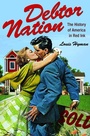
Debtor Nation
The History of America in Red Ink
1st Edition
Published on 3. January 2011
392 pages
978-1-4008-3840-0 (ISBN)
Description

The story of personal debt in modern America
Before the twentieth century, personal debt resided on the fringes of the American economy, the province of small-time criminals and struggling merchants. By the end of the century, however, the most profitable corporations and banks in the country lent money to millions of American debtors. How did this happen? The first book to follow the history of personal debt in modern America, Debtor Nation traces the evolution of debt over the course of the twentieth century, following its transformation from fringe to mainstream-thanks to federal policy, financial innovation, and retail competition.
How did banks begin making personal loans to consumers during the Great Depression? Why did the government invent mortgage-backed securities? Why was all consumer credit, not just mortgages, tax deductible until 1986? Who invented the credit card? Examining the intersection of government and business in everyday life, Louis Hyman takes the reader behind the scenes of the institutions that made modern lending possible: the halls of Congress, the boardrooms of multinationals, and the back rooms of loan sharks. America's newfound indebtedness resulted not from a culture in decline, but from changes in the larger structure of American capitalism that were created, in part, by the choices of the powerful-choices that made lending money to facilitate consumption more profitable than lending to invest in expanded production.
From the origins of car financing to the creation of subprime lending, Debtor Nation presents a nuanced history of consumer credit practices in the United States and shows how little loans became big business.
Before the twentieth century, personal debt resided on the fringes of the American economy, the province of small-time criminals and struggling merchants. By the end of the century, however, the most profitable corporations and banks in the country lent money to millions of American debtors. How did this happen? The first book to follow the history of personal debt in modern America, Debtor Nation traces the evolution of debt over the course of the twentieth century, following its transformation from fringe to mainstream-thanks to federal policy, financial innovation, and retail competition.
How did banks begin making personal loans to consumers during the Great Depression? Why did the government invent mortgage-backed securities? Why was all consumer credit, not just mortgages, tax deductible until 1986? Who invented the credit card? Examining the intersection of government and business in everyday life, Louis Hyman takes the reader behind the scenes of the institutions that made modern lending possible: the halls of Congress, the boardrooms of multinationals, and the back rooms of loan sharks. America's newfound indebtedness resulted not from a culture in decline, but from changes in the larger structure of American capitalism that were created, in part, by the choices of the powerful-choices that made lending money to facilitate consumption more profitable than lending to invest in expanded production.
From the origins of car financing to the creation of subprime lending, Debtor Nation presents a nuanced history of consumer credit practices in the United States and shows how little loans became big business.
All prices
More details
Edition
Course Book
Language
English
Place of publication
Princeton, NJ
United States
Publishing group
De Gruyter
Target group
Professional and scholarly
Edition type
Digital original
Product notice
Reflowable
Illustrations
10 halftones. 4 line illus.
File size
1,23 MB
ISBN-13
978-1-4008-3840-0 (9781400838400)
Schweitzer Classification
Other editions
Additional editions

Book
10/2012
Princeton University Press
€33.00
Shipment within 10-20 days
Book
01/2011
Princeton University Press
€55.80
Article exhausted; check different version
Person
Louis Hyman is assistant professor of history at the ILR School of Cornell University.
Content
List of Illustrations ix
An Introduction to the History of Debt 1
Chapter One: Making Credit Modern: The Origins of the Debt Infrastructure in the 1920s 10
Chapter Two: Debt and Recovery: New Deal Housing Policy and the Making of National Mortgage Markets 45
Chapter Three: How Commercial Bankers Discovered Consumer Credit: The Federal Housing Administration and Personal Loan Departments, 1934-1938 73
Chapter Four: War and Credit: Government Regulation and Changing Credit Practices 98
Chapter Five: Postwar Consumer Credit: Borrowing for Prosperity 132
Chapter Six: Legitimating the Credit Infrastructure: Race, Gender, and Credit Access 173
Chapter Seven: Securing Debt in an Insecure World: Credit Cards and Capital Markets 220
Epilogue: Debt as Choice, Debt as Structure 281
Acknowledgments 289
Abbreviations 291
Notes 293
References 363
Index 365
An Introduction to the History of Debt 1
Chapter One: Making Credit Modern: The Origins of the Debt Infrastructure in the 1920s 10
Chapter Two: Debt and Recovery: New Deal Housing Policy and the Making of National Mortgage Markets 45
Chapter Three: How Commercial Bankers Discovered Consumer Credit: The Federal Housing Administration and Personal Loan Departments, 1934-1938 73
Chapter Four: War and Credit: Government Regulation and Changing Credit Practices 98
Chapter Five: Postwar Consumer Credit: Borrowing for Prosperity 132
Chapter Six: Legitimating the Credit Infrastructure: Race, Gender, and Credit Access 173
Chapter Seven: Securing Debt in an Insecure World: Credit Cards and Capital Markets 220
Epilogue: Debt as Choice, Debt as Structure 281
Acknowledgments 289
Abbreviations 291
Notes 293
References 363
Index 365

