

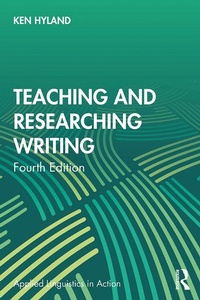
Teaching and Researching Writing
4th Edition
Published on 23. September 2021
382 pages
978-1-000-42657-1 (ISBN)
Description

The new edition of Ken Hyland's text provides an authoritative guide to writing theory, research, and teaching. Emphasising the dynamic relationship between scholarship and pedagogy, it shows how research feeds into teaching practice. Teaching and Researching Writing introduces readers to key conceptual issues in the field today and reinforces their understanding with detailed cases, then offers tools for further investigating areas of interest. This is the essential resource for students of applied linguistics and language education to acquire and operationalise writing research theories, methods, findings, and practices--as well as for scholars and practitioners looking to learn more about writing and literacy.
New to the fourth edition:
Added or expanded coverage of important topics such as translingualism, digital literacies and technologies, multimodal and social media writing, action research, teacher reflection, curriculum design, teaching young learners, and discipline-specific and profession-specific writing.
Updated throughout--including revision to case studies and classroom practices--and discussion of Rhetorical Genre Studies, intercultural rhetoric, and expertise.
Reorganised References and Resources section for ease of use for students, researchers, and teachers.
New to the fourth edition:
Added or expanded coverage of important topics such as translingualism, digital literacies and technologies, multimodal and social media writing, action research, teacher reflection, curriculum design, teaching young learners, and discipline-specific and profession-specific writing.
Updated throughout--including revision to case studies and classroom practices--and discussion of Rhetorical Genre Studies, intercultural rhetoric, and expertise.
Reorganised References and Resources section for ease of use for students, researchers, and teachers.
More details
Series
Edition
4th edition
Language
English
Place of publication
London
United Kingdom
Publishing group
Taylor & Francis Ltd
Target group
College/higher education
Illustrations
9 Line drawings, black and white; 6 Halftones, black and white; 15 Illustrations, black and white
ISBN-13
978-1-000-42657-1 (9781000426571)
Copyright in bibliographic data and cover images is held by Nielsen Book Services Limited or by the publishers or by their respective licensors: all rights reserved.
Schweitzer Classification
Other editions
New editions
Ken Hyland
Teaching and Researching Writing
E-Book
05/2026
5th Edition
Routledge
€55.49
Available for download
Additional editions
Ken Hyland
Teaching and Researching Writing
Book
09/2021
4th Edition
Routledge
€208.60
Shipment within 10-20 days
Ken Hyland
Teaching and Researching Writing
Book
09/2021
4th Edition
Routledge
€61.20
Shipment within 10-20 days
Person
Ken Hyland is Professor of Applied Linguistics in Education at the University of East Anglia, UK.
Content
Contents
Series Editor Preface
Preface
Acknowledgements
SECTION I
Understanding Writing
1
An Overview of Writing
1.1
Text-Oriented Understandings
1.2
Writer-Oriented Understandings
1.3
Reader-Oriented Understandings
1.4
Conclusion
Further Reading
2
Key Issues in Writing
2.1
Writing and Context
2.2
Literacy and Expertise
2.3
2.4
Academic and Disciplinary Writing
Writing, Technology and Digital Literacy
2.5
2.6
Multimodal Writing
Writing and Identity
2.7
English, Dominance and Writing
2.8
Conclusion
Further Reading
3
Quandaries and Possibilities
3.1
Writing Instruction and Culture
3.2
3.3
Information Technology and Social Networks
Writing Wikis and Blogs
3.4
Multimodal Writing Instruction
3.5
Writing Instruction and Plagiarism
3.6
3.7
Writing Instruction and Written Corrective Feedback
Automated Writing Evaluation (AWE)
3.8
Conclusion
Further Reading
SECTION II
Researching Writing
4
Research Practices and Issues
4.1
Reflective Practice
4.2
Practitioner Research
4.3
Research Design
4.4
Research Methods
4.5
4.6
4.7
Research Methodologies
Research Topics
Conclusion
Further Reading
5
Research Cases: Observing and Reporting
5.1
Questionnaire Research on Teachers Writing Book Reviews
5.2
Experimental Research on Peer Response
5.3
Interview Research on Academic Blogs
5.4
Protocol Research on Primary Students' Writing Strategies
5.5
Diary Blogs Research on Drafting a Research Paper
5.6
Keystroke Logging Research on Writing Strategies
5.7
Conclusion
Further Reading
6
Research Cases: Texts and Contexts
6.1
Genre Analysis Research on Grant Proposal Abstracts
6.2
Corpus Research on Learner Uses of Lexical Bundles
6.3
Case-Study Research of a Chinese Doctor Writing for Publication
6.4
Ethnographic Research on Student Peer Review of Writing
6.5
Multimodal Research of Elementary Students' Maths Writing
6.6
Synthesis Research on the Effectiveness of Peer Feedback
6.7
Conclusion
Further Reading
SECTION III
Teaching Writing
7
Approaches to Teaching Writing
7.1
Text-Oriented Approaches to Teaching
7.2
Writer-Oriented Approaches to Teaching
7.3
Reader-Oriented Approaches to Teaching
7.4
Conclusion
Further Reading
8
Teaching Writing: Materials and Practices
8.1
Research Writing: A Series of Advanced Writing Guides
8.2
Corpora in Writing Instruction
8.3
Leaner blogs
8.4
8.5
Writing Teaching and Academic Word Lists
Scaffolding School Literacy: Writing Frames
8.6
Wikis in the writing class
8.7
Writing Portfolios: Pedagogy and Assessment
Further Reading
9
Teaching Writing: Classes and Courses
9.1
Writ 101: A Modified Process Approach
9.2
Genre in Australian Schools
9.3
English for Clinical Pharmacy: A Specific EAP Course
9.4
Go for Gold-Writing for a Reason
9.5
Data Driven Learning for Research Postgraduates
Further Reading
SECTION IV
Exploring Writing
10
Significant Areas and Key Texts
10.1
Literacy and writing
10.2
Rhetoric
10.3
Scientific and Technical Writing
10.4
Professional and Business Writing
10.5
Academic Writing
10.6
Journalism and Print Media
10.7
First-Language Writing
10.8
Second-Language Writing Instruction
10.9
Pragmatics and Writing
10.10
Translation Studies
10.11
Literary Studies
10.12
Writing using digital technologies
10.13
Writing and Multimodal Texts
10.14
Writing and Forensic Linguistics
10.15
10.16
Writing and young learners
Creative Writing
11
Key Sources on Writing
11.1
Research Sources: For analysis and study of writing
11.2
Teaching sources: For practitioners and learners
Glossary
References
Index
Series Editor Preface
Preface
Acknowledgements
SECTION I
Understanding Writing
1
An Overview of Writing
1.1
Text-Oriented Understandings
1.2
Writer-Oriented Understandings
1.3
Reader-Oriented Understandings
1.4
Conclusion
Further Reading
2
Key Issues in Writing
2.1
Writing and Context
2.2
Literacy and Expertise
2.3
2.4
Academic and Disciplinary Writing
Writing, Technology and Digital Literacy
2.5
2.6
Multimodal Writing
Writing and Identity
2.7
English, Dominance and Writing
2.8
Conclusion
Further Reading
3
Quandaries and Possibilities
3.1
Writing Instruction and Culture
3.2
3.3
Information Technology and Social Networks
Writing Wikis and Blogs
3.4
Multimodal Writing Instruction
3.5
Writing Instruction and Plagiarism
3.6
3.7
Writing Instruction and Written Corrective Feedback
Automated Writing Evaluation (AWE)
3.8
Conclusion
Further Reading
SECTION II
Researching Writing
4
Research Practices and Issues
4.1
Reflective Practice
4.2
Practitioner Research
4.3
Research Design
4.4
Research Methods
4.5
4.6
4.7
Research Methodologies
Research Topics
Conclusion
Further Reading
5
Research Cases: Observing and Reporting
5.1
Questionnaire Research on Teachers Writing Book Reviews
5.2
Experimental Research on Peer Response
5.3
Interview Research on Academic Blogs
5.4
Protocol Research on Primary Students' Writing Strategies
5.5
Diary Blogs Research on Drafting a Research Paper
5.6
Keystroke Logging Research on Writing Strategies
5.7
Conclusion
Further Reading
6
Research Cases: Texts and Contexts
6.1
Genre Analysis Research on Grant Proposal Abstracts
6.2
Corpus Research on Learner Uses of Lexical Bundles
6.3
Case-Study Research of a Chinese Doctor Writing for Publication
6.4
Ethnographic Research on Student Peer Review of Writing
6.5
Multimodal Research of Elementary Students' Maths Writing
6.6
Synthesis Research on the Effectiveness of Peer Feedback
6.7
Conclusion
Further Reading
SECTION III
Teaching Writing
7
Approaches to Teaching Writing
7.1
Text-Oriented Approaches to Teaching
7.2
Writer-Oriented Approaches to Teaching
7.3
Reader-Oriented Approaches to Teaching
7.4
Conclusion
Further Reading
8
Teaching Writing: Materials and Practices
8.1
Research Writing: A Series of Advanced Writing Guides
8.2
Corpora in Writing Instruction
8.3
Leaner blogs
8.4
8.5
Writing Teaching and Academic Word Lists
Scaffolding School Literacy: Writing Frames
8.6
Wikis in the writing class
8.7
Writing Portfolios: Pedagogy and Assessment
Further Reading
9
Teaching Writing: Classes and Courses
9.1
Writ 101: A Modified Process Approach
9.2
Genre in Australian Schools
9.3
English for Clinical Pharmacy: A Specific EAP Course
9.4
Go for Gold-Writing for a Reason
9.5
Data Driven Learning for Research Postgraduates
Further Reading
SECTION IV
Exploring Writing
10
Significant Areas and Key Texts
10.1
Literacy and writing
10.2
Rhetoric
10.3
Scientific and Technical Writing
10.4
Professional and Business Writing
10.5
Academic Writing
10.6
Journalism and Print Media
10.7
First-Language Writing
10.8
Second-Language Writing Instruction
10.9
Pragmatics and Writing
10.10
Translation Studies
10.11
Literary Studies
10.12
Writing using digital technologies
10.13
Writing and Multimodal Texts
10.14
Writing and Forensic Linguistics
10.15
10.16
Writing and young learners
Creative Writing
11
Key Sources on Writing
11.1
Research Sources: For analysis and study of writing
11.2
Teaching sources: For practitioners and learners
Glossary
References
Index
