

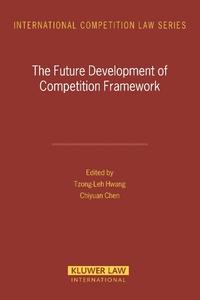
The Future Development of Competition Framework
Published on 13. October 2004
330 pages
978-90-411-7190-0 (ISBN)
Description

In the march of economic globalization it has become increasingly apparent that divergence in competition policy from one country to another is a major stumbling block. More than any other factor, an international consensus of competition laws is sure to facilitate the clear working interaction among trade, investment, intellectual property rights, and technology transfer that economic progress demands. This forward-looking book offers presents insightful perspectives on how this consensus may be achieved.
The Future Development of Competition Framework presents papers and speeches by well-known competition law practitioners versed in competition law and policy, including representatives of national competition authorities. They came from a variety of countries - including France, Germany, Canada, Mexico, Indonesia, Malaysia, Russia, Japan, Australia, Taiwan, Korea and the United States - to attend a 2003 conference sponsored by the Taiwan Fair Trade Commission. The book reproduces texts of the various contributions to the conference, including a roundtable discussion. Among the topics addressed are the following:
- - mergers and acquisitions;
- - political interests;
- - enforcement policies and sanctions;
- - national cultures and traditions;
- - international cartels;
- - regional cooperation;
- - concentration indexes and dominance indexes;
- - patent pools;
- - financial deregulation;
- - confidentiality measures;
- - technical assistance;
- - striking the right balance between competition and regulation;
- - reconciling competition policy and development policies.
Although they are especially valuable for their concentration on the Asia Pacific countries, these discussions will be of incalculable value to practitioners and academics everywhere who are involved in any of the interconnected branches of economic law or policy covered here.
The Future Development of Competition Framework presents papers and speeches by well-known competition law practitioners versed in competition law and policy, including representatives of national competition authorities. They came from a variety of countries - including France, Germany, Canada, Mexico, Indonesia, Malaysia, Russia, Japan, Australia, Taiwan, Korea and the United States - to attend a 2003 conference sponsored by the Taiwan Fair Trade Commission. The book reproduces texts of the various contributions to the conference, including a roundtable discussion. Among the topics addressed are the following:
- - mergers and acquisitions;
- - political interests;
- - enforcement policies and sanctions;
- - national cultures and traditions;
- - international cartels;
- - regional cooperation;
- - concentration indexes and dominance indexes;
- - patent pools;
- - financial deregulation;
- - confidentiality measures;
- - technical assistance;
- - striking the right balance between competition and regulation;
- - reconciling competition policy and development policies.
Although they are especially valuable for their concentration on the Asia Pacific countries, these discussions will be of incalculable value to practitioners and academics everywhere who are involved in any of the interconnected branches of economic law or policy covered here.
More details
Other editions
Additional editions
Tzong-Leh Hwang | Chiyuan Chen
The Future Development of Competition Framework
Book
10/2004
Kluwer Law International
€279.29
Shipment within 10-20 days
Content
- Cover
- Half Title Page
- Title Page
- Copyright Page
- Preface
- Table of Contents
- About the Authors
- Chapter 1. Introduction
- Internationalization of Competition Laws: Levels of Diversities
- 1. THE ISSUE
- 2. THE ICN AND DIVERGENCES IN THE NOTIFICATION OF MERGERS
- 3. LEVELS OF DIVERGENCES
- 4. RULES AIMED AGAINST CLEAR ANTICOMPETITIVE BEHAVIOR
- 5. RULES RESULTING FROM SPECIFIC VIEWS OF COMPETITION POLICY
- 6. RULES WHICH REFLECT CONFLICTING POLICIES, IN PARTICULAR POLITICAL INTERESTS
- 7. RULES OF ENFORCEMENT POLICIES AND SANCTIONS
- 8. RULES RELATED TO NATIONAL CULTURES AND TRADITIONS
- 9. CONCLUSIONS
- 10. REFERENCES
- Chapter 2. Speeches by Representatives of Foreign Competition Authorities
- Competition, Trade and Development before and after Cancun
- 1. CASES OF INTERNATIONAL CARTELS
- 1.1. Cement in Egypt
- 1.2. The Aluminum cartel
- 1.3. The Heavy Electrical Equipment Cartel
- 1.4. How Can Egypt Deal with These Cases
- 2. The Importance of Transnational Anti-competitive Practices for developing countries
- 3. TWO APPROACHES TO THE PROBLEM OF EXTERNALITIES DUE TO INTERNATIONAL ANTI-COMPETITIVE PRACTICES
- 4. POSSIBLE REMEDIES
- 5. THE STATE OF PLAY BEFORE CANCUN
- 6. THE CANCUN MINISTERIAL CONFERENCE
- 7. CONCLUSION
- Regional Cooperation Between Competition Authorities
- 1. PROBLEMATICS
- 2. FORMS OF COOPERATION
- 2.1. Institutional Cooperation
- 2.2. Case-specific Cooperation
- 3. REGIONAL COOPERATION AS A CATALYST
- 4. CLOSING REMARK
- Canadian Perspectives on International Competition Cooperation
- 1. INTRODUCTION
- 2. ORGANIZATION FOR ECONOMIC COOPERATION AND DEVELOPMENT (OECD)
- 3. THE INTERNATIONAL COMPETITION NETWORK (ICN)
- 4. COOPERATION THROUGH BILATERAL ARRANGEMENTS
- 5. MERGER REVIEW
- 6. ANTI-CARTEL ACTIVITY
- 7. CONCLUSION
- Current Development of Competition Law and Policy in Indonesia
- 1. INTRODUCTION
- 2. TREND IN COMPETITION LAW AND POLICY IN INDONESIA
- 3. IMPLEMENTATION OF COMPETITION LAW
- 4. CONCLUSION
- 5. REFERENCES
- Chapter 3. Globalization and the Development of Competition Framework
- Globalization and the Competition Analytical Framework: Some Mexican Experiences
- 1. GENERAL RELATIONSHIPS BETWEEN GLOBALIZATION AND ECONOMIC POLICY
- 2. GLOBALIZATION AND THE COMPETITION ANALYTICAL FRAMEWORK
- 3. GENERAL CHARACTERISTICS OF THE RELEVANT MARKET
- 3.1. Method used by some competition authorities to determine the relevant market
- 3.2. An alternative method to determine relevant markets
- 3.3. Geographical dimension of the relevant market
- 4. CONCENTRATION ANALYSIS (CONCENTRATION INDEXES)
- 4.1. Limitations of the concentration indexes
- 4.2. Market shares for the computation of concentration indexes
- 4.3. Concentration indexes used by the Mexican authority
- 4.3.1. The Herfindahl Index
- 4.3.2. The Dominance Index
- 4.4. Incomplete information
- 4.5. Index thresholds for merger analyses
- 4.6. Exceptions to the thresholds
- 4.7. Advantages of the dominance index
- 5. FINAL REMARK
- Competition Policy as Welfare-Enhancing Complement to Trade Liberalization: A United States Perspective
- 1. INTRODUCTION
- 2. ANTITRUST AND TRADE POLICY
- 3. INTERNATIONAL ANTITRUST: GROWTH AND HARMONIZATION
- 4. CONCLUSION
- Globalization and Development of Competition Policy in the Russian Federation
- Refreshed Approaches to the Development of Global Competition Framework
- 1. INTRODUCTION
- 2. SOME BACKGROUND OF THE EFFORTS TOWARD ESTABLISHING A MULTILATERAL COMPETITION FRAMEWORK UNDER THE WTO
- 3. PREVIOUS APPROACHES AND THOUGHTS ON THE INTERACTIONS BETWEEN TRADE AND COMPETITION POLICY
- 4. THE WHYS AND WHEREFORES FOR THE DIFFERENCES
- 5. BASIC IDEAS OF ALTERNATIVE APPROACHES
- 5.1. To consider giving up the idea of a single competition agreement
- 5.2. To cope only with trade related aspect of competition matters
- 5.3. To promote some approaches and to establish "Understandings" or "Decisions" in some areas
- 5.3.1. To continue sectoral approach used under the GATS
- 5.3.2. To consider soft rules
- 5.3.3. To expand the prevention of abuse of monopolies under the GATS to GATT and TRIPS Agreement
- 5.3.4. To include positive comity provisions under the GATT and TRIPS Agreement
- 5.3.5. To provide incentives through authorizations
- 6. CONCLUDING REMARKS
- Chapter 4. Competition Framework for Technological Innovation
- Intellectual Property Rights and Competition Law - Making Them Co-exist
- 1. INTRODUCTION
- 2. INTELLECTUAL PROPERTY RIGHTS AND COMPETITION LAW
- 3. AUSTRALIAN INTELLECTUAL PROPERTY POLICY ISSUES
- 3.1. Australia Competition Law and the Role of the ACCC
- 3.1.1. Intellectual Property Rights and the TPA
- 3.2. Review of Australian Intellectual Property and Competition Law
- 3.3. Refining the Exemption Provisions Section 51(3) of the Trade Practices Act
- 3.4. Copyright Collecting Societies
- 4. PARALLEL IMPORTS
- 4.1. Changes to the Law
- 4.2. Parallel Importing of Sound Recordings
- 4.2.1. Court cases
- 4.2.2. Price Surveys
- 4.3. Parallel Imports of Books and Computer Software
- 4.3.1. Books
- 4.3.2. Computer software
- 4.4. Regional Playback Control Systems
- 4.4.1 Court Case
- 5. CONCLUSIONS
- APPENDIX A - INTERNATIONAL GUIDELINES ON INTELLECTUAL PROPERTY LICENSING
- APPENDIX B - AUSTRALASIAN PERFORMING RIGHTS ASSOCIATION
- Patents and Standards
- 1. INTRODUCTION
- 2. STANDARDS, STANDARD SETTING AND COMPETITION
- 2.1. Standards
- 2.2. The Effect of Standards
- 2.3. Standard Setting Organizations (SSOs)
- 2.4. Standard Setting
- 3. PATENTS AND COMPETITION
- 3.1. Patents
- 3.2. The Relationship between Intellectual Property and Antitrust Today
- 4. STANDARD SETTING POLICIES AND PATENTS
- 4.1. Conduct by SSOs
- 4.2. Conduct by Patentees
- 5. FUTURE COURSE OF ACTION
- 5.1. ForSSOs
- 5.2. For Competition Authorities
- 5.3. For the Legislature
- Policy Issues in Efficient Collaboration Through a Patent Pool
- SUMMARY
- 1. INTRODUCTION
- 2. MAJOR STRUCTURAL FEATURES OF RECENT PATENT POOLS
- 3. STANDARD BODIES AND PATENT POOLS
- 4. CONSTRAINTS ON EFFICIENT COLLABORATION IN COMPLEMENTARY PATENTS
- 5. POLICY ISSUES FOR EFFICIENT COLLABORATION
- 5.1. Ground for policy interventions
- 5.2. Standard policy
- 5.3. Competition and IPR policy toward an outsider
- 6. REFERENCE
- A Discussion of the Relationship Between the Patent Law and the Fair Trade Law in Taiwan with a Review of the Philips CD-R Decisions
- 1. INTRODUCTION
- 2. RELEVANT REGULATIONS IN TAIWAN
- 2.1. The Exception under Article 45 of Fair Trade Law
- 2.2. Taiwan's Rules for Review of Technology Licensing Arrangement Cases by the Fair Trade Commission
- 2.2.1. Examples of provisions which are NOT in violation of the Law
- 2.2.2. Examples of Provisions which ARE in Violation of the Law
- 2.2.3. Examples of provisions which MAY be in violation of the Law
- 3. PHILIPS ELECTRONICS ET AL
- 3.1. Facts
- 3.2. Taiwan's FTC Philips decisions
- 3.3. Relevant issues
- 4. RELEVANT MARKETS FOR CD-R TECHNOLOGIES
- 4.1. Goods markets, technology markets, and innovation markets
- 4.2. Markets for CD-R
- 5. THE PATENT POOL AS A SPECIAL FORM OF PATENT LICENSING
- 6. THE TREATMENT OF PATENT POOLS UNDER THE FAIR TRADE LAW
- 6.1. The U.S. Regulations Concerning Patent Pools
- 6.2. Patent pools and market power
- 6.3. The Effect of closed patent pools on competition
- 6.4. Patent pools involving technologies concerning standard specifications and the effect on competition
- 7. PATENT POOLS AND CONCERTED ACTIONS
- 7.1. Concerted actions under Taiwan's Fair Trade Law
- 7.2. Determining whether enterprises are in horizontal competitive relationship with one another
- 7.3. Concerted actions restricting business activities
- 8. PATENT POOLS AND THE ABUSE OF MARKET POWER
- 8.1. Determining monopoly status
- 8.2. Abuse of market power
- 9. CONCLUSION
- Technological Innovation, the Knowledge-Based Economy and Competition Policy
- 1. INTRODUCTION
- 2. CHARACTERISTICS OF A KNOWLEDGE-BASED ECONOMY'S BUSINESS DEVELOPMENT AND MARKET COMPETITION
- 2.1. Increase in enterprise size
- 2.2. Collaboration among Enterprises
- 2.3. Virtual enterprises
- 2.4. Shortening the business and product life-span cycles
- 2.5. Fuzzy and boundless market
- 3. CHALLENGES AND RESPONSES TO COMPETITION POLICY
- 3.1. Monopolies
- 3.2. Mergers
- 3.3. Concerted actions
- 3.4. Unfair competition
- 4. CORRESPONDING ACTIONS OF THE TAIWAN FAIR TRADE COMMISSION IN THE ERA OF THE KNOWLEDGE-BASED ECONOMY
- 4.1. Background to the Taiwan Fair Trade Commission
- 4.2. Carrying out the "Building a Fair Competitive Environment for the Knowledge-Based Economy" Project
- 4.3. Reform of merger controls to enhance enterprise competitiveness
- 4.4. Strengthening cooperation with related institutions to protect intellectual property
- 4.5. Promotion of the concept of fair trade to establish the culture of competition
- 5. CONCLUSION
- 6. REFERENCES
- Chapter 5. Competition Framework for Financial Reform
- Korea's Competition Framework in the Financial Industry
- 1. INTRODUCTION
- 2. PROGRESS OF THE KOREAN FINANCIAL INDUSTRY
- 2.1. Growth-oriented financial system
- 2.2. Financial deregulation
- 2.3. Structural reform
- 3. APPLYING THE COMPETITION LAW IN THE FINANCIAL SECTOR
- 3.1. Expanding the application of the competition law
- 3.2. Competition law enforcement in the financial sector
- 4. M&As IN BANKING INDUSTRY
- 4.1. Situation
- 4.2. Procedure of M&A notification and review
- 4.3. Investigation of the bank M&As
- 4.3.1. Definition of the relevant market
- 4.3.2. Analyzing the adverse competitive effects
- 4.3.3. Efficiency
- 5. CONCLUSION
- 6. REFERENCES
- Taiwan's Financial Reforms and Competition
- 1. INTRODUCTION
- 2. ANALYSIS OF MAJOR FINANCIAL ISSUES IN TAIWAN
- 2.1. Over Competition Resulting in Low Market Shares
- 2.2. Less profit due to increased market competition
- 2.3. Poor general economic climate affects credits and asset quality
- 2.4. Rise of financial groups poses challenges to financial supervision
- 3. FINANCIAL REFORM LEGISLATION
- 3.1. Formulation of the Law Governing Merger of Financial Institutions
- 3.2. Promulgation of the Financial Holding Company Law
- 4. ISSUES RELATING TO COMPETITION LAW
- 4.1. Principles governing threshold and review of mergers of Financial Institutions in Taiwan
- 4.2. Financial Holding Companies and the filing for merger
- 4.3. Confidentiality measures and disclosure of trade information
- 4.4. Regulations on cross selling
- 4.5. Issues on financial innovation and tie-in
- 4.5.1. Money management account (MMA)
- 4.5.2. Trust and insurance funds
- 4.5.3. Are the MMA and trust insurance funds tie-ins prohibited by the Fair Trade Law?
- 4.5.4. Establishing a fair competition environment between financial subsidiaries under the financial holding company (FHC) structure and the non-FHCs structured financial institutions
- 5. CONCLUSION
- Chapter 6. Competition Framework for Developing Economies and Technical Assistance
- A Competition Framework for Developing Economies and Technical Assistance
- 1. INTRODUCTION
- 2. WHY OECD COUNTRIES ARE EMBRACING INCREASED COMPETITION AND MORE EFFICIENT AND FLEXIBLE REGULATION
- 3. COMPETITION AND EFFICIENCY AS A COHERENT FRAMEWORK FOR ALL ECONOMIC AND REGULATORY POLICY MAKING
- 4. STRIKING THE RIGHT BALANCE BETWEEN COMPETITION AND REGULATION
- 4.1. General Suggestions
- 4.2. Getting the Right Structure
- 4.3. Establishing the Right Rules
- 4.4. Creating the Right Institutions
- 5. BUILDING CAPACITY TO PURSUE A STRONG COMPETITION POLICY
- 5.1. Building a competition culture
- 5.2. Creating an effective competition law enforcement regime
- 5.3. Cooperation and capacity building
- 6. CONCLUSION
- APPENDIX A - OECD POLICY RECOMMENDATIONS ON REGULATORY REFORM
- APPENDIX B - APEC PRINCIPLES TO ENHANCE COMPETITION AND REGULATORY REFORM
- Reconciling Competition Policy with Development Policies: The Case of Malaysia
- 1. INTRODUCTION
- 2. Reconciling Competition Policy and Development Policies
- 3. CHARACTERISTICS OF THE MALAYSIAN ECONOMY
- 3.1. Small economy
- 3.2. Regional separation and disparity
- 3.3. Open economy
- 3.4. Market structure
- 4. DEVELOPMENT POLICIES IN MALAYSIA
- 4.1. Industrial Policy
- 4.2. Trade Policy
- 4.3. Privatization Policy
- 4.4. Socio Economic Policy
- 5. FORMULATING A COMPETITION POLICY FRAMEWORK FOR MALAYSIA
- 5.1. Objectives of the Fair Trade Practices Policy
- 5.2. Scope of the Fair Trade Practices Policy
- 5.3. Content of the Fair Trade Practices Policy
- 5.4. Institutions of the Fair Trade Practices Policy
- 6. CONCLUSIONS
- Competition Law in Indonesia: Framework and Technical Assistance
- 1. INTRODUCTION
- 2. FRAMEWORK
- 2.1. Goals
- 2.2. Coverage
- 2.3. Market power and standard of violation
- 2.4. Exceptions
- 2.5. Agency: the KPPU
- 2.6. The police and public prosecutor
- 2.7. The court
- 2.8. Time limit
- 3. TECHNICAL ASSISTANCE (TA)
- 4. CONCLUSION
- Annex - Roundtable Discussion
- Abbreviations
- Table of Cases
- Table of Treaties, Statutes, Codes and Laws
- Back Cover
