

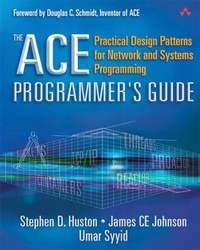
ACE Programmer's Guide, The
Practical Design Patterns for Network and Systems Programming
1st Edition
Published on 15. May 2010
544 pages
978-0-672-33418-4 (ISBN)
Description

The ADAPTIVE Communication Environment (ACE) is an open-source software toolkit created to solve network programming challenges. Written in C++, with the help of 30 core developers and 1,700 contributors, this portable middleware has evolved to encapsulate and augment a wide range of native OS capabilities essential to support performance-driven software systems.
The ACE Programmer's Guide is a practical, hands-on guide to ACE for C++ programmers building networked applications and next-generation middleware. The book first introduces ACE to beginners. It then explains how you can tap design patterns, frameworks, and ACE to produce effective, easily maintained software systems with less time and effort. The book features discussions of programming aids, interprocess communication (IPC) issues, process and thread management, shared memory, the ACE Service Configurator framework, timer management classes, the ACE Naming Service, and more.
The ACE Programmer's Guide is a practical, hands-on guide to ACE for C++ programmers building networked applications and next-generation middleware. The book first introduces ACE to beginners. It then explains how you can tap design patterns, frameworks, and ACE to produce effective, easily maintained software systems with less time and effort. The book features discussions of programming aids, interprocess communication (IPC) issues, process and thread management, shared memory, the ACE Service Configurator framework, timer management classes, the ACE Naming Service, and more.
More details
Edition
1. Auflage
Language
English
Place of publication
Upper Saddle River
United States
Target group
Professional and scholarly
File size
3,39 MB
ISBN-13
978-0-672-33418-4 (9780672334184)
Copyright in bibliographic data and cover images is held by Nielsen Book Services Limited or by the publishers or by their respective licensors: all rights reserved.
Schweitzer Classification
Other editions
Additional editions
Stephen D. Huston | James CE Johnson | Umar Syyid
The ACE Programmer's Guide
Practical Design Patterns for Network and Systems Programming
Book
11/2003
Addison Wesley
€64.34
Article exhausted; check different version
Persons
Stephen D. Huston is President and CEO of Riverace Corporation, a provider of technical support and consulting services to companies who want to keep software projects on track using ACE. Steve has nearly ten years of experience with ACE, and more than twenty years of software development experience, focusing on network protocol and C++ networked application development in a wide range of hardware and software environments.
Content
Illustrations.
Tables.
Foreword.
Preface.
I. ACE BASICS.
1. Introduction to ACE.
A History of ACE.
ACE's Benefits.
ACE's Organization.
Patterns, Class Libraries, and Frameworks.
Porting Your Code to Multiple Operating Systems.
Smoothing the Differences among C++ Compilers.
Using Both Narrow and Wide Characters.
Where to Find More Information and Support.
Summary.
2. How to Build and Use ACE in Your Programs.
A Note about ACE Versions.
Guide to the ACE Distribution.
How to Build ACE.
How to Include ACE in Your Applications.
How to Build Your Applications.
Summary.
3. Using the ACE Logging Facility.
Basic Logging and Tracing.
Enabling and Disabling Logging Severities.
Customizing the ACE Logging Macros.
Redirecting Logging Output.
Using Callbacks.
The Logging Client and Server Daemons.
The LogManager Class.
Runtime Configuration with the ACE Logging Strategy.
Summary.
4. Collecting Runtime Information.
Command Line Arguments and ACE_Get_Opt.
Accessing Configuration Information.
Building Argument Vectors.
Summary.
5. ACE Containers.
Container Concepts.
Sequence Containers.
Associative Containers.
Allocators.
Summary.
II. INTERPROCESS COMMUNICATION.
6. Basic TCP/IP Socket Use.
A Simple Client.
Adding Robustness to a Client.
Building a Server.
Summary.
7. Handling Events and Multiple I/O Streams.
Overview of the Reactor Framework.
Handling Multiple I/O Sources.
Signals.
Notifications.
Timers.
Using the Acceptor-Connector Framework.
Reactor Implementations.
Summary.
8. Asynchronous I/O and the ACE Proactor Framework.
Why Use Asynchronous I/O?.
How to Send and Receive Data.
Establishing Connections.
The ACE_Proactor Completion Demultiplexer.
Using Timers.
Other I/O Factory Classes.
Combining the Reactor and Proactor Frameworks.
Summary.
9. Other IPC Types.
Interhost IPC with UDP/IP.
Intrahost Communication.
Summary.
III. PROCESS AND THREAD MANAGEMENT.
10. Process Management.
Spawning a New Process.
Using the ACE_Process_Manager.
Synchronization Using ACE_Process_Mutex.
Summary.
11. Signals.
Using Wrappers.
Event Handlers.
Guarding Critical Sections.
Signal Management with the Reactor.
Summary.
12. Basic Multithreaded Programming.
Getting Started.
Basic Thread Safety.
Intertask Communication.
Summary.
13. Thread Management.
Types of Threads.
Priorities and Scheduling Classes.
Thread Pools.
Thread Management Using ACE_Thread_Manager.
Signals.
Thread Start-Up Hooks.
Cancellation.
Summary.
14. Thread Safety and Synchronization.
Protection Primitives.
Thread Synchronization.
Thread-Specific Storage.
Summary.
15. Active Objects.
The Pattern.
Using the Pattern.
Summary.
16. Thread Pools.
Understanding Thread Pools.
Half-Sync/Half-Async Model.
Leader/Followers Model.
Thread Pools and the Reactor.
Summary.
IV. ADVANCED ACE.
17. Shared Memory.
ACE_Malloc and ACE_Allocator.
Persistence with ACE_Malloc.
Position-Independent Allocation.
ACE_Malloc for Containers.
Wrappers.
Summary.
18. ACE Streams Framework.
Overview.
Using a One-Way Stream.
A Bidirectional Stream.
Summary.
19. ACE Service Configurator Framework.
Overview.
Configuring Static Services.
Setting Up Dynamic Services.
Setting Up Streams.
Reconfiguring Services During Execution.
Using XML to Configure Services and Streams.
Configuring Services without svc.conf.
Singletons and Services.
Summary.
20. Timers.
Timer Concepts.
Timer Queues.
Prebuilt Dispatchers.
Managing Event Handlers.
Summary.
21. ACE Naming Service.
The ACE_Naming_Context.
A Single-Process Naming Context: PROC_LOCAL.
Sharing a Naming Context on One Node: NODE_LOCAL.
Sharing a Naming Context across the Network: NET_LOCAL.
Summary.
Bibliography.
Index.
Tables.
Foreword.
Preface.
I. ACE BASICS.
1. Introduction to ACE.
A History of ACE.
ACE's Benefits.
ACE's Organization.
Patterns, Class Libraries, and Frameworks.
Porting Your Code to Multiple Operating Systems.
Smoothing the Differences among C++ Compilers.
Using Both Narrow and Wide Characters.
Where to Find More Information and Support.
Summary.
2. How to Build and Use ACE in Your Programs.
A Note about ACE Versions.
Guide to the ACE Distribution.
How to Build ACE.
How to Include ACE in Your Applications.
How to Build Your Applications.
Summary.
3. Using the ACE Logging Facility.
Basic Logging and Tracing.
Enabling and Disabling Logging Severities.
Customizing the ACE Logging Macros.
Redirecting Logging Output.
Using Callbacks.
The Logging Client and Server Daemons.
The LogManager Class.
Runtime Configuration with the ACE Logging Strategy.
Summary.
4. Collecting Runtime Information.
Command Line Arguments and ACE_Get_Opt.
Accessing Configuration Information.
Building Argument Vectors.
Summary.
5. ACE Containers.
Container Concepts.
Sequence Containers.
Associative Containers.
Allocators.
Summary.
II. INTERPROCESS COMMUNICATION.
6. Basic TCP/IP Socket Use.
A Simple Client.
Adding Robustness to a Client.
Building a Server.
Summary.
7. Handling Events and Multiple I/O Streams.
Overview of the Reactor Framework.
Handling Multiple I/O Sources.
Signals.
Notifications.
Timers.
Using the Acceptor-Connector Framework.
Reactor Implementations.
Summary.
8. Asynchronous I/O and the ACE Proactor Framework.
Why Use Asynchronous I/O?.
How to Send and Receive Data.
Establishing Connections.
The ACE_Proactor Completion Demultiplexer.
Using Timers.
Other I/O Factory Classes.
Combining the Reactor and Proactor Frameworks.
Summary.
9. Other IPC Types.
Interhost IPC with UDP/IP.
Intrahost Communication.
Summary.
III. PROCESS AND THREAD MANAGEMENT.
10. Process Management.
Spawning a New Process.
Using the ACE_Process_Manager.
Synchronization Using ACE_Process_Mutex.
Summary.
11. Signals.
Using Wrappers.
Event Handlers.
Guarding Critical Sections.
Signal Management with the Reactor.
Summary.
12. Basic Multithreaded Programming.
Getting Started.
Basic Thread Safety.
Intertask Communication.
Summary.
13. Thread Management.
Types of Threads.
Priorities and Scheduling Classes.
Thread Pools.
Thread Management Using ACE_Thread_Manager.
Signals.
Thread Start-Up Hooks.
Cancellation.
Summary.
14. Thread Safety and Synchronization.
Protection Primitives.
Thread Synchronization.
Thread-Specific Storage.
Summary.
15. Active Objects.
The Pattern.
Using the Pattern.
Summary.
16. Thread Pools.
Understanding Thread Pools.
Half-Sync/Half-Async Model.
Leader/Followers Model.
Thread Pools and the Reactor.
Summary.
IV. ADVANCED ACE.
17. Shared Memory.
ACE_Malloc and ACE_Allocator.
Persistence with ACE_Malloc.
Position-Independent Allocation.
ACE_Malloc for Containers.
Wrappers.
Summary.
18. ACE Streams Framework.
Overview.
Using a One-Way Stream.
A Bidirectional Stream.
Summary.
19. ACE Service Configurator Framework.
Overview.
Configuring Static Services.
Setting Up Dynamic Services.
Setting Up Streams.
Reconfiguring Services During Execution.
Using XML to Configure Services and Streams.
Configuring Services without svc.conf.
Singletons and Services.
Summary.
20. Timers.
Timer Concepts.
Timer Queues.
Prebuilt Dispatchers.
Managing Event Handlers.
Summary.
21. ACE Naming Service.
The ACE_Naming_Context.
A Single-Process Naming Context: PROC_LOCAL.
Sharing a Naming Context on One Node: NODE_LOCAL.
Sharing a Naming Context across the Network: NET_LOCAL.
Summary.
Bibliography.
Index.
