

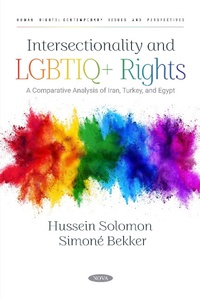
Intersectionality and LGBTIQ+ Rights: A Comparative Analysis of Iran, Turkey, and Egypt
Published on 4. October 2023
149 pages
979-8-89113-171-2 (ISBN)
Description

"Intersectionality and LGBTQ+ Rights: A Comparative Analysis of Iran, Turkey, and Egypt" delves into the multifaceted landscape of LGBTQ+ rights in the Middle East and North Africa (MENA) region. This meticulously researched book explores the challenges faced by LGBTQ+ individuals and communities in Iran, Turkey, and Egypt while providing insight into the potential pathway towards achieving equality. Examining the socio-cultural, legal, and political factors influencing LGBTQ+ marginalization, the book uncovers the intersecting forms of discrimination prevalent in these countries. It sheds light on gender-based violence, social exclusion, and restrictive laws that contribute to the struggles faced by LGBTQ+ communities. By adopting an intersectional approach, the author emphasizes the need to understand and address the intricate issues surrounding LGBTQ+ rights. The book evaluates the roles of governments, civil society, international organizations, and multinational corporations in promoting and safeguarding LGBTQ+ rights. A valuable resource for scholars, activists, and policymakers, this book offers in-depth insights, recommendations, and future directions for advancing LGBTQ+ rights and fostering inclusive societies in Iran, Turkey, and Egypt. "Intersectionality and LGBTQ+ Rights: A Comparative Analysis of Iran, Turkey, and Egypt" comprises of six chapters, encompassing comprehensive analysis, case studies, and recommendations for governments and relevant stakeholders.
More details
Other editions
Additional editions
Hussein Solomon
Intersectionality and LGBTIQ+ Rights: A Comparative Analysis of Iran, Turkey, and Egypt
Book
10/2023
Nova Science Publishers Inc
€126.26
Shipment within 3-4 weeks
Content
- Intro
- Contents
- Chapter 1
- Introduction
- 1.1. Background and Significance
- 1.2. Problem Statement: Framing the Research Problem
- 1.2.1. The State and the Issue of Gender
- 1.2.2. Systemic Discrimination
- 1.2.3. Minority in a Minority
- 1.3. Aims and Objectives
- 1.4. Research Methodology and Limits to the Book
- 1.5. Literature Review
- 1.6. Terminology
- 1.7. The Structure of the Book
- Chapter 2
- Theoretical Framework Intersectionality n
- 2.1. Introduction
- 2.2. Conceptualization of Intersectionality
- 2.3. Theorizing and Measuring Intersectionality
- 2.3.1. Analogies of Intersectionality
- 2.3.2. The Dynamics of Intersectionality: Unpacking Structural and Political Perspectives
- 2.3.3. Unveiling the Potential: Intersectionality as an Ever-Evolving Approach
- 2.4. Navigating Power Dynamics: Gender, Identity, and Intersectionality in Focus
- 2.5. Intersectionality and LGBTQ+ Rights in the Middle East: Unveiling Systemic Discrimination and Power Relations
- 2.6. Conclusion
- Chapter 3
- The Plight of LGBTQ+ Individuals in Iran: Challenges and Discrimination
- 3.1. Introduction
- 3.2. The Complex Web of Oppression: Intersections of Identity and Discrimination in Iran
- 3.2.1. Navigating Double Discrimination: The Intersection of Gender and Sexuality for Lesbians in Iran
- 3.2.2. Intersecting Identities and Differential Treatment: Experiences of Gay Men in Iran
- 3.3. Intersecting Discriminations: Analyzing Societal Inequalities for LGBTQ+ Individuals in Iran
- 3.3.1. State-Sponsored Discrimination: Unmasking Homophobic Rhetoric and Policies
- 3.3.2. Social Stigma and Media Censorship: LGBTQ+ Discrimination in Iran's Public Sphere
- 3.3.3. The Hidden Dangers at Home: Family Discrimination against LGBTQ+ Individuals in Iran
- 3.3.4. Systemic Violence: LGBTQ+ Oppression in Education and Healthcare in Iran
- 3.4. Conclusion
- Chapter 4
- Intersectionality and LGBTQ+ Discrimination: Exploring Turkey's Complex Landscape
- 4.1. Introduction
- 4.2. Intersecting Discriminations: Unravelling the Complexities of Oppression in Turkish Society
- 4.2.1. Anti-LGBTQ+ Rhetoric and Identity Politics: Erdogan's Political Strategy
- 4.2.2. Employment Inequality and Stigmatization: The Struggle for LGBTQ+ Equality in Turkish Workplaces
- 4.2.3. The Three M's: Men, Military, and Medical Discrimination
- 4.2.4. Institutionalised Discrimination: The Turkish Government's Repression on Rainbow Symbolism, Pride, and Women's Rights
- 4.3. Intersectionality and LGBTQ+ Refugees: Politics, Power, and Practices
- 4.4. Conclusion
- Chapter 5
- From Mubarak to Al-Sisi: A Pattern of LGBTQ+ Discrimination in Egypt
- 5.1. Introduction
- 5.2. Post-Revolution Landscape: LGBTQ+ Activism and Challenges
- 5.3. Unveiling the Complexity: Intersecting Identities and Social Categories
- 5.3.1. Law and Discrimination: The Unequal Treatment of Homosexual and Heterosexual Men in Egypt's Legal System
- 5.3.2. Challenging the Patriarchy: Lesbian Women's Double Marginalization in Egypt
- 5.4. Beyond Single Oppression: Understanding Intersecting Discriminations Faced by LGBTQ+ Community in Egypt
- 5.4.1. Denied Recognition: State-Sponsored Homophobia and the Battle for Transgender Rights in Egypt
- 5.4.2. The Watchful Eye: Government Surveillance and Entrapment of LGBTQ+ Individuals in Egypt
- 5.5. Conclusion
- Chapter 6
- Conclusion: Discussions and Findings
- 6.1. Recapitulation of the Intersectional Analysis
- 6.1.1. Iran
- 6.1.2. Turkey
- 6.1.3. Egypt
- 6.2. The Call for Intersectional Approached
- 6.3. The Role of External Actors in Promoting LGBTQ+ Rights
- Glossary
- References
- Index
- About the Authors
- Blank Page
