

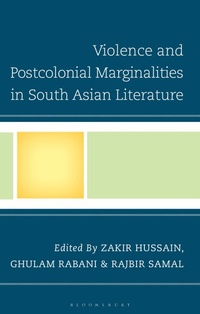
Violence and Postcolonial Marginalities in South Asian Literature
1st Edition
Published on 11. December 2025
284 pages
979-8-216-26608-2 (ISBN)
Description

Violence and Postcolonial Marginalities in South Asian Literature explores the multifaceted dimensions of violence represented in the literature of South Asia.
The book sheds light on the relationships between colonial legacies, social structures, and violence in the South Asian region. In the context of South Asia, a region marked by rich cultural diversity and historical complexities, the intersections of postcolonialism, violence, and literature become particularly salient. Through critical engagements with Dalit, feminist, and environmental literatures, this collection illuminates how corporeal, psychic, and spatial violence are normalized by hegemonic narratives and inscribed onto subaltern bodies and landscapes.
The book sheds light on the relationships between colonial legacies, social structures, and violence in the South Asian region. In the context of South Asia, a region marked by rich cultural diversity and historical complexities, the intersections of postcolonialism, violence, and literature become particularly salient. Through critical engagements with Dalit, feminist, and environmental literatures, this collection illuminates how corporeal, psychic, and spatial violence are normalized by hegemonic narratives and inscribed onto subaltern bodies and landscapes.
More details
Edition
1. Auflage
Language
English
Place of publication
New York
United States
Publishing group
Bloomsbury Publishing Plc
Target group
Professional and scholarly
College/higher education
ISBN-13
979-8-216-26608-2 (9798216266082)
Copyright in bibliographic data and cover images is held by Nielsen Book Services Limited or by the publishers or by their respective licensors: all rights reserved.
Schweitzer Classification
Other editions
Additional editions
Zakir Hussain | Ghulam Rabani | Rajbir Samal
Violence and Postcolonial Marginalities in South Asian Literature
Book
approx. 02/2026
Rowman & Littlefield Publishers
€111.90
Not yet published
Persons
Zakir Hussain is Assistant Professor of English at the University of Ladakh, India.
Ghulam Rabani is Senior Doctoral Fellow of English in the Department of Humanities and Social Sciences at the Indian Institute of Technology, Roorkee.
Rajbir Samal is Senior Research Fellow in the Department of Humanities and Social Sciences at the Indian Institute of Technology, Roorkee, India.
Ghulam Rabani is Senior Doctoral Fellow of English in the Department of Humanities and Social Sciences at the Indian Institute of Technology, Roorkee.
Rajbir Samal is Senior Research Fellow in the Department of Humanities and Social Sciences at the Indian Institute of Technology, Roorkee, India.
Content
About the Contributors
Acknowledgements
Introduction: Violence and Postcolonial Marginalities in South Asian Literature
Zakir Hussain, Ghulam Rabani, and Rajbir Samal
Part 1: Violence, Caste, and Gender
1. Dialectics of Vulnerability and Resistance: The Politics of Dalit Identity in C. Ayyappan's Writings
Christina Romeo (Christ Academy Institute for Advanced Studies, Bengaluru)
2. Charred Bodies, Charred Narratives: Violence, Memory, and Truth in Meena Kandasamy's The Gypsy Goddess
Saundarya (Jawaharlal Nehru University, Delhi)
3. Through Traumatic (Mate)Realism and Strategic Essentialism: A Critical Study of Meena Kandasamy's The Gypsy Goddess
Dhanya V Sankar and Sarbani Banerjee (Indian Institute of Technology, Roorkee)
4. Locating the Articulations of Gendered Violence in A Leaf in the Storm
Aiswarya Sanath (Indian Institute of Technology Kharagpur)
Part 2: Postcolonial Fractures and Ethnic Violence
5. Home and the Nation: Representing Marginalities in the Postcolonial Indian English Novel
Saman Ashfaq (Institute for Excellence in Higher Education, Bhopal)
6. Anthologizing India's Northeast: A Study of Ethnic Identity and Violence in the Region
Niborna Hazarika (Guru Gobind Singh Indraprastha University, New Delhi)
7. Violence, Vulnerability, and Ethics in The Story of a Brief Marriage: Bearing Witness to Marginalized Suffering
Navneet Kumar (Mount Royal University)
8. Quiet Devastations: Sri Lankan Ethnic Violence and Broken Intimacies in Selvadurai and Arudpragasam
Madhurima Nayak (Banaras Hindu University, Varanasi)
Part 3: Place, People, and Environmental Violence
9. Post-Millennial Indian Fiction and The Discourse of Toxicity
Rahul Vijayan and Nagendra Kumar (Indian Institute of Technology Roorkee)
10. Intersecting Injustices: Green Criminology and Postcolonial Marginalities in Indra Sinha's Animal's People
Ranjit Mandal (Rural Institute of Higher Studies in Bhograi) and Debjani Banerjee (Beheragora Polytechnic)
11. Bastuhara: Historiographical Recovery of the Ecological Subaltern in The Hungry Tide
Gunja Nandi (Texas Christian University)
12. Violence at the Wake of Capitalist Modernity: A Literary Study of People Vis-à-vis the Rivers of Bengal
Indra Sankar Ghatak and Bhagyasree Saha (Indian Institute of Technology Mandi)
Index
Acknowledgements
Introduction: Violence and Postcolonial Marginalities in South Asian Literature
Zakir Hussain, Ghulam Rabani, and Rajbir Samal
Part 1: Violence, Caste, and Gender
1. Dialectics of Vulnerability and Resistance: The Politics of Dalit Identity in C. Ayyappan's Writings
Christina Romeo (Christ Academy Institute for Advanced Studies, Bengaluru)
2. Charred Bodies, Charred Narratives: Violence, Memory, and Truth in Meena Kandasamy's The Gypsy Goddess
Saundarya (Jawaharlal Nehru University, Delhi)
3. Through Traumatic (Mate)Realism and Strategic Essentialism: A Critical Study of Meena Kandasamy's The Gypsy Goddess
Dhanya V Sankar and Sarbani Banerjee (Indian Institute of Technology, Roorkee)
4. Locating the Articulations of Gendered Violence in A Leaf in the Storm
Aiswarya Sanath (Indian Institute of Technology Kharagpur)
Part 2: Postcolonial Fractures and Ethnic Violence
5. Home and the Nation: Representing Marginalities in the Postcolonial Indian English Novel
Saman Ashfaq (Institute for Excellence in Higher Education, Bhopal)
6. Anthologizing India's Northeast: A Study of Ethnic Identity and Violence in the Region
Niborna Hazarika (Guru Gobind Singh Indraprastha University, New Delhi)
7. Violence, Vulnerability, and Ethics in The Story of a Brief Marriage: Bearing Witness to Marginalized Suffering
Navneet Kumar (Mount Royal University)
8. Quiet Devastations: Sri Lankan Ethnic Violence and Broken Intimacies in Selvadurai and Arudpragasam
Madhurima Nayak (Banaras Hindu University, Varanasi)
Part 3: Place, People, and Environmental Violence
9. Post-Millennial Indian Fiction and The Discourse of Toxicity
Rahul Vijayan and Nagendra Kumar (Indian Institute of Technology Roorkee)
10. Intersecting Injustices: Green Criminology and Postcolonial Marginalities in Indra Sinha's Animal's People
Ranjit Mandal (Rural Institute of Higher Studies in Bhograi) and Debjani Banerjee (Beheragora Polytechnic)
11. Bastuhara: Historiographical Recovery of the Ecological Subaltern in The Hungry Tide
Gunja Nandi (Texas Christian University)
12. Violence at the Wake of Capitalist Modernity: A Literary Study of People Vis-à-vis the Rivers of Bengal
Indra Sankar Ghatak and Bhagyasree Saha (Indian Institute of Technology Mandi)
Index
