

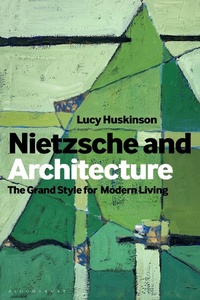
Nietzsche and Architecture
The Grand Style for Modern Living
1st Edition
Published on 25. July 2024
280 pages
978-1-350-41293-4 (ISBN)
Description

Nietzsche and Architecture explores Nietzsche's relationship to the architects, buildings, and modern architectural movements he went on to inspire, and situates his philosophy more appropriately and comprehensively within the field of architectural studies, architectural history, and theory.
Divided into two parts, the book first examines Nietzsche's philosophy of architecture, exploring his notions of rhythm, ornament, style, and power. It then goes on to examine Nietzsche's ambiguous architectural legacy, scrutinising iconic architects, thinkers, designs, and cultural movements to ascertain their relationship with Nietzschean ideas, from the crystal architecture of Bruno Taut and Peter Behrens, to the 'new styles' of the Bauhaus and Le Corbusier, Louis H. Sullivan's desire for the heights, and the cultural propaganda of 'Nazi architecture'.
Clearly explaining the subtleties and complexities of Nietzsche's architectural thought, Nietzsche and Architecture provides an accessible insight into Nietzsche's philosophy and its significance to the development of modern architecture in the 19th and early 20th centuries, shedding vital light on the continued relevance of Nietzsche to architecture today.
Divided into two parts, the book first examines Nietzsche's philosophy of architecture, exploring his notions of rhythm, ornament, style, and power. It then goes on to examine Nietzsche's ambiguous architectural legacy, scrutinising iconic architects, thinkers, designs, and cultural movements to ascertain their relationship with Nietzschean ideas, from the crystal architecture of Bruno Taut and Peter Behrens, to the 'new styles' of the Bauhaus and Le Corbusier, Louis H. Sullivan's desire for the heights, and the cultural propaganda of 'Nazi architecture'.
Clearly explaining the subtleties and complexities of Nietzsche's architectural thought, Nietzsche and Architecture provides an accessible insight into Nietzsche's philosophy and its significance to the development of modern architecture in the 19th and early 20th centuries, shedding vital light on the continued relevance of Nietzsche to architecture today.
More details
Edition
1. Auflage
Language
English
Place of publication
London
United Kingdom
Publishing group
Bloomsbury Publishing PLC
Target group
Professional and scholarly
College/higher education
Illustrations
50 bw illus
ISBN-13
978-1-350-41293-4 (9781350412934)
Copyright in bibliographic data and cover images is held by Nielsen Book Services Limited or by the publishers or by their respective licensors: all rights reserved.
Schweitzer Classification
Other editions
Additional editions
Book
08/2024
Bloomsbury Visual Arts
€32.50
Shipment within 15-20 days
Person
Lucy Huskinson is Professor of Philosophy and Deputy Head of the School of History, Law, and Social Sciences at Bangor University, UK.
Content
Acknowledgements
Abbreviations
List of Illustrations
Introduction
PART I. NIETZSCHE'S PHILOSOPHY OF ARCHITECTURE
CHAPTER 1. The Problematic Lack of Style
CHAPTER 2. Architectural Remedy in the Grand Style
CHAPTER 3. Nietzsche's Architectural Influences: Gottfried Semper and Festive Theatre
PART II. NIETZSCHE'S AMBIGUOUS ARCHITECTURAL LEGACY
CHAPTER 4. Buildings to 'honour' Nietzsche
CHAPTER 5. Nietzsche and the New Style
CHAPTER 6. The Grand Style in Modern Architecture
CHAPTER 7. Modern Architecture Inspired by Nietzsche
References
Bibliography
Abbreviations
List of Illustrations
Introduction
PART I. NIETZSCHE'S PHILOSOPHY OF ARCHITECTURE
CHAPTER 1. The Problematic Lack of Style
CHAPTER 2. Architectural Remedy in the Grand Style
CHAPTER 3. Nietzsche's Architectural Influences: Gottfried Semper and Festive Theatre
PART II. NIETZSCHE'S AMBIGUOUS ARCHITECTURAL LEGACY
CHAPTER 4. Buildings to 'honour' Nietzsche
CHAPTER 5. Nietzsche and the New Style
CHAPTER 6. The Grand Style in Modern Architecture
CHAPTER 7. Modern Architecture Inspired by Nietzsche
References
Bibliography
