

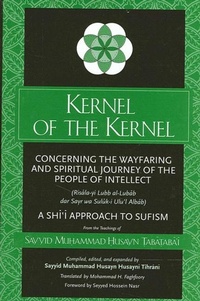
Kernel of the Kernel
Concerning the Wayfaring and Spiritual Journey of the People of Intellect (Risala-yi Lubb al-Lubab dar Sayr wa Suluk-i Ulu'l Albab) A Shi'i Approach to Sufism
1st Edition
Published on 1. February 2012
183 pages
978-0-7914-8927-7 (ISBN)
Description

An English translation of a seminal book on Sufism from a Shi'i perspective by an eminent Muslim thinker.
More details
Other editions
Additional editions
Sayyid Mu?ammad ?usayn ?aba?aba'i
Kernel of the Kernel
Concerning the Wayfaring and Spiritual Journey of the People of Intellect (Risala-yi Lubb al-Lubab dar Sayr wa Suluk-i Ulu'l Albab) A Shi?i Approach to Sufism
Book
05/2003
State University of New York Press
€40.10
Shipment within 10-20 days

Sayyid Mu?ammad ?usayn ?aba?aba'i
Kernel of the Kernel
Concerning the Wayfaring and Spiritual Journey of the People of Intellect (Risala-yi Lubb al-Lubab dar Sayr wa Suluk-i Ulu'l Albab) A Shi?i Approach to Sufism
Book
05/2003
State University of New York Press
€109.47
Article exhausted; check different version
Persons
Sayyid Muhammad Husayn Tabataba'i (1901-1982) was a prominent Muslim scholar who taught Islamic philosophy, jurisprudence, ethics, and gnosis in the seminaries of Qum, Iran. He is celebrated for the example of his spiritual life and for his spiritual writings. Sayyid Muhammad Husayn Husayni Tihrani (1925-1995) was one of Tabataba'i's most brilliant students. A teacher, eloquent speaker, and prolific writer, his most important works include comprehensive studies on the nature of God, the lives and spiritual status of Shii Imams, and eschatology. Formerly a Professor at the University of Tehran, Mohammad H. Faghfoory is affiliated with George Washington University and the Institute of Ismaili Studies in London.
Content
Foreword by Seyyed Hossein Nasr
Translator's Introduction
Chapter One: Editor's Introduction 1. Attraction to the invisible world is in man's primordial nature
2. The Straight Path means a combination of exoterism and esoterism
3. The Holy Qur'an calls for purification along with intellection
4. Mulla Sadra's recommendation for humility of the heart and acquiring intellectual sciences
5. The chain of gnostics during the last hundred years
6. Reasons and motivations for compilation of this treatise
Chapter Two: Kernel of the Kernel 7. The human being in the darkness of materialism
8. Wayfaring and spiritual journey according to the gnostics
9. Difficulties in passing through the intermediate world and the realm of multiplicity of the soul 10. The spiritual traveler entering the realm of spirit
11. The goal of the traveler is companionship with God and His Image
12. Muraqabah, its stages, and effects
13. The meaning of wine (mey) according to gnostics
14. The traveler observes his own soul
15. The traveler observes Divine Names and Attributes
16. Immersion in the Divine Essence of the Lord and subsistence in the Worshiped
17. The station of being present in the world of multiplicity while simultaneously witnessing and experiencing the realms of Divine Lordship
18. Reasons why not everyone can reach the station of human perfection
19. The inability of words to describe the realities of the lights of catharsis and the Realms of Divine Lordship
20. The world of sincerity (khulus) and its hierarchy
21. Peculiarities and manifestations of sincerity of essence (khulus-i dhati)
22. Freedom from the world of multiplicity is one of the first and most essential necessities of spiritual journey
23. One's detachment from one's essence
24. The need for Divine Grace for total victory in the struggle against the carnal soul
25. The necessity of observing all religious duties throughout spiritual journey
26. Observing religious duties by the Perfect Man is by virtue of perfection, and not for finding proximity to God
27. Brief description of the realms preceding the realm of sincerity (khulus) according to Qur'an Chapter Three: Description of the Realms Preceding the Realm of Khulus 28. The Greater Islam (Islam-i Akbar) 29. The Greater Faith (Iman-i Akbar) 30. The Greater Migration (Hijrat-i Kubra) 31. The Greater Spiritual Struggle (Jihad-i Akbar) 32. The Greatest Submission (Islam-i a'azam) 33. The Greatest Faith (Iman-i a'azam) 34. The Greatest Migration (Hijrat-i 'uzma) and the Greatest Spiritual Struggle (Jihad-i a'azam)
35. Choosing to Die
36. Explanation: Special privileges granted to Muslim spiritual travelers over travelers of previous religions
37. The Station of Righteousness (Suluh) 38. Different kinds of righteousness (Salah) Chapter Four: Undifferentiated Description of the Path and Methods of Wayfaring Toward God 39. The necessity to seek reason to prove the truth of religion
40. The effects of lamentation and pleading to God with humility to find faith in the World of Meaning
41. Conversation between the prophet Hadrat-i Idris with 'Allamah Tabataba'i in a dream
42. God will guide those who search guidance from Him with sincerity and purity of heart
43. Knowledge and action complement each other
44. The necessity of having bodily organs share the joy of faith
45. The absence of sadness and fear for the selfless traveler
46. Wayfaring in the Angelical Kingdom is not in contradiction with being in this world
47. Prayers and supplications of the Shi'ite Imams were not merely for guiding and teaching purposes
Chapter 5: Differentiated Description of the Path and Methods of Wayfaring Toward God 48. The necessary conditions for spiritual journey
49. Abandoning conventionalism, habitual practices, and formalities
50. Steadfastness
51. Tolerance and forbearance
52. Loyalty
53. Stability and perseverance
54. Constant attention
55. One's accounting one's inward state
56. Self-condemnation
57. Expeditious action
58. Devotion
59. Observing proper manners
60. Intention
61. Silence
62. Abstaining from indulgence in food consumption
63. Spiritual retreat 64. Morning wakefulness
65. Perpetual ritual cleanliness
66. Constant expression of humility
67. Avoiding appetite and worldly pleasure
68. Guarding and protecting the secrets and mysteries of the path
69. Spiritual teacher and master
70. Litany and supplication
71. Control of mind, thoughts, and other mental preoccupations
72. Invocation
73. Meditation
74. Methods for control of mind and thoughts in the treatise attributed to Ayatullah Sayyid Mahdi (ibn Murtada ibn Muhammad) Bahr al-'Ulum
75. Methods used by the late Akhund Mulla Husayn-Quli Hamadani 76. Stages of muraqabah 77. On the chain of the author's spiritual teachers and masters in Divine sciences
78. The opening of the fourfold realms of tawhid before one's soul as a result of muraqabah and concentration on the soul
79. What do the gnostics mean by Griffin ('Anqa) and (Simaurgh) 80. Poems by Hafiz alluding to the station of the Essence of the Invisible of all invisibles
Index of Qur'anic Verses Index of Ahadith Index of Quotations of the Sayings of the Shi'ite Imams Notes on Saints, Scholars, and Authors Cited in the Text General Index
Translator's Introduction
Chapter One: Editor's Introduction 1. Attraction to the invisible world is in man's primordial nature
2. The Straight Path means a combination of exoterism and esoterism
3. The Holy Qur'an calls for purification along with intellection
4. Mulla Sadra's recommendation for humility of the heart and acquiring intellectual sciences
5. The chain of gnostics during the last hundred years
6. Reasons and motivations for compilation of this treatise
Chapter Two: Kernel of the Kernel 7. The human being in the darkness of materialism
8. Wayfaring and spiritual journey according to the gnostics
9. Difficulties in passing through the intermediate world and the realm of multiplicity of the soul 10. The spiritual traveler entering the realm of spirit
11. The goal of the traveler is companionship with God and His Image
12. Muraqabah, its stages, and effects
13. The meaning of wine (mey) according to gnostics
14. The traveler observes his own soul
15. The traveler observes Divine Names and Attributes
16. Immersion in the Divine Essence of the Lord and subsistence in the Worshiped
17. The station of being present in the world of multiplicity while simultaneously witnessing and experiencing the realms of Divine Lordship
18. Reasons why not everyone can reach the station of human perfection
19. The inability of words to describe the realities of the lights of catharsis and the Realms of Divine Lordship
20. The world of sincerity (khulus) and its hierarchy
21. Peculiarities and manifestations of sincerity of essence (khulus-i dhati)
22. Freedom from the world of multiplicity is one of the first and most essential necessities of spiritual journey
23. One's detachment from one's essence
24. The need for Divine Grace for total victory in the struggle against the carnal soul
25. The necessity of observing all religious duties throughout spiritual journey
26. Observing religious duties by the Perfect Man is by virtue of perfection, and not for finding proximity to God
27. Brief description of the realms preceding the realm of sincerity (khulus) according to Qur'an Chapter Three: Description of the Realms Preceding the Realm of Khulus 28. The Greater Islam (Islam-i Akbar) 29. The Greater Faith (Iman-i Akbar) 30. The Greater Migration (Hijrat-i Kubra) 31. The Greater Spiritual Struggle (Jihad-i Akbar) 32. The Greatest Submission (Islam-i a'azam) 33. The Greatest Faith (Iman-i a'azam) 34. The Greatest Migration (Hijrat-i 'uzma) and the Greatest Spiritual Struggle (Jihad-i a'azam)
35. Choosing to Die
36. Explanation: Special privileges granted to Muslim spiritual travelers over travelers of previous religions
37. The Station of Righteousness (Suluh) 38. Different kinds of righteousness (Salah) Chapter Four: Undifferentiated Description of the Path and Methods of Wayfaring Toward God 39. The necessity to seek reason to prove the truth of religion
40. The effects of lamentation and pleading to God with humility to find faith in the World of Meaning
41. Conversation between the prophet Hadrat-i Idris with 'Allamah Tabataba'i in a dream
42. God will guide those who search guidance from Him with sincerity and purity of heart
43. Knowledge and action complement each other
44. The necessity of having bodily organs share the joy of faith
45. The absence of sadness and fear for the selfless traveler
46. Wayfaring in the Angelical Kingdom is not in contradiction with being in this world
47. Prayers and supplications of the Shi'ite Imams were not merely for guiding and teaching purposes
Chapter 5: Differentiated Description of the Path and Methods of Wayfaring Toward God 48. The necessary conditions for spiritual journey
49. Abandoning conventionalism, habitual practices, and formalities
50. Steadfastness
51. Tolerance and forbearance
52. Loyalty
53. Stability and perseverance
54. Constant attention
55. One's accounting one's inward state
56. Self-condemnation
57. Expeditious action
58. Devotion
59. Observing proper manners
60. Intention
61. Silence
62. Abstaining from indulgence in food consumption
63. Spiritual retreat 64. Morning wakefulness
65. Perpetual ritual cleanliness
66. Constant expression of humility
67. Avoiding appetite and worldly pleasure
68. Guarding and protecting the secrets and mysteries of the path
69. Spiritual teacher and master
70. Litany and supplication
71. Control of mind, thoughts, and other mental preoccupations
72. Invocation
73. Meditation
74. Methods for control of mind and thoughts in the treatise attributed to Ayatullah Sayyid Mahdi (ibn Murtada ibn Muhammad) Bahr al-'Ulum
75. Methods used by the late Akhund Mulla Husayn-Quli Hamadani 76. Stages of muraqabah 77. On the chain of the author's spiritual teachers and masters in Divine sciences
78. The opening of the fourfold realms of tawhid before one's soul as a result of muraqabah and concentration on the soul
79. What do the gnostics mean by Griffin ('Anqa) and (Simaurgh) 80. Poems by Hafiz alluding to the station of the Essence of the Invisible of all invisibles
Index of Qur'anic Verses Index of Ahadith Index of Quotations of the Sayings of the Shi'ite Imams Notes on Saints, Scholars, and Authors Cited in the Text General Index
