

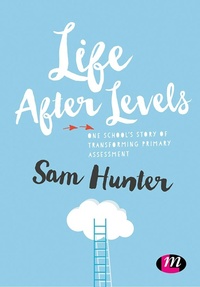
Life After Levels
One school's story of transforming primary assessment
1st Edition
Published on 9. August 2016
152 pages
978-1-4739-8823-1 (ISBN)
Description

This is the story of one school's successful journey to a 'life after levels'.
Together, the Headteacher and staff at one successful school took on the challenge:
Where do we begin?
What is the best assessment system for our school and our children?
How do we make the most of assessment opportunities in the classroom?
How do we create an assessment policy from scratch and implement it in the school?
How do we evaluate it, re-shape it and talk about it to parents, the wider school community and our colleagues in primary education?
Through exploring one school's story, this text supports teachers and schools in a time of uncertainty, confusion and choice to make the most of the new opportunity to assess children without the restrictions of levels.
"The removal of Levels has given all professionals involved in education a unique opportunity to rediscover what we value in this key aspect of teaching and learning...and it is an opportunity that we must grab with both hands. I want this book to provide a time for reflection for teachers and school leaders to re-adjust their thinking on assessment and to get excited about it."
- Sam Hunter -
Together, the Headteacher and staff at one successful school took on the challenge:
Where do we begin?
What is the best assessment system for our school and our children?
How do we make the most of assessment opportunities in the classroom?
How do we create an assessment policy from scratch and implement it in the school?
How do we evaluate it, re-shape it and talk about it to parents, the wider school community and our colleagues in primary education?
Through exploring one school's story, this text supports teachers and schools in a time of uncertainty, confusion and choice to make the most of the new opportunity to assess children without the restrictions of levels.
"The removal of Levels has given all professionals involved in education a unique opportunity to rediscover what we value in this key aspect of teaching and learning...and it is an opportunity that we must grab with both hands. I want this book to provide a time for reflection for teachers and school leaders to re-adjust their thinking on assessment and to get excited about it."
- Sam Hunter -
Reviews / Votes
As a busy teaching head, I didn't think I'd have time to read 'Life After Levels' by Sam Hunter - how wrong I was! A quick flick through showered me with nuggets of useful information and ideas to share with staff. It's easy to dip into, easy to navigate and reading it isn't a chore.This book, I decided, is a really welcome, 'on-side' read for beleaguered professionals trying to achieve their best and create the most effective systems in the current assessment climate.
'Life After Levels' is reassuringly rooted in research - but filled with practical tips ready to lift straight off the page and straight into the classroom! I'm going to share one (or more) of the strategy tips from the end of the book at each staff meeting from now on. -- Bridget Knight The book is well written and down-to-earth; it is firmly based in classroom learning, with children at the heart of the concepts. A practical and reassuring book that will guide schools and help the development of new assessment systems, as well as helping with the implementation and effectiveness of current systems. -- Sarah Brew
More details
Edition
First Edition
Language
English
Place of publication
London
United Kingdom
Publishing group
Sage Publications Ltd
Target group
Professional and scholarly
Product notice
Reflowable
File size
1,14 MB
ISBN-13
978-1-4739-8823-1 (9781473988231)
Copyright in bibliographic data and cover images is held by Nielsen Book Services Limited or by the publishers or by their respective licensors: all rights reserved.
Schweitzer Classification
Other editions
Additional editions
Book
08/2016
1st Edition
Learning Matters Ltd
€68.90
Shipment within 15-20 days
Book
08/2016
1st Edition
Learning Matters Ltd
€134.30
Shipment within 15-20 days
Person
As a headteacher Sam Hunter is committed to providing the best possible education to the children in her care. After nearly 20 years working in education, she is currently the head at Hiltingbury Junior School, a thriving learning community in Hampshire, which fosters forward-thinking and outward-looking practice.
In 2014 the school was recognised by the Department for Education through the assessment innovation fund. Since then Sam has been sharing her approach to assessment, while regularly speaking at national conferences and hosting visits to her school. This allows colleagues from across the UK and abroad to experience how Learning Ladders works in the classroom.
Sam believes in the power that quality assessment creates for transforming teaching and learning. Life After Levels is her first book and her aim is to ensure that schools feel confident in creating their own ethos of assessment, which has pupils' learning at its centre rather than a fear of accountability. She believes that pupils' understanding of their role in learning underpins successful assessment.
Sam is passionate about school-to-school support and is also a guest contributor to TES.
In 2014 the school was recognised by the Department for Education through the assessment innovation fund. Since then Sam has been sharing her approach to assessment, while regularly speaking at national conferences and hosting visits to her school. This allows colleagues from across the UK and abroad to experience how Learning Ladders works in the classroom.
Sam believes in the power that quality assessment creates for transforming teaching and learning. Life After Levels is her first book and her aim is to ensure that schools feel confident in creating their own ethos of assessment, which has pupils' learning at its centre rather than a fear of accountability. She believes that pupils' understanding of their role in learning underpins successful assessment.
Sam is passionate about school-to-school support and is also a guest contributor to TES.
Content
Part One: Exploring Assessment
Assessment: Where we are now (and how we got here)
Principles of Great Assessment
Part Two: The Impact and Opportunity of Life After Levels
The Impact and Opportunity of Life after Levels for School Practitioners
The Impact and Opportunity of Life after Levels for Pupils
The Impact and Opportunity of Life after Levels for Parents
Part Three: Performance and Accountability
The Accountability Question
Accountability and Teacher Performance
Part Four: Assessment Toolkit
Ideas and Strategies for Primary Assessment
Getting evidence from the children in the classroom
Making the most of WALTs and SC
Promoting pupil self-assessment in lessons to guide their next steps
Quality questioning and discussion
Feedback
Practical tips for using Learning Ladders
Conclusions: Taking Control of Assessment
Assessment: Where we are now (and how we got here)
Principles of Great Assessment
Part Two: The Impact and Opportunity of Life After Levels
The Impact and Opportunity of Life after Levels for School Practitioners
The Impact and Opportunity of Life after Levels for Pupils
The Impact and Opportunity of Life after Levels for Parents
Part Three: Performance and Accountability
The Accountability Question
Accountability and Teacher Performance
Part Four: Assessment Toolkit
Ideas and Strategies for Primary Assessment
Getting evidence from the children in the classroom
Making the most of WALTs and SC
Promoting pupil self-assessment in lessons to guide their next steps
Quality questioning and discussion
Feedback
Practical tips for using Learning Ladders
Conclusions: Taking Control of Assessment
