

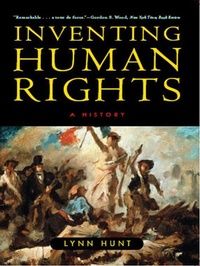
Inventing Human Rights
A History
Published on 17. April 2008
272 pages
978-0-393-06972-3 (ISBN)
Description

"A tour de force.”—Gordon S. Wood, New York Times Book Review
How were human rights invented, and how does their tumultuous history influence their perception and our ability to protect them today? From Professor Lynn Hunt comes this extraordinary cultural and intellectual history, which traces the roots of human rights to the rejection of torture as a means for finding the truth. She demonstrates how ideas of human relationships portrayed in novels and art helped spread these new ideals and how human rights continue to be contested today.More details
Other editions
Additional editions
Book
04/2008
WW Norton & Co
€16.50
Shipment within 15-20 days
Person
Lynn Hunt is Distinguished Research Professor at the University of California, Los Angeles. The author of numerous works, including Inventing Human Rights and Writing History in the Global Era and former president of the American Historical Association, she lives in Los Angeles.
Content
- Intro
- Praise
- ALSO BY LYNN HUNT
- Title Page
- Copyright
- Dedication
- Contents
- Acknowledgments
- Introduction: "We hold these truths to be self-evident
- 1. "TORRENTS OF EMOTION" Reading Novels and Imagining Equality
- 2. "BONE OF THEIR BONE" Abolishing Torture
- 3. "THEY HAVE SET A GREAT EXAMPLE" Declaring Rights
- 4. "THERE WILL BE NO END OF IT" The Consequences of Declaring
- 5. "THE SOFT POWER OF HUMANITY" Why Human Rights Failed, Only to Succeed in the Long Run
- Appendix: Three Declarations: 1776, 1789, 1948
- Notes
- Permissions
