

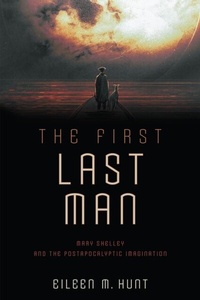
The First Last Man
Mary Shelley and the Postapocalyptic Imagination
1st Edition
Published on 16. April 2024
224 pages
978-0-8122-9861-1 (ISBN)
Description

Beyond her most famous creation-the nightmarish vision of Frankenstein's Creature-Mary Shelley's most enduring influence on politics, literature, and art perhaps stems from the legacy of her lesser-known novel about the near-extinction of the human species through war, disease, and corruption. This novel, The Last Man (1826), gives us the iconic image of a heroic survivor who narrates the history of an apocalyptic disaster in order to save humanity-if not as a species, then at least as the practice of compassion or humaneness. In visual and musical arts from 1826 to the present, this postapocalyptic figure has transmogrified from the "last man" into the globally familiar filmic images of the "invisible man" and the "final girl."
Reading Shelley's work against the background of epidemic literature and political thought from ancient Greece to Covid-19, Eileen M. Hunt reveals how Shelley's postapocalyptic imagination has shaped science fiction and dystopian writing from H. G. Wells, M. P. Shiel, and George Orwell to Octavia Butler, Margaret Atwood, and Emily St. John Mandel. Through archival research into Shelley's personal journals and other writings, Hunt unearths Shelley's ruminations on her own personal experiences of loss, including the death of young children in her family to disease and the drowning of her husband, Percy Bysshe Shelley. Shelley's grief drove her to intensive study of Greek tragedy, through which she developed the thinking about plague, conflict, and collective responsibility that later emerges in her fiction. From her readings of classic works of plague literature to her own translation of Sophocles's Oedipus Rex, and from her authorship of the first major modern pandemic novel to her continued influence on contemporary popular culture, Shelley gave rise to a tradition of postapocalyptic thought that asks a question that the Covid-19 pandemic has made newly urgent for many: What do humans do after disaster?
Reading Shelley's work against the background of epidemic literature and political thought from ancient Greece to Covid-19, Eileen M. Hunt reveals how Shelley's postapocalyptic imagination has shaped science fiction and dystopian writing from H. G. Wells, M. P. Shiel, and George Orwell to Octavia Butler, Margaret Atwood, and Emily St. John Mandel. Through archival research into Shelley's personal journals and other writings, Hunt unearths Shelley's ruminations on her own personal experiences of loss, including the death of young children in her family to disease and the drowning of her husband, Percy Bysshe Shelley. Shelley's grief drove her to intensive study of Greek tragedy, through which she developed the thinking about plague, conflict, and collective responsibility that later emerges in her fiction. From her readings of classic works of plague literature to her own translation of Sophocles's Oedipus Rex, and from her authorship of the first major modern pandemic novel to her continued influence on contemporary popular culture, Shelley gave rise to a tradition of postapocalyptic thought that asks a question that the Covid-19 pandemic has made newly urgent for many: What do humans do after disaster?
Reviews / Votes
"This erudite study examines plague motifs in the writings of 19th-century English novelist Mary Shelley...The sharp analysis sheds welcome light on lesser studied corners of Shelley's oeuvre, and Hunt's meditation on the final scene of The Last Man provides a stirring take on enduring in the face of calamity: 'We should always act upon hope for retaining what makes us loving, humane, and connected to others, even in the face of total catastrophe.' English literature scholars will consider this well worth their time." (Publishers Weekly) "Hunt is unusual, almost unique, in practicing serious literary criticism outside of a literature department...The First Last Man is a book about Mary Shelley, COVID-19, and global politics all at once. Though Shelley's apocalyptic and dystopian novel The Last Man (1826), set in the aftermath of a deadly pandemic, is at the center, the real subject is Shelley's 'plague writing' in general, both public and private, fiction and nonfiction. Hunt views The Last Man as a departure from an earlier tradition of plague literature going back to Sophocles' Oedipus Rex (which Shelley translated) by depicting a global pandemic, which allowed her to reflect on how cultures respond to traumas partly of their own creation-an echo of Frankenstein. As the daughter of two political philosophers, Shelley was well positioned to muse on these questions. This thoroughly researched and compellingly written book deserves a wide readership." (Choice) "The final installment of Eileen M. Hunt's magnificent trilogy of books about Mary Shelley, and the most profound. Studying The Last Man together with Shelley's tragic journals and her hitherto unknown translation of Sophocles's Oedipus Rex, Hunt uncovers a searing account of catastrophe, suited to our times, but also a constructive project of facing the worst with love, hope, and connection to others. Shelley now takes her rightful place as a major, indeed heroic, voice in the history of political thought." (Martha C. Nussbaum, The University of Chicago) "The First Last Man is compelling reading. Timely, thought provoking, and humane, it reframes Shelley's The Last Man for our moment and epitomizes a new kind of intellectual, literary, and political awareness about Shelley's work." (Maria Schoina, Aristotle University of Thessaloniki, Greece) "Eileen M. Hunt wears her deep learning lightly to pace a scholarly narrative that itself often reads like a novel, informed by her own autobiography, finding companionship in Shelley's persistence through serial devastations to persevere with hope and purpose. The First Last Man is an unrivaled accomplishment of admirable scholarship and impassioned humanism." (Susan J. Wolfson, Princeton University) "This book, which combines deep erudition with personal storytelling and introspection, is sui generis." (Sylvana Tomaselli, author of Wollstonecraft: Philosophy, Passion, and Politics) "Highly original, meticulously researched, and compelling, this extraordinary book is not only a sweeping and comprehensive study of Mary Shelley's place in the tradition of plague literature, but also a deeply moving account of Eileen M. Hunt's personal story and her own experience reading and researching Shelley during the Covid pandemic." (Charlotte Gordon, author of Romantic Outlaws: The Extraordinary Lives of Mary Wollstonecraft and Mary Shelley)All prices
More details
Language
English
Place of publication
Pennsylvania
United States
Target group
Professional and scholarly
Illustrations
18 b/w illus.
ISBN-13
978-0-8122-9861-1 (9780812298611)
Copyright in bibliographic data and cover images is held by Nielsen Book Services Limited or by the publishers or by their respective licensors: all rights reserved.
Schweitzer Classification
Other editions
Additional editions
Book
04/2024
University of Pennsylvania Press
€33.00
Shipment within 10-20 days
Person
Eileen M. Hunt is Professor of Political Science at the University of Notre Dame. She is the author of Artificial Life After Frankenstein and Mary Shelley and the Rights of the Child: Political Philosophy in "Frankenstein," both available from the University of Pennsylvania Press.
Content
Preface. Mary Shelley Created "Frankenstein," and Then a Pandemic
Introduction. Contagions of Misfortune: Plague as a Metaphor for Disaster
Chapter 1. Journals of Sorrow: Mary Shelley's Existential Philosophy of Love
Chapter 2. The Plague of War: Salvaging the Significance of Mary Shelley's Translation of Oedipus Rex
Chapter 3. Mary Shelley's The Last Man: Existentialism and International Relations Meet the Postapocalyptic Pandemic Novel
Postface. The Last Woman in Self-Quarantine
Notes
Index
Acknowledgments. Or, Coming Full Circle
Introduction. Contagions of Misfortune: Plague as a Metaphor for Disaster
Chapter 1. Journals of Sorrow: Mary Shelley's Existential Philosophy of Love
Chapter 2. The Plague of War: Salvaging the Significance of Mary Shelley's Translation of Oedipus Rex
Chapter 3. Mary Shelley's The Last Man: Existentialism and International Relations Meet the Postapocalyptic Pandemic Novel
Postface. The Last Woman in Self-Quarantine
Notes
Index
Acknowledgments. Or, Coming Full Circle

