

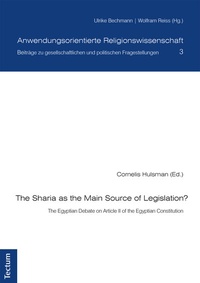
The Sharia as the Main Source of Legislation?
The Egyptian Debate on Article II of the Egyptian Constitution
1st Edition
Published on 29. January 2014
260 pages
978-3-8288-5842-8 (ISBN)
Description

As Egypt enters a new phase of transition with its first Islamist government, Christians and non-Islamist Muslims have become fearful of the implications of an Islamist government for the rule of law. Their major concern is the push for implementation of Islamic law through Article II of the Constitution. In Western countries this Article has caused an outcry against Islamists from those harboring little desire for dialogue and understanding. This book, wants to spark a more fruitful exchange by offering an unprecedented look into this debate among Muslims and Christians in Egypt. Providing statistical analysis, interviews, as well as contributions by many Egyptian officials it facilitates readers to develop an informed position on this matter.
More details
Other editions
Additional editions
Cornelis Hulsman
The Sharia as the Main Source of Legislation?
The Egyptian Debate on Article II of the Egyptian Constitution
Book
12/2012
1st Edition
Tectum Wissenschaftsverlag
€24.90
Article exhausted; check different version
Content
Preface
Introduction (Cornelis Hulsman)
1 Discussions on Article II of the Constitution in Egypt need a calm approach (Hani Labib)
2 Opinion poll on canceling or keeping Article II of the Egyptian Constitution (Fatma El-Zanaty and Muhammad al-Ghazali)
2.1 The objectives of the opinion poll
2.2 Organization of the Report
2.3 The Survey Methodology and Sample Design
2.4 Survey Coverage
2.5 Characteristics of the Sample
2.6 Opinions of Citizens about the Constitution
2.6.1 Knowledge about the Egyptian Constitution
2.6.2 Positions Regarding Participation in the Referendum on the Constitutional amendments of March 19
2.6.3 Opinion Trends Towards Constitutional Amendments on March 19
2.6.4 Trends Regarding Whether Priority Should be Given to Changing the Constitution first or first the People's Assembly Elections
2.7 Opinions of Citizens about Article II of the Constitution
2.7.1 Knowledge about Article II of the Constitution
2.7.2 Hearing about Proposed Amendments of Article II of the Constitution
2.7.3 Reasons Believed to be Behind Proposal of Amending Article II of the Constitution
2.8 Tendencies towards Article II of the Constitution
2.8.1 Tendency to Keep Article II of the Constitution
2.8.2 Tendency to Annul Article II of the Constitution
2.8.3 Tendency to Amend Article II of the Constitution
2.9 Conclusions Opinion Poll
2.9.1 Summary of the Most Important Results and Recommendations
3 Comparing Muslim and Christian responses in the El-Zanaty Survey (Jayson Casper)
4 Article II of the Constitution: Amendment for Time (Usamah Salamah)
5 Roundtable discussions about Article II: Clerics, Media, and Civil Society (Jayson Casper)
6 Example of misrepresentation of Article II in relation to Christians in Egypt (Cornelis Hulsman)
6.1 Introduction
6.2 Social Context; Secularism, Cultural Relativism and Differences in Development
6.3 The Place of Christians in Modern Egypt
6.4 Egyptian Curricula
6.5 Media
6.6 Arbitrary, Politically-motivated Application of the Law
6.7 Is the shari'ah Inherently Discriminatory towards non-Muslims?
6.8 Changes in social perceptions in society
6.9 Conclusion
7 Article II of the Egyptian Constitution; background and contrasting opinions (Patricia Prentice)
7.1 Introduction
7.2 Traditional Methods of Interpreting the shari'ah
7.3 Development towards Article II of the Constitution
7.4 How Article II is interpreted by the Supreme Constitutional Council
7.5 The contrasting opinions on Article II of the Constitution
7.6 Conclusion
8 Article II in the Debate about Constitutional Amendments in 2007 (Nushin Atmaca)
8.1 Introduction
8.2 Article II in the Discussion before the Constitutional Amendments
8.3 Article II and the Constitutional Amendments
8.3.1 Why Article II?
8.3.2 Groups and arguments
8.4 Conclusion
9 Nabil Ahmad Hilmi: A liberal scholar advocating amending Article II (Cornelis Hulsman)
9.1 Conflicting Cultures and the Overwhelming Islamist Majority
9.2 Liberals and secularists in past lawmaking
9.3 The Supreme Constitutional Court
9.4 Article II in the 1971 Constitution and the 1980 Amendment
9.5 Arguments about the relation between the shari'ah and the law
9.6 Comparisons to other countries
9.7 Arguments by opponents of Article II of the Constitution
9.8 Article II and its Impact on Copts
9.9 Response to Unfairly Blaming Article II
9.10 Conclusion
10 Article II and Freedom of Belief (Hani Labib)
10.1 History
10.2 The 2007 Constitutional Amendments
10.2.1 Article I and II
10.2.2 Examples of Sectarian Arguments around Article II
10.3 Conversions to Islam and Christianity
10.3.1 Rulings and Evidence
10.3.2 Constitutional provisions related to equality and freedom
10.3.3 Religious-change Law
10.4 Proposed Texts for Drafting Article II
10.5 Conclusion with proposed text for the amendment of Article II
About the Center for Intercultural Dialogue and Translation (CIDT)
About the Authors
Introduction (Cornelis Hulsman)
1 Discussions on Article II of the Constitution in Egypt need a calm approach (Hani Labib)
2 Opinion poll on canceling or keeping Article II of the Egyptian Constitution (Fatma El-Zanaty and Muhammad al-Ghazali)
2.1 The objectives of the opinion poll
2.2 Organization of the Report
2.3 The Survey Methodology and Sample Design
2.4 Survey Coverage
2.5 Characteristics of the Sample
2.6 Opinions of Citizens about the Constitution
2.6.1 Knowledge about the Egyptian Constitution
2.6.2 Positions Regarding Participation in the Referendum on the Constitutional amendments of March 19
2.6.3 Opinion Trends Towards Constitutional Amendments on March 19
2.6.4 Trends Regarding Whether Priority Should be Given to Changing the Constitution first or first the People's Assembly Elections
2.7 Opinions of Citizens about Article II of the Constitution
2.7.1 Knowledge about Article II of the Constitution
2.7.2 Hearing about Proposed Amendments of Article II of the Constitution
2.7.3 Reasons Believed to be Behind Proposal of Amending Article II of the Constitution
2.8 Tendencies towards Article II of the Constitution
2.8.1 Tendency to Keep Article II of the Constitution
2.8.2 Tendency to Annul Article II of the Constitution
2.8.3 Tendency to Amend Article II of the Constitution
2.9 Conclusions Opinion Poll
2.9.1 Summary of the Most Important Results and Recommendations
3 Comparing Muslim and Christian responses in the El-Zanaty Survey (Jayson Casper)
4 Article II of the Constitution: Amendment for Time (Usamah Salamah)
5 Roundtable discussions about Article II: Clerics, Media, and Civil Society (Jayson Casper)
6 Example of misrepresentation of Article II in relation to Christians in Egypt (Cornelis Hulsman)
6.1 Introduction
6.2 Social Context; Secularism, Cultural Relativism and Differences in Development
6.3 The Place of Christians in Modern Egypt
6.4 Egyptian Curricula
6.5 Media
6.6 Arbitrary, Politically-motivated Application of the Law
6.7 Is the shari'ah Inherently Discriminatory towards non-Muslims?
6.8 Changes in social perceptions in society
6.9 Conclusion
7 Article II of the Egyptian Constitution; background and contrasting opinions (Patricia Prentice)
7.1 Introduction
7.2 Traditional Methods of Interpreting the shari'ah
7.3 Development towards Article II of the Constitution
7.4 How Article II is interpreted by the Supreme Constitutional Council
7.5 The contrasting opinions on Article II of the Constitution
7.6 Conclusion
8 Article II in the Debate about Constitutional Amendments in 2007 (Nushin Atmaca)
8.1 Introduction
8.2 Article II in the Discussion before the Constitutional Amendments
8.3 Article II and the Constitutional Amendments
8.3.1 Why Article II?
8.3.2 Groups and arguments
8.4 Conclusion
9 Nabil Ahmad Hilmi: A liberal scholar advocating amending Article II (Cornelis Hulsman)
9.1 Conflicting Cultures and the Overwhelming Islamist Majority
9.2 Liberals and secularists in past lawmaking
9.3 The Supreme Constitutional Court
9.4 Article II in the 1971 Constitution and the 1980 Amendment
9.5 Arguments about the relation between the shari'ah and the law
9.6 Comparisons to other countries
9.7 Arguments by opponents of Article II of the Constitution
9.8 Article II and its Impact on Copts
9.9 Response to Unfairly Blaming Article II
9.10 Conclusion
10 Article II and Freedom of Belief (Hani Labib)
10.1 History
10.2 The 2007 Constitutional Amendments
10.2.1 Article I and II
10.2.2 Examples of Sectarian Arguments around Article II
10.3 Conversions to Islam and Christianity
10.3.1 Rulings and Evidence
10.3.2 Constitutional provisions related to equality and freedom
10.3.3 Religious-change Law
10.4 Proposed Texts for Drafting Article II
10.5 Conclusion with proposed text for the amendment of Article II
About the Center for Intercultural Dialogue and Translation (CIDT)
About the Authors
