

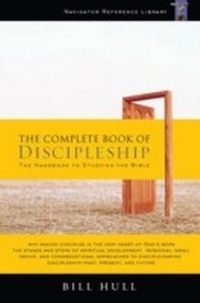
The Complete Book of Discipleship
On Being and Making Followers of Christ
1st Edition
Published on 27. February 2014
352 pages
978-1-61521-490-7 (ISBN)
Description

Well organized and readily accessible, The Complete Book of Discipleship pulls together into one convenient, comprehensive volume relevant topics to discipleship such as:
- Spiritual growth
- Transformation
- Spiritual disciplines
- Discipleship in the local church and beyond
Indexed for easy reference.
More details
Other editions
Additional editions
Book
11/2006
NavPress
€20.50
Shipment within 3-4 weeks
Person
Bill Hull is a writer and discipleship evangelist calling the church to choose the life to which Jesus called every disciple. He has written many books on this subject and spent twenty years working it out as a pastor. Bill is a graduate of Oral Roberts University and Talbot School of Theology, and co-founder of the Bonhoeffer Project.
Content
- Intro
- Title Page
- Copyright Page
- Contents
- Introduction
- The Merger
- Classic Discipleship
- Spiritual Formation
- Environmental Discipleship
- A New Monasticism: Nothing Like the Old
- Chapter 1: Biblical Foundations of Discipleship
- Discipleship: God's Very Best for His People
- Discipleship: God's Primary Work
- Jesus Said So
- God Gave His All to This Mission
- A Transformed Person Can Change the World
- A Company of the Committed
- Learning to Obey
- Defining Terms
- Disciple
- Disciple-Making
- Discipleship
- Spiritual Formation
- What Discipleship Is Not
- Not a Program
- Not a Production Line
- Not Just for Beginners
- Not Just for Leaders
- Not Just for the Highly Literate
- Not Just for People Who Like Structure
- The Creation of a Non-Discipleship Christianity
- Does Non-Discipleship Christianity Make Disciples?
- Exploring a Faith That Embraces Discipleship
- The Great Cloud of Witnesses
- Characteristics of a Faith That Embraces Discipleship
- The Kind of Person the Gospel Can Create
- Personal Characteristics of Disciples
- Personal Competencies of Disciples
- Chapter 2: Origins of Discipleship
- Pre-Christian Examples of Discipleship
- The Greco-Roman World
- The Semitic World of the Hebrews
- The Prophets
- Wise Men and Scribes
- Discipleship during the Time of Christ
- The Pharisees
- Disciples of John the Baptist
- The Separatist Disciples
- The Zealots
- Characteristics of the Rabbinical Tradition
- First-Century Discipleship
- The Uniqueness of Jesus' Discipleship
- Unique in Whom He Chose
- Uniquely Based on Friendship and Common Respect
- Unique Because It Redefined Disciple
- Unique in How We Should Apply It Now
- Is This Kind of Discipleship Common Today?
- A Disciple Submits to a Teacher
- A Disciple Finds and Teaches Other Disciples
- Chapter 3: The Story of Discipleship
- Bishops as Spiritual Guides
- Clement of Rome
- Ignatius of Antioch: The Bishop of Bishops
- Polycarp of Smyrna
- When We Were All Catholics
- Monks and Mavericks
- Characteristics of Monks
- God in the Ordinary: Benedict and the Benedictines
- Live Like Christ and Love the Poor: Francis of Assisi and the Franciscans
- Intellectual Life: Dominic and the Dominicans
- The Middle Years
- The Eucharist
- Community Worship
- Art
- The Reformation: New Life
- Courage: Martin Luther
- Spiritual Basics: John Calvin
- Personal Devotions for Every Person: Thomas Cranmer
- Disciplines of the Inner Life: Philip Jacob Spener
- Community: Count Nicholas Ludwig von Zinzendorf
- Discipleship Done Right: John Wesley
- A Gospel That Embraces Discipleship: Dietrich Bonhoeffer
- Chapter 4: The Distinguishing Marks of a Disciple
- The Imitation of Christ
- "Imitate Me"
- Why Imitate Christ?
- The Call to Discipleship
- The Urge to Follow Jesus
- The Call to the Life
- Anyone Can and Should
- Self-Denial Is Essential
- Take Up Your Mission
- The Torment of the Daily
- The Six-Fold Definition of Being Conformed to Christ's Image
- 1. Transformed Mind: Believe What Jesus Believed
- 2. Transformed Character: Live the Way Jesus Lived
- 3. Transformed Relationships: Love as Jesus Loved
- 4. Transformed Habits: Train as Jesus Trained
- 5. Transformed Service: Minister as Jesus Ministered
- 6. Transformed Influence: Lead the Way Jesus Led
- Chapter 5: The Disciple-Making Environment: What Makes Things Grow
- How Environment Affects Growth
- Too Close and Too Demanding: The Parable of the Turtle
- Necessary Ingredients for a Healthy Environment
- Trust
- Grace
- Humility
- Submission
- Affirmation
- Chapter 6: The Stages of Discipleship
- Maturity: A Community Project
- Phases, Stages, and Steps of Spiritual Development
- Eight Steps for Training Disciples
- The Diamond of Discipleship
- Sequential and Segmented
- Jesus' Model for Developing Followers
- Come and See
- Come and Follow Me
- Come and Be with Me
- Remain in Me
- Chapter 7: Christian Spiritual Transformation
- The Transformational Triangle
- Community
- The Holy Spirit and Scripture
- Training and Pattern of Life
- Events and Circumstances
- Mission
- The Whole Triangle
- The Role of Spiritual Disciplines in Transformation
- Why Practice Spiritual Disciplines?
- Principle 1: Training Leads to Godliness
- Principle 2: Practice Creates the Trained State
- Principle 3: Perseverance Makes Transformation a Reality
- Chapter 8: Personal Approaches to Disciple-Making
- The Personal Dimension
- Coaching: Skills and Task
- A Coaching Primer
- The Coach's Function
- The Ten Commandments of Coaching
- Mentoring: Becoming a Person
- Mentored to Be a New Person in Christ
- Mentored By God's Word
- Mentored for Worship in Community
- Spiritual Direction: Specific Soul Care
- Characteristics of a Spiritual Director
- Distinctives of Spiritual Direction
- Choosing a Spiritual Director
- Chapter 9: The Role of Small Groups in Discipleship
- Principles for Starting Groups
- Establish a Beachhead
- Orientation
- The Prototype
- Customize the Group
- Types of Small Groups
- Covenant Groups
- Support Groups
- Basic Accountability Groups
- Ongoing Accountability Groups
- Open and Closed Groups
- Basic Principles for Every Group
- Be Intentional
- Provide Structure
- Strive for Intimacy
- Insist on Outreach
- Commit to Reproduce
- Personal Preparation for Starting Groups
- Various Start-Up Methods
- Develop a Master Group
- Use the Quick-Start Approach
- Inspire and Hand Out Materials
- Communicate the Reason for Small-Group Ministry
- A Sample Approach
- Selecting Leaders
- Character
- Suitability
- Availability
- Faithfulness
- Training Leaders
- Establish a Covenant Relationship
- Hold Regular Leader Meetings
- Hold One-on-One Meetings
- Encourage Playtime
- Provide Continuing Education
- Management of Commitments
- Establish Accountability and Support
- Set a Structure
- Work Out Problems
- Chapter 10: Congregations, Pastors, and Discipleship
- Is Bigger Better?
- Quality over Quantity
- How Local Congregations Differ from Other Ministries
- Church Is Ordinary
- Church Is a Product of the Consumer Culture
- Different Levels of Spiritual Maturity
- The Seeker
- The Starter
- The Struggler
- The Stagnant
- The Stable
- Training and Organizing the Congregation
- Start at the Beginning
- Realize That Some Will Always Be Spectators
- Use a Development System
- Use Careful Management
- Advice to Church Leaders
- Give Up the Gods
- Develop Your Inner Life
- Give Yourself to the Principle of Discipleship
- Give Yourself to Others
- Chapter 11: Spiritual Generations
- The Responsibility to Reproduce: A Sacred Trust
- Needed: Both a Paul and a Timothy
- Reproduction Requires Intentional Repeated Action
- The Qualities of Reproduction and Multiplication
- Proper Selection of Personnel
- Several Passes on the Sacred Deposit
- Passing on to the Right People
- Imitation, Not Impersonation
- What Can Be Passed On
- Chapter 12: The Future of Discipleship: Living the Jesus Way
- A Challenge and a Worry
- The Right Thing in the Wrong Way
- Two Philosophies
- The Jesus Way or the Consumer Way?
- 1. Competence before Prayer
- 2. Individualism Instead of Congregation
- 3. Impatience Rather Than Endurance
- 4. Celebrity over Humility
- Choosing the Jesus Way
- Appendix A: Five Models of Effective Discipleship
- The Competencies Model: Pantego Bible Church, Dallas
- The Missional Model: Fellowship Bible Church of Little Rock, Arkansas
- The Neighborhood Model: Perimeter Church, Atlanta
- The Worldview Model: Fellowship Bible Church North, Plano, Texas
- The Lecture-Lab Model: North Coast Church, Vista, California
- A "Best of " Model
- Appendix B: Research for Evaluating Congregations
- Why Congregations Do Poorly
- What Makes Churches Effective at Disciple-Making
- Notes
- Index
- Author
