

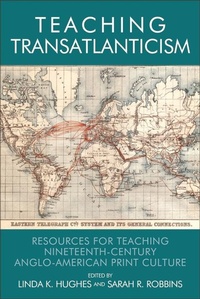
Teaching Transatlanticism
Description

An essential resource for teaching 19th-century print culture in Transatlantic Studies
The 18 chapters in this book outline conceptual approaches to the field and provide practical resources for teaching, ranging from ideas for individual class sessions to full syllabi and curricular frameworks.
The book is divided into 5 key sections: Curricular Histories and Key Trends; Organising Curriculum through Transatlantic Lenses; Teaching Transatlantic Figures; Teaching Genres in Transatlantic Context; and Envisioning Digital Transatlanticism. Individual chapters from experts in the field range from reconceptualising entire courses to revisiting individual texts, authors, and genres through a transatlantic lens. Weaving in strategies from innovative teaching shaped by the digital humanities, the collection also looks ahead to the future of this growing field.
A dedicated Teaching Transatlanticism website accompanies the book.
Key Features:
- Provides readers with help about the conceptual and practical issues
- Classroom accounts address multiple genres, issues and media
- Reflections on real-world teaching contexts are blended with scholarly analysis of key issues in the field today
- The specially designed project website supports the book and invites continued conversations through a moderated discussion space and submission venue for readers'' own teaching materials
More details
Other editions
Additional editions
Content
- Intro
- Title Page
- Copyright
- Contents
- Acknowledgements
- Note on Companion Website
- Notes on Contributors
- 1. Introduction: Tracing Currents and Joining Conversations
- PART I Curricular Histories and Key Trends
- 2. On Not Knowing Any Better
- 3. Transatlantic Networks in the Nineteenth Century
- 4. Rewriting the Atlantic: Symbiosis, 1997-2014
- PART II Organising Curriculum Through Transatlantic Lenses
- 5. Anthologising and Teaching Transatlantic Romanticism
- 6. 'Flat Burglary'? A Course on Race, Appropriation, and Transatlantic Print Culture
- 7. Dramatising the Black Atlantic: Live Action Projects in Classrooms
- PART III Teaching Transatlantic Figures
- 8. The Canadian Transatlantic: Susanna Moodie and Pauline Johnson
- 9. Frederick Douglass, Maria Weston Chapman, and Harriet Martineau: Atlantic Abolitionist Networks and Transatlanticism's Binaries
- 10. 'How did you get here? and where are you going?': Transatlantic Literary History, Exile, and Textual Traces in Herman Melville's Israel Potter
- 11. Americans, Abroad: Reading Portrait of a Lady in a Transatlantic Context
- PART IV Teaching Genres in Transatlantic Context
- 12. Making Anglo-American Oratory Resonate
- 13. Genre and Nationality in Nineteenth-Century British and American Poetry
- 14. Teaching 'Transatlantic Sensations'
- 15. Prophecy, Poetry, and Democracy: Teaching Through the International Lens of the Fortnightly Review
- PART V Envisioning Digital Transatlanticism
- 16. Transatlantic Mediations:Teaching Victorian Poetry in theNew Print Media
- 17. Digital Transatlanticism: An Experience of and Reflections on Undergraduate Research in the Humanities
- 18. Twenty-First-Century Digital Publics and Nineteenth-Century Transatlantic Public Spheres
- PART VI Afterword
- 19. Looking Forward
- Index
