

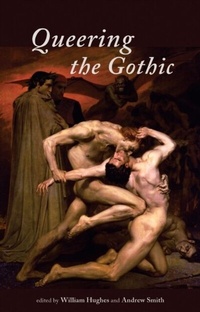
Queering the Gothic
1st Edition
Published on 1. June 2017
208 pages
978-1-5261-2545-3 (ISBN)
Description

Queering the Gothic is the first multi-authored book concerned with the developing interface between Gothic criticism and queer theory. Considering a range of Gothic texts produced between the eighteenth century and the present, the contributors explore the relationship between reading Gothically and reading Queerly, making this collection both an important reassessment of the Gothic tradition and a significant contribution to scholarship on queer theory.
Writers discussed include William Beckford, Matthew Lewis, Mary Shelley, George Eliot, George Du Maurier, Oscar Wilde, Eric, Count Stenbock. E. M. Forster, Antonia White, Melanie Tem, Poppy Z. Brite, and Will Self. There is also exploration of non-text media including an analysis of Michael Jackson's pop videos. Arranged chronologically, the book establishes links between texts and periods and examines how conjunctions of 'queer', 'gay', and 'lesbian' can be related to, and are challenged by, a Gothic tradition. All of the chapters were specially commissioned for the collection, and the contributors are drawn from the forefront of academic work in both Gothic and Queer Studies. -- .
Writers discussed include William Beckford, Matthew Lewis, Mary Shelley, George Eliot, George Du Maurier, Oscar Wilde, Eric, Count Stenbock. E. M. Forster, Antonia White, Melanie Tem, Poppy Z. Brite, and Will Self. There is also exploration of non-text media including an analysis of Michael Jackson's pop videos. Arranged chronologically, the book establishes links between texts and periods and examines how conjunctions of 'queer', 'gay', and 'lesbian' can be related to, and are challenged by, a Gothic tradition. All of the chapters were specially commissioned for the collection, and the contributors are drawn from the forefront of academic work in both Gothic and Queer Studies. -- .
All prices
More details
Language
English
Place of publication
Manchester
United Kingdom
Edition type
Digital original
Illustrations
Halftones, black & white
Halftones, black & white
ISBN-13
978-1-5261-2545-3 (9781526125453)
Copyright in bibliographic data and cover images is held by Nielsen Book Services Limited or by the publishers or by their respective licensors: all rights reserved.
Schweitzer Classification
Other editions
Additional editions
William Hughes | Andrew Smith
Queering the Gothic
Book
09/2011
Manchester University Press
€27.30
Shipment within 15-20 days
William Hughes | Andrew Smith
Queering the Gothic
Book
06/2009
Manchester University Press
€134.60
Shipment within 15-20 days
Persons
William Hughes is Professor of Gothic Studies at Bath Spa University. Andrew Smith is Professor of English Studies at the University of Glamorgan where he is Co-Director of the Research Centre for Literature, Arts and Science (RCLAS) -- .
Content
Acknowledgements
Introduction: Queering the Gothic - William Hughes and Andrew Smith
1. 'Love in a Convent': Or, Gothic and the Perverse Father of Queer Enjoyment - Dale Townshend
2. 'Do You Share My Madness?': Frankenstein's Queer Gothic - Mair Rigby
3. Daniel Deronda's Jewish Panic - Royce Mahawatte
4. 'That mighty love which maddens one to crime': Medicine Masculinity, Same-Sex Desire and the Gothic in Teleny - Diane Mason
5. Gothic Landscapes, Imperial Collapse, and the Queering of Adela Quested in E. M. Forster's A Passage to India - Ardel Thomas
6. Antonia White's Frost in May: Gothic Mansions, Ghosts and Particular Friendships - Paulina Palmer
7. Devouring Desires: Lesbian Gothic Horror - Gina Wisker
8. 'The taste of blood meant the end of aloneness'.Vampires and Gay Men in Poppy Z. Brite's Lost Souls - William Hughes
9. Michael Jackson's Queer Funk - Steven Bruhm
10. Death, Art, and Bodies: Queering the Queer Gothic in Will Self's Dorian - Andrew Smith
Notes on Contributors
Index -- .
Introduction: Queering the Gothic - William Hughes and Andrew Smith
1. 'Love in a Convent': Or, Gothic and the Perverse Father of Queer Enjoyment - Dale Townshend
2. 'Do You Share My Madness?': Frankenstein's Queer Gothic - Mair Rigby
3. Daniel Deronda's Jewish Panic - Royce Mahawatte
4. 'That mighty love which maddens one to crime': Medicine Masculinity, Same-Sex Desire and the Gothic in Teleny - Diane Mason
5. Gothic Landscapes, Imperial Collapse, and the Queering of Adela Quested in E. M. Forster's A Passage to India - Ardel Thomas
6. Antonia White's Frost in May: Gothic Mansions, Ghosts and Particular Friendships - Paulina Palmer
7. Devouring Desires: Lesbian Gothic Horror - Gina Wisker
8. 'The taste of blood meant the end of aloneness'.Vampires and Gay Men in Poppy Z. Brite's Lost Souls - William Hughes
9. Michael Jackson's Queer Funk - Steven Bruhm
10. Death, Art, and Bodies: Queering the Queer Gothic in Will Self's Dorian - Andrew Smith
Notes on Contributors
Index -- .
