

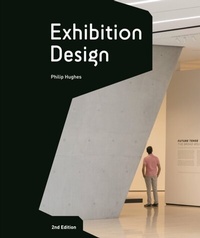
Exhibition Design Second Edition
An Introduction
1st Edition
Published on 20. August 2015
337 pages
978-1-78067-801-6 (ISBN)
Description

Exhibition Design describes the skills needed to become an exhibition designer, including: developing a brief and working with clients; design principles for graphics, circulation, lighting, and accessibility; presenting ideas to clients; and the practicalities of production.
A wealth of visual material includes photographs of completed exhibitions by world-renowned designers, concept drawings, computer renderings, charts and tables of information - all for a wide range of exhibitions around the world, permanent and temporary, including museums and galleries, visitor centres, brand experiences, festivals, and trade fairs.
This second edition includes new examples, updated information on the latest digital technology, and expanded coverage of interactives and sound and film.
A wealth of visual material includes photographs of completed exhibitions by world-renowned designers, concept drawings, computer renderings, charts and tables of information - all for a wide range of exhibitions around the world, permanent and temporary, including museums and galleries, visitor centres, brand experiences, festivals, and trade fairs.
This second edition includes new examples, updated information on the latest digital technology, and expanded coverage of interactives and sound and film.
More details
Other editions
Additional editions
Book
08/2015
Laurence King Publishing
€57.14
Article exhausted; check different version
Person
Philip Hughes
Content
- Intro
- Title Page
- Contents
- Copyright
- Introduction
- Who this book is for
- The modern exhibition
- The history of exhibition design
- Recent developments
- The role of the exhibition designer
- How to use this book
- 1. The brief
- How specific should a brief be?
- What kind of language should a brief use?
- Strategy
- Content and assets
- Audience
- Time and money
- 2. The visitor
- Engaging the visitor
- Layering for diverse audiences
- Learning styles
- Branding
- The brand environment
- Teenagers and Museums
- Designing for disability/accessibility
- 3. The site
- The permanent exhibition site
- Signposting the exhibition site
- Signposting trade fairs
- "Open" exhibition spaces
- "Closed" exhibition spaces
- Internal organization: architecture
- Internal organization: content
- How to survey a site
- 4. Exhibition strategy
- What is an exhibition strategy?
- Classifying the exhibits
- Devising a path
- The importance of experiences
- 5. 3-D design skills
- Generating guiding ideas
- Evolving a design
- Developing the design using sketches, models and plans
- Planning the circulation
- Developing elevations
- The direction of flow
- 6. Graphic design skills
- The role of graphics in an exhibition
- Approaches to exhibition graphics
- Designing for legibility
- Designing for readability
- Reproducing graphics
- 7. Lighting
- How lighting is used in exhibitions
- The human eye
- Surveying the site
- The lighting plan
- Exhibit-focused lighting
- Environmental lighting
- Feature lighting
- Coloured lighting
- Lighting for comfort
- Conservation
- Lighting specifications
- Trade fairs
- Professional practice
- 8. Interactives
- Interactive media
- The visitor experience
- Technology
- What kind of interactive?
- What makes a successful interactive?
- Writing an interactive brief
- Other considerations
- 9. Sound and film
- The benefits of sound and film
- The pitfalls of sound and film
- Types of linear media in exhibitions
- Writing an audiovisual brief
- Acoustic considerations
- How to ensure quality media experiences
- Limiting factors
- 10. Materials
- Choosing materials
- Deciding on suitable materials
- 11. Portable exhibitions
- Flexible designs
- 12. Technical drawing
- The purpose of technical drawings
- Labels, details and notes
- Official approvals
- Tenders
- Amending drawings
- 13. Construction and delivery
- Construction
- Trade fairs
- The green agenda
- The designer's responsibilities
- Trade practices
- Children's exhibits
- Project management
- Ancillary services
- Handover
- 14. Conclusion
- An evolving discipline
- Green design
- The future
- Accessibility guidelines
- Smithsonian guidelines for accessible exhibition design
- Sample storyline
- Glossary
- Further reading
- useful websites
- Index
- Picture credits
- Acknowledgements
