

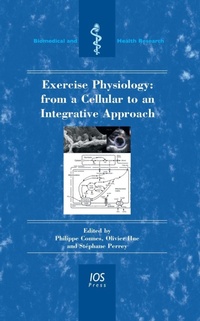
Exercise Physiology: from a Cellular to an Integrative Approach
1st Edition
Published on 15. June 2010
692 pages
978-1-60750-497-9 (ISBN)
Description

There is no doubt that if the field of exercise physiology is to make further advancements, the various specialized areas must work together in solving the unique and difficult problems of understanding how exercise is initiated, maintained and regulated at many functional levels, and what causes us to quit. Exercise is perhaps the most complex of physiological functions, requiring the coordinated, integrated activation of essentially every cell, tissue and organ in the body. Such activation is known to take place at all levels - from molecular to systemic. Focusing on important issues addressed at cellular and systemic levels, this handbook presents state-of-the-art research in the field of exercise physiology. Each chapter serves as a comprehensive resource that will stimulate and challenge discussion in advanced students, researchers, physiologists, medical doctors and practitioners. Authored by respected exercise physiologists from nineteen countries, each chapter has been significantly updated to provide up-to-date coverage of the topics and to offer complete descriptions of the many facets of the most physiological responses from a cellular to an integrative approach within individual body systems in normal and disease states and includes some chapters that are rarely addressed in exercise physiology books, such as the influence of exercise on endothelium, vasomotor control mechanisms, coagulation, immune function and rheological properties of blood, and their influence on hemodynamics. This book represents the first iteration to provide such a work. Normal exercise responses divided into muscle function, bioenergetics, and respiratory, cardiac and blood/vascular function; Fitness, training, exercise testing and limits to exercise; Exercise responses in different environments; Beneficial effects of exercise rehabilitation on ageing and in the prevention and treatment of disease states; Rarely addressed issues such as the influence of exercise on endothelium, vasomotor control mechanisms, coagulation, immune function and rheological properties of blood and their influence on hemodynamics.
More details
Series
Language
English
Place of publication
London
Netherlands
Publishing group
IOS Press
Target group
Professional and scholarly
File size
17,54 MB
ISBN-13
978-1-60750-497-9 (9781607504979)
Copyright in bibliographic data and cover images is held by Nielsen Book Services Limited or by the publishers or by their respective licensors: all rights reserved.
Schweitzer Classification
Other editions
Additional editions
Olivier Hue | Stephane Perrey
Exercise Physiology: from a Cellular to an Integrative Approach
Book
06/2010
1st Edition
IOS Press,US
€202.38
Article exhausted; check different version
Content
- Title page
- Foreword (1)
- Foreword (2)
- Preface
- Acknowledgements
- Contents
- Section 1. Muscle Function and Bioenergetics
- Muscle Contraction and Supplying ATP to Muscle Cells
- Hormonal and Cellular Control of Bioenergetics
- Skeletal Muscle Fatigue
- A Non Invasive Investigation of Training-Induced Metabolic Changes
- Section 2. Respiratory Function and Activity
- Lungs (Anatomy) and Mechanics of Ventilation
- Control of Breathing: Regulation of Exercise Hypernea
- Pulmonary Diffusion, Ventilation-Perfusion Ratio and Arterial Oxygen Homeostasis
- Section 3. Cardiac Function and Activity
- Heart Anatomy, Mechanisms of Contraction, and Cardiac Function During Exercise
- Electrocardiogram
- Cardiac Performance and Hemodynamics
- Heart Rate Variability
- Section 4. Blood Flow Dynamics, Blood Circulation and Vascular Function
- Characteristics of Blood Vessels
- Control of Skeletal Muscle Microcirculation in Exercise
- Blood Rheology and Exercise
- Endothelial Function and Physical Activity
- Exercise, Oxidative Stress, and Inflammation
- Blood Hemostasis in Exercise and Training
- Section 5. Aerobic Fitness: Indices, Limiting Factors and Effect of Training
- Time Course of Oxygen Uptake at Exercise
- Ventilatory Thresholds, Lactic Thresholds and Maximal Lactate Steady State Concept
- Oxygen Uptake Efficiency Slope
- Energetic Cost of Exercise
- Substrate Oxidation
- Section 6. Anaerobic Fitness: Indices, Limiting Factors and Effects of Training
- Anaerobic Power and Capacity
- Accumulated Oxygen Deficit Issues
- Repeated Sprint Ability
- Section 7. Environmental Physiology
- Exercise in Hot and Cold Environments
- Altitude, Hypoxia and Exercise
- Apnea Diving
- Section 8. Exercise Sudden-Death in Apparently Healthy Subjects
- Sudden Cardiac Death Related to Physical Exercise
- A Contemporary Understanding of the Exercise-Related Heat Illnesses
- Exercise Associated Hyponatremia
- The Case of Sickle Cell Trait Carriers
- Section 9. Diseases: Exercise Testing and Training Prescription
- Exercise Therapy for Obesity and Type 2 Diabetes
- Coronary Artery Disease
- Cardiopulmonary Exercise Testing in Patients with Heart Failure
- Hypertension and Exercise
- Role of Regular Exercise in the Management of Asthma
- New Insights on Chronic Obstructive Pulmonary Disease Exercise Physiopathology
- Sickle Cell Anemia
- Human Immunodeficiency Virus
- Cancer
- Ageing
- Note on the Editors
- Author Index
