

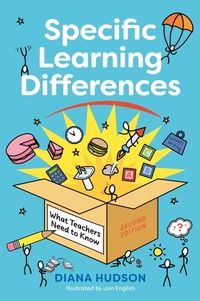
Specific Learning Differences, What Teachers Need to Know (Second Edition)
Embracing Neurodiversity in the Classroom
Published on 18. April 2024
272 pages
978-1-83997-709-1 (ISBN)
Description

Winner of the 2024 Teach Secondary Award for SEND resources
The updated, straight-talking and accessible guide is ideal for teachers, teaching assistants, SENCOs, senior leadership and even home schooling parents who want to know more about supporting students with Learning Differences.
Highlighting some of the more commonly encountered Specific Learning Differences (SpLD's), expert Diana Hudson concisely describes the signs of those that are most commonly encountered in the classroom. Covering: dyslexia, dyspraxia, dyscalculia, dysgraphia, autism spectrum condition, ADHD, OCD and featuring brand new chapters on Pathological Demand Avoidance (PDA), Sensory Processing Disorder (SPD) and tics and Tourette Syndrome, this book covers all the information you need, whilst reminding us that all neurodivergent children are individuals and have different qualities.
Diana provides an overview of each identity and evaluates how you may need to adapt your levels of support in the classroom - as well as practical suggestions for modifying teaching materials and methods to make learning enjoyable, effective and accessible for all students. There are also dedicated chapters on helping students with SpLD's to improve their organisation and develop effective revision skills and exam techniques.
The updated, straight-talking and accessible guide is ideal for teachers, teaching assistants, SENCOs, senior leadership and even home schooling parents who want to know more about supporting students with Learning Differences.
Highlighting some of the more commonly encountered Specific Learning Differences (SpLD's), expert Diana Hudson concisely describes the signs of those that are most commonly encountered in the classroom. Covering: dyslexia, dyspraxia, dyscalculia, dysgraphia, autism spectrum condition, ADHD, OCD and featuring brand new chapters on Pathological Demand Avoidance (PDA), Sensory Processing Disorder (SPD) and tics and Tourette Syndrome, this book covers all the information you need, whilst reminding us that all neurodivergent children are individuals and have different qualities.
Diana provides an overview of each identity and evaluates how you may need to adapt your levels of support in the classroom - as well as practical suggestions for modifying teaching materials and methods to make learning enjoyable, effective and accessible for all students. There are also dedicated chapters on helping students with SpLD's to improve their organisation and develop effective revision skills and exam techniques.
More details
Edition
Digital original
Language
English
Place of publication
London
United Kingdom
Target group
Professional and scholarly
Edition type
Illustrated edition
Illustrations
B&W Illustrations
File size
2,95 MB
ISBN-13
978-1-83997-709-1 (9781839977091)
Copyright in bibliographic data and cover images is held by Nielsen Book Services Limited or by the publishers or by their respective licensors: all rights reserved.
Schweitzer Classification
Other editions
Additional editions
Diana Hudson
Specific Learning Differences, What Teachers Need to Know (Second Edition)
Embracing Neurodiversity in the Classroom
Book
04/2024
Jessica Kingsley Publishers
€22.50
Shipment within 3-4 weeks
Person
Diana Hudson has taught science in secondary schools for over 35 years. Combining her enthusiasm for teaching science to children who think differently and her training in teaching students with Specific Learning Differences, she has become both a Head of Biology and a SENCO at different times in her career. She has written articles for journals including the SEN magazine and Education in Chemistry and is the author of Specific Learning Difficulties, What Teachers Need to Know, published in 2015 and Exploring Science with Dyslexic Children and Teens published in 2021 by Jessica Kingsley Publishers.
Content
- Intro
- Specific Learning Differences - What Teachers Need to Know
- Cover
- Of related interest
- Title Page
- Copyright
- Contents
- Acknowledgements
- Introduction To The Second Edition
- 1. Brains That Work a Little Differently: Introducing Specific Learning Differences
- 2. Dyslexia
- 3. Dyscalculia
- 4. Dysgraphia
- 5. Dyspraxia/Developmental Coordination Disorder (DCD)
- 6. Attention Deficit Hyperactivity Disorder (ADHD)
- 7. Autism Spectrum Disorder (ASD)
- 8. Pathological Demand Avoidance (PDA)
- 9. Sensory Processing Disorder (SPD)
- 10. Obsessive Compulsive Disorder (OCD)
- 11. Tics and Tourette Syndrome
- 12. Organisational Skills
- 13. Exams and Revision
- 14. A Final Word
- Glossary
- Appendix 1: Summary table of most common areas of difficulty
- Appendix 2: Comparison of PDA and ODD
- Appendix 3: Downloadable quick teacher checklists of indicators of the most common learning differen
- Appendix 4: References, websites and support organisations
- Index
