

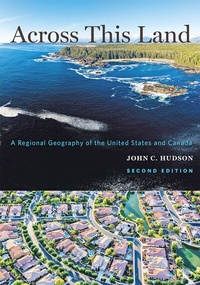
Across This Land
A Regional Geography of the United States and Canada
2nd Edition
Published on 7. April 2020
520 pages
978-1-4214-3759-0 (ISBN)
Description

A fascinating overview of the lands and peoples of the United States and Canada, both past and present.
Based on decades of research and written in clear, concise prose by one of the foremost geographers in North America, John C. Hudson's Across This Land is a comprehensive regional geography of the North American continent. Dividing the terrain into ten regions, which are then subdivided into twenty-seven smaller areas, Hudson's brisk narrative reveals the dynamic processes of each area's distinctive place-specific characteristics. Focusing on how human activities have shaped and have been shaped by the natural environment, Hudson considers physical, political, and historical geography. He also highlights related topics, including resource exploitation, economic development, and population change.
Praised in its first edition as a readable and reliable interpretation of United States and Canadian geography, the revised Across This Land retains these strengths while adding substantial new material. Incorporating the latest available population and economic data, this thoroughly updated edition includes
reflections on new developments, such as resource schemes, Native governments in Atlantic Canada, and the role of climate change in the Arctic
a new section focused on the US Pacific insular territories west of Hawaii
evolving views of oil and gas production resulting from the introduction of hydraulic fracturing
revised text and maps involving agricultural production based on the 2017 Census of Agriculture
current place names
more than 130 photographs
The most extensive regional geography of the North American continent on the market, Hudson's Across This Land will continue as the standard text in geography courses dealing with Canada and the United States, as well as a popular reference work for scholars, students, and lay readers.
Based on decades of research and written in clear, concise prose by one of the foremost geographers in North America, John C. Hudson's Across This Land is a comprehensive regional geography of the North American continent. Dividing the terrain into ten regions, which are then subdivided into twenty-seven smaller areas, Hudson's brisk narrative reveals the dynamic processes of each area's distinctive place-specific characteristics. Focusing on how human activities have shaped and have been shaped by the natural environment, Hudson considers physical, political, and historical geography. He also highlights related topics, including resource exploitation, economic development, and population change.
Praised in its first edition as a readable and reliable interpretation of United States and Canadian geography, the revised Across This Land retains these strengths while adding substantial new material. Incorporating the latest available population and economic data, this thoroughly updated edition includes
reflections on new developments, such as resource schemes, Native governments in Atlantic Canada, and the role of climate change in the Arctic
a new section focused on the US Pacific insular territories west of Hawaii
evolving views of oil and gas production resulting from the introduction of hydraulic fracturing
revised text and maps involving agricultural production based on the 2017 Census of Agriculture
current place names
more than 130 photographs
The most extensive regional geography of the North American continent on the market, Hudson's Across This Land will continue as the standard text in geography courses dealing with Canada and the United States, as well as a popular reference work for scholars, students, and lay readers.
More details
Series
Edition
second edition
Language
English
Place of publication
Baltimore
United States
Target group
College/higher education
Edition type
Revised edition
Illustrations
60 Karten, 132 s/w Abbildungen
60 Maps; 132 Illustrations, black and white
File size
170,26 MB
ISBN-13
978-1-4214-3759-0 (9781421437590)
DOI
10.56021/9781421437590
Copyright in bibliographic data and cover images is held by Nielsen Book Services Limited or by the publishers or by their respective licensors: all rights reserved.
Schweitzer Classification
Other editions
Additional editions
Book
04/2020
2nd Edition
Johns Hopkins University Press
€70.50
Shipment within 10-20 days

Book
04/2002
Johns Hopkins University Press
€65.88
Article exhausted; check for reprint
Person
John C. Hudson is a professor of geography and the director of the Program in Geography at Northwestern University. He is the coauthor of American Farms, American Food: A Geography of Agriculture and Food Production in the United States.
Content
List of Maps
Preface
References
PART I. Atlantic Canada and Quebec
Chapter 1. Newfoundland and Labrador
Chapter 2. Quebec
Chapter 3. The Maritimes
PART II. The Northeast
Chapter 4. New England
Chapter 5. New York and Ontario
Chapter 6. The Middle Atlantic
PART III. The Upland South
Chapter 7. The Southern Appalachians
Chapter 8. The Interior Low Plateaus
Chapter 9. The Ozarks and the Ouachitas
PART IV. The Lowland South
Chapter 10. The Southeastern Piedmont and the Coastal Plain
Chapter 11. The Florida Peninsula
Chapter 12. The Gulf Coastal Plain and the Alluvial Mississippi Valley
PART V. The Middle West
Chapter 13. The Corn Belt
Chapter 14. The Lower Great Lakes
PART VI. The Central Plains
Chapter 15. Prairie Wheat Lands
Chapter 16. Texas and the Southern Plains
PART VII. The Western Plains and the Rocky Mountains
Chapter 17. The Southern Rocky Mountains and the High Plains
Chapter 18. The Missouri Plateau
PART VIII. The Intermountain West
Chapter 19. The Northern Rocky Mountains and the Columbia-Snake Plateau
Chapter 20. The Great Basin
Chapter 21. The Colorado Plateau and the Desert Southwest
PART IX. The North
Chapter 22. The Upper Great Lakes
Chapter 23. The Canadian Shield
Chapter 24. The Far North
PART X. The Pacific Realm
Chapter 25. The Pacific Northwest
Chapter 26. California
Chapter 27. Hawaii
Index
Preface
References
PART I. Atlantic Canada and Quebec
Chapter 1. Newfoundland and Labrador
Chapter 2. Quebec
Chapter 3. The Maritimes
PART II. The Northeast
Chapter 4. New England
Chapter 5. New York and Ontario
Chapter 6. The Middle Atlantic
PART III. The Upland South
Chapter 7. The Southern Appalachians
Chapter 8. The Interior Low Plateaus
Chapter 9. The Ozarks and the Ouachitas
PART IV. The Lowland South
Chapter 10. The Southeastern Piedmont and the Coastal Plain
Chapter 11. The Florida Peninsula
Chapter 12. The Gulf Coastal Plain and the Alluvial Mississippi Valley
PART V. The Middle West
Chapter 13. The Corn Belt
Chapter 14. The Lower Great Lakes
PART VI. The Central Plains
Chapter 15. Prairie Wheat Lands
Chapter 16. Texas and the Southern Plains
PART VII. The Western Plains and the Rocky Mountains
Chapter 17. The Southern Rocky Mountains and the High Plains
Chapter 18. The Missouri Plateau
PART VIII. The Intermountain West
Chapter 19. The Northern Rocky Mountains and the Columbia-Snake Plateau
Chapter 20. The Great Basin
Chapter 21. The Colorado Plateau and the Desert Southwest
PART IX. The North
Chapter 22. The Upper Great Lakes
Chapter 23. The Canadian Shield
Chapter 24. The Far North
PART X. The Pacific Realm
Chapter 25. The Pacific Northwest
Chapter 26. California
Chapter 27. Hawaii
Index
