

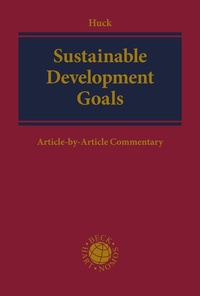
Sustainable Development Goals
Article-by-Article Commentary
1st Edition
Published on 16. March 2022
696 pages
978-3-7489-0206-5 (ISBN)
Description

Die neue UN-Resolution
"Transforming our world: the 2030 Agenda for Sustainable Development" - die neue UN-Ziele verankern klare Vorgaben für nachhaltige Entwicklung und verstehen sich als konzeptionelle, normative Antwort auf das global fließende Muster der wirtschaftlichen Transformation, kurz: die Globalisierung.
Der neue Kommentar
Der Kommentar von Huck reagiert hierauf mit einer umfassenden Auslegung für die praktische Arbeit. Er deckt den gesamten Regelungsbereich der einzelnen Sustainable Development Goals, kurz SDGs ab. Ausführlich werden die insgesamt 169 Zielvorgaben erläutert und eingeordnet. Dabei werden immer auch Fragen zur Verbindlichkeit für wen, zum konkreten Anwendungsbereich und zu Rechtsschutzmöglichkeiten geklärt.
The UN Resolution Transforming our world: "the 2030 Agenda for Sustainable Development" set in forth at 1 January 2016 enshrines 17 Sustainable Development Goals (SDGs) including 169 targets and seems a conceptual, normative answer to the global fluid pattern of economic transformation, shortly: the globalisation. Against this background, the SDGs are embarking to the multileveled legal order, following different horizontal and vertical ways. The significance of the SDGs for the application of the law in the context of regulations of the international level within the UN and autonomous International Organisations appears to be clearly visible. On the vertical level regional cooperation such as the EU, ASEAN, CARICOM, are integrating the SDGs in different legal agreements and similar currently happens on the national level and not to forget the transnational level as well. This new Commentary covers the whole field of SDG law.
More details
Other editions
Additional editions
Book
03/2022
1st Edition
Nomos
€170.00
Shipment within 5-7 days
Content
- Cover
- Introduction
- I. Introduction
- II. Outline
- III. Evolutionary Aspects of Sustainable Development
- 1. Overview
- 2. The Contemporary Understanding of the SDGs
- IV. Preparation for a New Approach: The Main Character of the New Approach
- V. Normative Dimensions of the SDGs
- VI. Dignity and the Sustainable Development Goals
- VII. Theoretical Approach
- VIII. Methodology
- 1. Operationalising the SDGs in a Theoretical Way
- 2. Operationalising the SDGs in a Practical Sense
- 3. Systematic Word Count
- IX. The Internal and External Systematic Approach
- X. The Internal Principles of the SDGs
- 1. The '5 P'-Principle
- a) Ratio and Correlation to Sustainability
- b) New Approach of Extended Sustainable Development
- c) Relationship and Interpretational Guide of the 5 Ps
- d) SDGs 'wrapped' by Layers of Principles rooted in International Law
- i. People (P1)
- ii. Planet (P2)
- iii. Prosperity (P3)
- iv. Peace (P4)
- v. Partnership (P5)
- vi. Conclusion to the 5 Ps
- 2. Multilateralism and the Inherent Care for Cooperation
- 3. Equity Principle
- 4. Principle of Access to Justice
- 5. Principle of Integrated Nature of the Sustainable Development Goals
- 6. Principle of the Three Dimensions of Sustainable Development
- 7. Principle of Sustainable, Inclusive and Sustained Economic Growth
- 8. The Matrix of Outcome Orientation
- 9. A Revitalized Global Partnership
- 10. Means of Implementation and the Revitalized Global Partnership
- 11. Principle of Well-Being
- 12. Principle of International Trade
- 13. Strong Economic Foundations - Essence of Sustained, Inclusive and Sustainable Economic Growth Prosperity
- 14. Conclusion
- XI. External Principles
- 1. Charter of the United Nations
- 2. Universal Declaration of Human Rights
- 3. International Human Rights Treaties
- 4. Committee on World Food Security, 1974
- 5. Declaration on the Right to Development, 1986
- 6. United Nations Framework Convention on Climate Change, 1992
- 7. Rio Declaration on Environment and Development, 'Earth Summit', 1992
- 8. Conference of the Parties to the Convention on Biological Diversity, 1993
- 9. Programme of Action of the International Conference on Population and Development, 1994
- 10. World Summit for Social Development, 1995
- 11. Beijing Platform for Action, 1995
- 12. Millennium Declaration, 2000
- 13. World Summit on Sustainable Development (WSSD), Johannesburg Summit, 2002
- 14. New Partnership for Africa's Development (NEPAD), 2002
- 15. World Summit Outcome, 2005
- 16. Istanbul Declaration and Programme of Action, 2011
- 17. Fourth United Nations Conference on the Least Developed Countries, 2011
- 18. United Nations Conference on Sustainable Development, 2012
- 19. 10-Year Framework of Programmes on Sustainable Consumption and Production Patterns, 2012
- 20. African Union's Agenda 2063 and the Agenda 2063 - The Africa We Want, 2013
- 21. Rome Declaration on Nutrition and the Framework for Action, 2014
- 22. Second United Nations Conference on Landlocked Developing Countries, 2014
- 23. Third International Conference on Small Island Developing States (SIDS), 2014
- 24. Third United Nations World Conference on Disaster Risk Reduction, 2015
- 25. Addis Ababa Action Agenda, 2015
- 26. Technology Facilitation Mechanism (TFM), 2015
- 27. United Nations Conference on Housing and Sustainable Urban Development, 2016
- 28. Instruments mentioned in the Section entitled 'Sustainable Development Goals and targets'
- 29. Conclusion
- XII. Systematic Follow-up and Review of the Global Agenda 2030
- 1. High-Level Political Forum on Sustainable Development
- 2. Voluntary National Reviews
- 3. Measurement by Indicators
- 4. The Importance of Indicators
- 5. Legal Implication of the Use of Indicators
- 6. Conclusion
- Goal 1 End poverty in all its forms everywhere
- A. Background and Origin of SDG 1
- I. History of Poverty Alleviation by the UN
- II. Causes of Poverty
- III. Relation to Human Rights
- IV. Definitions
- 1. Poverty
- 2. Extreme Poverty
- B. Scope and Dimensions of SDG 1
- I. Legal Foundations
- 1. Human Rights and Economic, Social and Cultural Rights
- 2. The Role of States
- II. Inequalities, Poverty and Law
- III. Vulnerable Groups and Discrimination
- C. Interdependences of SDG 1
- D. Jurisprudential Significance of SDG 1
- I. Jurisdiction on Vision and Objectives
- 1. International Jurisdiction
- 2. European Jurisdiction
- 3. Arbitration Proceedings
- 4. Domestic Jurisdiction
- II. The Enforcement of No Poverty
- III. De Facto Influences on Jurisdiction
- E. Conclusion on SDG 1
- Goal 2 End hunger, achieve food security and improved nutrition and promote sustainable agriculture End hunger, achieve food security
- A. Background and Origin of SDG 2
- I. UN History of Eradicating Global Hunger
- II. Agriculture and Hunger
- B. Scope and Dimensions of SDG 2
- I. Elementary Definitions
- 1. Malnutrition
- 2. Hunger
- 3. Undernourishment
- 4. Food Security
- 5. Food Systems
- II. Legal Foundations
- 1. The Right to Food
- 2. The Role of States
- III. International Food Systems, Food Security and the Right to Food
- 1. Inequalities
- 2. Climate Change, Population Growth and Food Security
- 3. Inequalities between States and international Trade for Food
- 4. Women, Children and other Vulnerable Groups
- IV. International Organisations related to Food and Nutrition
- C. Interdependences of SDG 2
- D. Jurisprudential Significance of SDG 2
- I. Jurisdiction on Vision and Objectives
- 1. International Jurisdiction
- 2. European Jurisdiction
- 3. Arbitration Proceedings
- 4. Domestic Jurisdiction
- II. The Enforcement of a 'Right to Zero Hunger'?
- III. De Facto Influences on Jurisdiction
- E. Conclusion on SDG 2
- Goal 3 Ensure healthy lives and promote well-being for all at all ages
- A. Background and Origin of SDG 3
- B. Scope and Dimensions of SDG 3
- I. Elementary Definitions
- II. Legal Foundations
- 1. Right to Health
- 2. Well-Being
- III. International Organisations Related to Health and Well-Being
- IV. Public Health and Global Health: Framing the Scope of SDG 3
- V. SDG 3 and the State - Public Health Responsibilities
- 1. Legal Context of the Targets
- 2. SDG 3.3: End Epidemics and Combat Communicable Diseases
- VI. Universal Health Coverage and Free Health Care
- VII. A Specific Look on the Indicators of SDG 3
- VIII. Systematic Interpretation of SDG3
- 1. WTO, TRIPS and Health
- 2. Ocean and Health
- C. Interdependences of SDG 3
- D. Jurisprudential Significance of SDG 3
- I. Jurisdiction on Vision and Objectives
- 1. International Jurisdiction of Human Rights Courts
- 2. European Jurisdiction
- 3. Arbitration Proceedings
- II. Jurisdiction on SDG 3 Targets
- III. The Transfer of International Jurisdiction into National Jurisprudence
- IV. De Facto Influences on Jurisdiction
- E. Conclusion on SDG 3
- Goal 4 Ensure inclusive and equitable quality education and promote lifelong learning opportunities for all Ensure inclusive and equitable quality education
- A. Background and Origin of SDG 4
- I. History of the Right to Education
- II. The 4 A's
- III. UN History of Quality Education
- B. Scope and Dimensions of SDG 4
- I. Legal Characteristics
- II. Elementary Definitions
- 1. Education
- 2. Equitable Education
- 3. Inclusive Education
- 4. Literacy, Numeracy and Skills
- III. Legal Foundations of the Right to Education
- 1. Universal Declaration of Human Rights (UDHR)
- 2. Human Rights Instruments
- IV. Non-Discrimination, Equality and Equity
- V. International Organisations related to education
- C. Interdependences of SDG 4
- D. Jurisprudential Significance of SDG 4
- I. Jurisdiction on Vision and Objectives
- 1. International Jurisdiction
- 2. European Union Jurisdiction
- 3. Arbitration Proceedings
- 4. Domestic Jurisdiction
- II. The Impact of International Jurisprudence on National Law
- III. De Facto Influences on Jurisdiction
- E. Conclusion on SDG 4
- Goal 5 Achieve gender equality and empower all women and girls
- A. Background and Origin of SDG 5
- B. Scope and Dimensions of SDG 5
- I. Elementary Definitions
- II. Legal Foundations
- 1. Human Rights and Women: Universal Declaration of Human Rights, ICESCR and ICCPR
- 2. Human Rights and Women: CEDAW
- III. International Conventions and Declarations
- 1. The Beijing Platform for Action
- 2. Convention of Belém do Pará
- 3. The Maputo Protocol
- 4. The Istanbul Convention
- C. Interdependences of SDG 5
- D. Jurisprudential Significance of SDG 5
- I. Jurisdiction on Vision and Objectives
- 1. International Jurisdiction
- 2. European Jurisdiction
- 3. Arbitration Proceedings
- 4. Domestic Jurisdiction
- II. The Enforcement of a 'Right to Gender Equality'
- III. De Facto Influences on the Jurisdiction
- E. Conclusion on SDG 5
- Goal 6 Ensure availability and sustainable management of water and sanitation for all
- A. Background and Origin of SDG 6
- B. Scope and Dimensions of SDG 6
- I. Elementary Definitions
- 1. Availability
- 2. Accessibility
- 3. Affordability
- 4. Non-Discrimination
- II. Legal Foundations
- 1. Water in International Law
- 2. Right to Water and Sanitation
- III. Specific Look at the Indicators
- IV. UN Water as a Core Unit for Water
- C. Interdependences of SDG 6
- D. Jurisprudential Significance of SDG 6
- I. Jurisdiction on Vision and Principles
- 1. International Jurisdiction
- 2. European Jurisdiction
- 3. Arbitration Proceedings
- 4. Domestic Jurisdiction
- II. Jurisdiction on Targets and Indicators
- III. The Enforcement of a 'Right to Water'?
- IV. De Facto Influences on Jurisdiction
- E. Conclusion on SDG 6
- Goal 7 Ensure access to affordable, reliable, sustainable and modern energy for all
- A. Background and Origin of SDG 7
- B. Scope and Dimensions of SDG 7
- I. Elementary Definitions
- II. Legal Foundations
- III. States' Roles in Energy related Issues
- 1. The Principle of National Resource Sovereignty
- 2. Energy Diplomacy and Energy Security
- 3. The Social Scope of Energy
- C. Interdependences of SDG 7
- D. Jurisprudential Significance of SDG 7
- I. Jurisdiction on Vision and Objectives
- 1. International Jurisdiction
- 2. European Jurisdiction
- 3. Arbitration Proceedings
- 4. Domestic Jurisdiction
- II. De Facto Influences on the Jurisdiction
- E. Conclusion on SDG 7
- Goal 8 Promote sustained, inclusive and sustainable economic growth, full and productive employment and decent work for all Promote sustained, inclusive and sustainable economic growth, employment and work
- A. Background and Origin of SDG 8
- B. Scope and Dimensions of SDG 8
- I. Elementary Definitions
- 1. Economic Growth and Decent Work
- 2. Forced Labour, Modern Slavery, Human Trafficking and Child Labour
- II. Legal foundations
- 1. Labour Law
- 2. International Labour Law
- 3. ILO Conventions
- 4. ILO Declarations
- 5. Human Rights and Decent Work
- 6. Modern Slavery, Forced Labour, Child Labour and Human Trafficking
- C. Interdependences of SDG 8
- D. Jurisprudential Significance of SDG 8
- I. Jurisdiction on Vision and Objectives
- 1. International Jurisdiction
- 2. European Jurisdiction
- 3. Arbitration Proceedings
- 4. Domestic Jurisdiction
- II. The Enforcement of a 'Right to Decent Work and Economic Growth'
- III. De Facto Influences on Jurisdiction
- E. Conclusion on SDG 8
- Goal 9 Build resilient infrastructure, promote inclusive and sustainable industrialization and foster innovation Build resilient infrastructure, promote inclusive and sustainable industrialization
- A. Background and Origin of SDG 9
- B. Scope and Dimensions of SDG 9
- I. Infrastructure
- II. Industrialisation
- III. Innovation
- C. Interdependences of SDG 9
- D. Jurisprudential Significance of SDG 9
- I. Jurisdiction on Vision and Objectives
- 1. International Jurisdiction
- 2. European Jurisdiction
- 3. Arbitration Proceedings
- 4. Domestic Jurisdiction
- II. De Facto Influences on Jurisdiction
- E. Conclusion on SDG 9
- Goal 10 Reduce inequality within and among countries
- A. Background and Origin of SDG 10
- I. Inequality - Origin and Foundation of SDG 10
- II. Genesis of SDG 10
- B. Scope and Dimensions of SDG 10
- I. Elementary Definitions
- II. Legal Foundations
- 1. Inequality within Countries
- 2. Inequalities between Countries
- a. SDG 10.5, SDG 10.6, SDG 10.7 and States' Obligations
- b. International Trade and Inequality
- III. A Specific Look at the Indicators
- C. Interdependences of SDG 10
- D. Jurisprudential Significance of SDG 10
- I. Jurisdiction on Vision and Objectives
- 1. International Jurisdiction
- 2. European Jurisdiction
- 3. Arbitration Proceedings
- 4. Domestic Jurisdiction
- II. The Enforcement of 'No Inequality'
- III. De Facto Influences on the Jurisdiction
- E. Conclusion on SDG 10
- Goal 11 Make cities and human settlements inclusive, safe, resilient and sustainable
- A. Background and Origin of SDG 11
- B. Scope and Dimensions of SDG 11
- I. Definition of Cities
- II. The Right to Adequate Housing
- 1. Forced Eviction
- 2. Informal Settlements
- III. Public and Sustainable Transport
- IV. Urban and Territorial Planning
- V. Environmental Impacts
- VI. Public Spaces
- VII. Cultural and Natural Rights
- VIII. Disaster Risk Reduction
- IX. Women and Girls in Urban Planning
- C. Interdependences of SDG 11
- D. Jurisprudential Significance of SDG 11
- I. Jurisdiction on Vision and Objectives
- 1. International Jurisdiction
- 2. European Jurisdiction
- 3. Arbitration Proceedings
- 4. Domestic Jurisdiction
- II. The Enforcement of a 'Right to Sustainable, Safe, Inclusive Housing'?
- III. De Facto Influences on Jurisdiction
- E. Conclusion on SDG 11
- Goal 12 Ensure sustainable consumption and production patterns
- A. Background and Origin of SDG 12
- B. Scope and Dimensions of SDG 12
- I. Sustainable Consumption and Production
- II. Resource Efficiency and Sustainable Management of Natural Resources
- III. Waste and Chemical Management
- 1. Waste Reduction and Extended Producer Responsibility
- 2. Reduction of Food Waste
- IV. Green Economy and Green Growth
- 1. Trade and Green Protection
- 2. Sustainable Public Procurement
- 3. Sustainable Tourism
- 4. Corporate Sustainability Reporting
- 5. Consumer Information and Education
- C. Interdependences of SDG 12
- D. Jurisprudential Significance of SDG 12
- I. Jurisdiction on Vision and Objectives
- 1. International Jurisdiction
- 2. European Jurisdiction
- 3. Arbitration Proceedings
- 4. Domestic Jurisdiction
- II. The Enforcement of a 'Right to Responsible Consumption and Production'
- III. De Facto Influences on Jurisdiction
- E. Conclusion on SDG 12
- Goal 13 Take urgent action to combat climate change and its impactsAcknowledging that the United Nations Framework Convention on Climate Change is the primary international, intergovernmental forum for negotiating the global response to climate change.
- A. Background and Origin of SDG 13
- B. Scope and Dimensions of SDG 13
- I. Legal Framework and Definitions
- 1. Climate Change in International Environment Law
- 2. Common but Differentiated Responsibilities and Respective Capabilities
- II. Climate Change Mitigation and Adaptation
- 1. Climate Change and Disaster Risk Reduction
- 2. Building Resilience of Financial Systems
- III. Other Policy Responses to Combat Climate Change
- IV. International Trade and Climate Change
- C. Interdependences of SDG 13
- D. Jurisprudential Significance of SDG 13
- I. Jurisdiction on Vision and Objectives
- 1. International Jurisdiction
- 2. European Jurisdiction
- 3. Arbitration Proceedings
- 4. Domestic Jurisdiction
- II. The Enforcement of a 'Right to a Healthy Climate'
- III. De Facto Influences on Jurisdiction
- E. Conclusion on SDG 13
- Goal 14 Conserve and sustainably use the oceans, seas and marine resources for sustainable development Conserve and sustainably use the oceans, seas and marine resources
- A. Background and Origin of SDG 14
- B. Scope and Dimensions of SDG 14
- I. Sustainable use and Conservation of Oceans, Seas and Marine Resources
- II. Threats to Oceans
- 1. Marine Pollution
- 2. Marine Debris
- 3. Ocean Acidification
- III. Protecting the Economy Surrounding Oceans
- 1. Sustainable Fisheries
- 2. Subsidies contributing to illegal, unreported and unregulated fishing
- 3. Small Scale Fishers
- C. Interdependences of SDG 14
- D. Jurisprudential Significance of SDG 14
- I. Jurisdiction on Vision and Objectives
- 1. International Jurisdiction
- 2. European Jurisdiction
- 3. Arbitration Proceedings
- 4. Domestic Jurisdiction
- II. The Enforcement of a 'Right to healthy Oceans, Seas and Marine Resources'
- III. De Facto Influences on Jurisdiction
- E. Conclusion on SDG 14
- Goal 15 Protect, restore and promote sustainable use of terrestrial ecosystems, sustainably manage forests, combat desertification, and halt and reverse land degradation and halt biodiversity loss Protect, restore and promote sustainable use of terrestrial ecosystems
- A. Background and Origin of SDG 15
- B. Scope and Dimensions of SDG 15
- I. Sustainable Use and Conservation of the Terrestrial Ecosystem
- II. Sustainable Management of Forests
- III. Access and Benefit-Sharing
- IV. Threats to the Terrestrial Ecosystem
- 1. Desertification and Land Degradation
- 2. Climate Change
- 3. Risk of Extinction
- 4. Illegal Wildlife Trade
- 5. Invasive Alien Species
- C. Interdependences of SDG 15
- D. Jurisprudential Significance of SDG 15
- I. Jurisdiction on Vision and Objectives
- 1. International Jurisdiction
- 2. European Jurisdiction
- 3. Arbitration Proceedings
- 4. Domestic Jurisdiction
- II. The Enforcement of a 'Right to Biodiversity'
- III. De Facto Influences on Jurisdiction
- E. Conclusion on SDG 15
- Goal 16 Promote peaceful and inclusive societies for sustainable development, provide access to justice for all and build effective, accountable and inclusive institutions at all levels Promote peaceful and inclusive societies, provide access to justice for all
- A. Background and Origin of SDG 16
- I. Human Rights Background of SDG 16
- II. Nascence of SDG 16 - Visions about Securing the World
- B. Scope and dimensions of SDG 16
- I. Legal Foundation and tripartite Nature
- 1. Peace
- 2. Justice and Strong Institutions
- II. Elementary Definitions of legally significant Terms
- 1. Abuse, Exploitation, Trafficking, Violence and Torture
- 2. Rule of Law
- 3. Corruption, Bribery and Bribe
- 4. Participation
- 5. Legal Identity
- 6. Capacity
- C. Interdependences of SDG 16
- D. Jurisprudential Significance of SDG 16
- I. Vision and Principles
- 1. International Jurisdiction
- 2. European Jurisdiction
- 3. Arbitration Proceedings
- 4. Domestic Jurisdiction
- II. Jurisdiction on Targets and Indicators
- III. The Enforcement of SDG 16
- IV. De Facto Influences on Jurisdiction
- V. Evaluation of Jurisprudential Significance
- E. Conclusion on SDG 16
- I. Peace
- II. The Rule of Law
- III. Concept of Justice
- IV. Rule of Law and Women
- Goal 17 Strengthen the means of implementation and revitalize the Global Partnership for Sustainable Development Strengthen the means of implementation and revitalize the Global Partnership
- A. Background and Origin of SDG 17
- B. Scope and Dimensions of SDG 17
- I. SDG 17 in Context of the Global Agenda 2030
- II. Means of Implementation
- III. Financial MoIs
- IV. Non-financial MoIs
- C. Interdependences of SDG 17
- D. Jurisprudential Significance of SDG 17
- E. De Facto Influences on SDG 17
- F. Conclusion
- Epilogue
- I. SDG 1 and the Notion of No Poverty
- II. Tackling Hunger Everywhere with SDG 2
- III. Good Health and Well-Being with SDG 3
- IV. Enabling the Transformation - Education for Sustainable Development with SDG 4
- V. An Imperative of Humankind - Gender Equality with SDG 5 as a conditio sine qua non for Sustainable Development
- VI. Availability of Clean Water and Sanitation for all with SDG 6
- VII. Affordable and Clean Energy with SDG 7
- VIII. Decent Work and Economic Growth with SDG 8
- IX. Science, Technology and Innovation as Transformative Output of SDG 9
- X. Reducing Inequalities with SDG 10
- XI. Partnerships for Sustainable Cities and Communities with SDG 11
- XII. Responsible Consumption and Production with SDG 12
- XIII. Climate Action with SDG 13
- XIV. Sustaining Life Below Water with SDG 14
- XV. Sustaining Life on Land with SDG 15
- XVI. Legal Transition and Dependability - SDG 16 as Enabler for the Sustainable Transformation
- XVII. Cooperation at the Core of the New Approach with SDG 17
- XVIII. Conclusion
- Resolution adopted by the General Assembly on 25 September 2015
- 70/1. Transforming our world: the 2030 Agenda for Sustainable Development
- Transforming our world: the 2030 Agenda for Sustainable Development
- Preamble
- Declaration
- Introduction
- Our vision
- Our shared principles and commitments
- Our world today
- The new Agenda
- Means of implementation
- Follow-up and review
- A call for action to change our world
- Sustainable Development Goals and targets
- Goal 1. End poverty in all its forms everywhere
- Goal 2. End hunger, achieve food security and improved nutrition and promote sustainable agriculture
- Goal 3. Ensure healthy lives and promote well-being for all at all ages
- Goal 4. Ensure inclusive and equitable quality education and promote lifelong learning opportunities for all
- Goal 5. Achieve gender equality and empower all women and girls
- Goal 6. Ensure availability and sustainable management of water and sanitation for all
- Goal 7. Ensure access to affordable, reliable, sustainable and modern energy for all
- Goal 8. Promote sustained, inclusive and sustainable economic growth, full and productive employment and decent work for all
- Goal 9. Build resilient infrastructure, promote inclusive and sustainable industrialization and foster innovation
- Goal 10. Reduce inequality within and among countries
- Goal 11. Make cities and human settlements inclusive, safe, resilient and sustainable
- Goal 12. Ensure sustainable consumption and production patterns
- Goal 13. Take urgent action to combat climate change and its impactsAcknowledging that the United Nations Framework Convention on Climate Change is the primary international, intergovernmental forum for negotiating the global response to climate change.
- Goal 14. Conserve and sustainably use the oceans, seas and marine resources for sustainable development
- Goal 15. Protect, restore and promote sustainable use of terrestrial ecosystems, sustainably manage forests, combat desertification, and halt and reverse land degradation and halt biodiversity loss
- Goal 16. Promote peaceful and inclusive societies for sustainable development, provide access to justice for all and build effective, accountable and inclusive institutions at all levels
- Goal 17. Strengthen the means of implementation and revitalize the Global Partnership for Sustainable Development
- Means of implementation and the Global Partnership
- Follow-up and review
- National level
- Regional level
- Global level
