

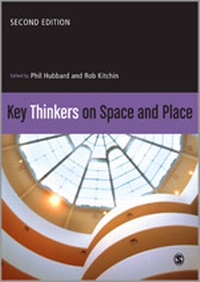
Key Thinkers on Space and Place
2nd Edition
Published on 12. November 2010
528 pages
978-1-4462-4773-0 (ISBN)
Description

In this latest edition of Key Thinkers on Space and Place, editors Phil Hubbard and Rob Kitchin provide us with a fully revised and updated text that highlights the work of over 65 key thinkers on space and place. Unique in its concept, the book is a comprehensive guide to the life and work of some of the key thinkers particularly influential in the current 'spatial turn' in the social sciences.
Providing a synoptic overview of different ideas about the role of space and place in contemporary social, cultural, political and economic life, each portrait comprises:
Biographical information and theoretical context.
An explication of their contribution to spatial thinking.
An overview of key advances and controversie.
Guidance on further reading.
With 14 additional chapters including entries on Saskia Sassen, Tim Ingold, Cindi Katz and John Urry, the book covers ideas ranging from humanism, Marxism, feminism and post-structuralism to queer-theory, post-colonialism, globalization and deconstruction, presenting a thorough look at diverse ways in which space and place has been theorized.
An essential text for geographers, this now classic reference text is for all those interested in theories of space and place, whether in geography, sociology, cultural studies, urban studies, planning, anthropology, or women's studies.
Providing a synoptic overview of different ideas about the role of space and place in contemporary social, cultural, political and economic life, each portrait comprises:
Biographical information and theoretical context.
An explication of their contribution to spatial thinking.
An overview of key advances and controversie.
Guidance on further reading.
With 14 additional chapters including entries on Saskia Sassen, Tim Ingold, Cindi Katz and John Urry, the book covers ideas ranging from humanism, Marxism, feminism and post-structuralism to queer-theory, post-colonialism, globalization and deconstruction, presenting a thorough look at diverse ways in which space and place has been theorized.
An essential text for geographers, this now classic reference text is for all those interested in theories of space and place, whether in geography, sociology, cultural studies, urban studies, planning, anthropology, or women's studies.
Reviews / Votes
The best encyclopaedic tool for human geographers since the Dictionary of Human Geography. It is hugely useful for students who want an easy way to access the roots of the major themes and debates in contemporary geographyStuart Aitken
San Diego State University
Space is now at the forefront of the social sciences and humanities. This compendium sets out the twists and turns of the thinkers who brought us to this place. In doing so, it sets out an effervescent intellectual landscape. Invaluable
Professor Nigel Thrift
Vice-Chancellor, University of Warwick
A most welcome and expanded version of the original Key Thinkers, this work more than any other guides readers through the complex theoretical landscape of space and place. An outstanding volume that articulates, through analyses of the visionary writings of some of the most important theorists in and beyond geography, the migrations of thought produced around our most important objects of analysis. The contributors excel in this effort
Professor John-Paul Jones III
University of Arizona, USA
The second edition of Key Thinkers on Space and Place sharpens and refines its project. Written in highly accessible language, the book will be a dependable source of inspiration and reflection to anyone with an interest in space and place as knowledge categories
Professor Richard Le Heron
University of Auckland, New Zealand
This is a helpfully updated version of an already well-researched and accessibly written text. As with the first edition, this version is invaluable for anyone seeking to understand the life and work of key thinkers who have shaped the "spatial turn" in the social sciences. It recognizes the contributions of those from all the major intellectual traditions from positivism to post-structuralism, and from a variety of disciplines, from geographers, anthropologists, economists, philosophers and more. And it consciously acknowledges intellectual traditions beyond the Anglo-American academy
Lily Kong
Professor of Geography, National University of Singapore
An accessible, authoritative and comprehensive introduction to the individuals who have shaped contemporary geographical thought. The book covers an impressive and thought-provoking selection of thinkers and writers, representing a variety of traditions and approaches. Each of the sixty-six entries provides a lively summary of the subject's life and work, and an expert critical analysis of their contribution to spatial theory. Key Thinkers on Space and Place is an invaluable reference resource for students of Human Geography and anyone interested in the development of spatial theory
Professor Michael Woods
Aberyswyth University
More details
Edition
Second Edition
Language
English
Place of publication
London
United Kingdom
Target group
College/higher education
ISBN-13
978-1-4462-4773-0 (9781446247730)
Copyright in bibliographic data and cover images is held by Nielsen Book Services Limited or by the publishers or by their respective licensors: all rights reserved.
Schweitzer Classification
Other editions
Additional editions
Phil Hubbard | Rob Kitchin
Key Thinkers on Space and Place
Book
11/2010
2nd Edition
SAGE Publications Ltd
€102.94
Article exhausted; check for reprint
Persons
Phil Hubbard is Professor in Urban Studies in the University of Kent's School of Social Policy, Sociology and Social Research. Rob Kitchin is a Professor in Maynooth University Social Sciences Institute and Department of Geography. He was a European Research Council Advanced Investigator on the Programmable City project (2013-2018) and a principal investigator on the Building City Dashboards project (2016-2020) and for the Digital Repository of Ireland (2009-2017). He is the (co)author or (co)editor of 31 other academic books, and (co)author of over 200 articles and book chapters. He has been an editor of Dialogues in Human Geography, Progress in Human Geography and Social and Cultural Geography, and was the co-Editor-in-Chief of the International Encyclopedia of Human Geography. He was the 2013 recipient of the Royal Irish Academy's Gold Medal for the Social Sciences.
Content
Preface to the Second Edition - Phil Hubbard and Rob Kitchin
Introduction: Why Key Thinkers? - Phil Hubbard and Rob Kitchin
Benedict Anderson - Euan Hague
Mark Auge - Peter Merriman
Trevor Barnes - Suzanne Reimer
Jean Baudrillard - David B Clarke and Marcus A Doel
Zygmunt Bauman - David B Clarke and Marcus A Doel
Ulrich Beck - Lewis Holloway
Brian Berry - Gordon L Clark
Homi K Bhabha - Constantina Papoulias
Pierre Bourdieu - Gary Bridge
Judith Butler - Minelle Mahtani
Anne Buttimer - Tom Mels
Manuel Castells - Phil Hubbard
Michel de Certeau - Mike Crang
Stuart E Corbridge - Simon Batterbury
Denis Cosgrove - Keith Lilley
Mike Davis - Donald McNeill
Michael Dear - Donald McNeill and Mark Tewdwr-Jones
Gilles Deleuze - Marcus A Doel and David B Clarke
Peter Dicken - Jonathan A Beaverstock
Arturo Escobar - Simon Batterbury and Jude L Fernando
Michel Foucault - Chris Philo
J K Gibson-Graham - Wendy Larner
Anthony Giddens - Barney Warf
Reginald Golledge - Rob Kitchin
Derek Gregory - Barney Warf
Torsten Hagerstrand - Robin Flowerdew
Peter Haggett - Robin Flowerdew
Stuart Hall - Don Mitchell
Donna Haraway - Lewis Holloway
J Brian Harley - Keith Lilley
David Harvey - Noel Castree
bell hooks - Katherine McKittrick
Tim Ingold - Hayden Lorimer
Peter Jackson - Don Mitchell
Cindi Katz - Tracey Skelton
Bruno Latour - Eric Laurier
Henri Lefebvre - Rob Shields
David Ley - Paul Rodaway
Kevin Lynch - John R Gold
Doreen Massey - Felicity Callard
Linda McDowell - Sarah Hall
Anssi Paasi - Rhys Jones
Allan Pred - Alan Latham
Gillian Rose - Minelle Mahtani
Edward W Said - Karen M Morin
Saskia Sassen - James Faulconbridge
Andrew Sayer - Andy C Pratt
Amartya Sen - Simon Batterbury and Jude L Fernando
David Sibley - Minelle Mahtani
Neil Smith - Noel Castree
Edward J Soja - Alan Latham
Gayatri Chakravorty Spivak - Robina Mohammad and James D Sidaway
Michael Storper - Suzanne Reimer
Peter Taylor - Jim Glassman
Nigel Thrift - Barney Warf
Gerard Toal - Euan Hague
Waldo Tobler - Robin Flowerdew
Yi-Fu Tuan - Paul Rodaway
John Urry - Peter Adey
Paul Virilio - David B Clarke and Marcus A Doel
Immanuel Wallerstein - Jim Glassman
Michael J Watts - Thomas Perreault
Benno Werlen - Roland Lippuner
Raymond Williams - Don Mitchell and Carrie Breitbach
Alan Wilson - Graham Clarke
Iris Marion Young - Felicity Callard
Glossary
Introduction: Why Key Thinkers? - Phil Hubbard and Rob Kitchin
Benedict Anderson - Euan Hague
Mark Auge - Peter Merriman
Trevor Barnes - Suzanne Reimer
Jean Baudrillard - David B Clarke and Marcus A Doel
Zygmunt Bauman - David B Clarke and Marcus A Doel
Ulrich Beck - Lewis Holloway
Brian Berry - Gordon L Clark
Homi K Bhabha - Constantina Papoulias
Pierre Bourdieu - Gary Bridge
Judith Butler - Minelle Mahtani
Anne Buttimer - Tom Mels
Manuel Castells - Phil Hubbard
Michel de Certeau - Mike Crang
Stuart E Corbridge - Simon Batterbury
Denis Cosgrove - Keith Lilley
Mike Davis - Donald McNeill
Michael Dear - Donald McNeill and Mark Tewdwr-Jones
Gilles Deleuze - Marcus A Doel and David B Clarke
Peter Dicken - Jonathan A Beaverstock
Arturo Escobar - Simon Batterbury and Jude L Fernando
Michel Foucault - Chris Philo
J K Gibson-Graham - Wendy Larner
Anthony Giddens - Barney Warf
Reginald Golledge - Rob Kitchin
Derek Gregory - Barney Warf
Torsten Hagerstrand - Robin Flowerdew
Peter Haggett - Robin Flowerdew
Stuart Hall - Don Mitchell
Donna Haraway - Lewis Holloway
J Brian Harley - Keith Lilley
David Harvey - Noel Castree
bell hooks - Katherine McKittrick
Tim Ingold - Hayden Lorimer
Peter Jackson - Don Mitchell
Cindi Katz - Tracey Skelton
Bruno Latour - Eric Laurier
Henri Lefebvre - Rob Shields
David Ley - Paul Rodaway
Kevin Lynch - John R Gold
Doreen Massey - Felicity Callard
Linda McDowell - Sarah Hall
Anssi Paasi - Rhys Jones
Allan Pred - Alan Latham
Gillian Rose - Minelle Mahtani
Edward W Said - Karen M Morin
Saskia Sassen - James Faulconbridge
Andrew Sayer - Andy C Pratt
Amartya Sen - Simon Batterbury and Jude L Fernando
David Sibley - Minelle Mahtani
Neil Smith - Noel Castree
Edward J Soja - Alan Latham
Gayatri Chakravorty Spivak - Robina Mohammad and James D Sidaway
Michael Storper - Suzanne Reimer
Peter Taylor - Jim Glassman
Nigel Thrift - Barney Warf
Gerard Toal - Euan Hague
Waldo Tobler - Robin Flowerdew
Yi-Fu Tuan - Paul Rodaway
John Urry - Peter Adey
Paul Virilio - David B Clarke and Marcus A Doel
Immanuel Wallerstein - Jim Glassman
Michael J Watts - Thomas Perreault
Benno Werlen - Roland Lippuner
Raymond Williams - Don Mitchell and Carrie Breitbach
Alan Wilson - Graham Clarke
Iris Marion Young - Felicity Callard
Glossary
