

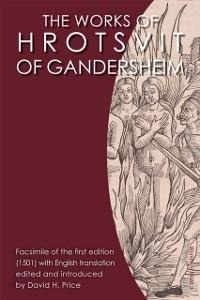
The Works of Hrotsvit of Gandersheim
Published on 15. June 2015
388 pages
978-0-252-09816-1 (ISBN)
Description

Historical assessments of Hrotsvit of Gandersheim are liberally adorned with the word "first." After all, she was the first major medieval woman author, the first German woman writer in print, the first post-classical playwright, as well as the first German to write a literary work on the Faust-theme, and she is sometimes said to have been the first woman historian.
These are landmarks to be sure. Yet Hrotsvit's place in cultural history is even more significant than such an impressive number of firsts might indicate, for she has reemerged to become a living part of European literature, a singular phenomenon for a tenth-century author. She is not only the earliest writer, of either gender, to have a secure place in the German literary canon, but also the only author from her period whose literary works continue to inspire generation after generation of fascinated readers from disparate cultures. Although her writings did not circulate widely in the Middle Ages, they became a sensation from the moment they were discovered in 1493. Her plays and poetic narratives began to attract widespread attention in the twentieth century and are now prominent fixtures in the American college curriculum. Her very name, which she confidently and aptly translated as "the powerful sound from Gandersheim" ("clamor validus Gandeshemensis"), portended her literary success.
Disappointingly few aspects of Hrotsvit's life are known. Apart from comments scattered among the introductions to her poetry, there are no reliable documentary sources for reconstructing her biography. Occasionally, this has provided license for odd, sometimes sexist and even misogynist, suggestions, especially in older scholarship, about her life experiences. Most famously, a nineteenth-century scholar argued that Hrotsvit never actually existed but was a literary hoax perpetrated by Conrad Celtis, Johannes Reuchlin, and other early humanists. Although this dubious charge was taken seriously for many decades, it has been definitively (and repeatedly) debunked. In fact, intensive scholarship over the last two centuries has pieced together a secure, albeit sparse, account of the likely circumstance of her life. Her floruit dates--ca. 935 until ca. 973--have excellent evidence. She identifies herself as a canoness of Abbey of Gandersheim (Saxony, Germany) during the rule of Abbess Gerberga II (940-1001; abbess as of 959), a niece of Emperor Otto I. Hrotsvit also helpfully observes that her abbess is younger than she, thus allowing scholars to place her birth approximately in 935. Several of her works mention well-documented historical events, such as the papal coronation of Emperor Otto I in 962 and the coronation of Otto II, as co-emperor, in 967. Her final work, a brief epic on the history of Abbey of Gandersheim, was completed while Otto I was still alive, thereby indicating that her literary activity, at least as far as the surviving works are concerned, ended before his death in 973.
These are landmarks to be sure. Yet Hrotsvit's place in cultural history is even more significant than such an impressive number of firsts might indicate, for she has reemerged to become a living part of European literature, a singular phenomenon for a tenth-century author. She is not only the earliest writer, of either gender, to have a secure place in the German literary canon, but also the only author from her period whose literary works continue to inspire generation after generation of fascinated readers from disparate cultures. Although her writings did not circulate widely in the Middle Ages, they became a sensation from the moment they were discovered in 1493. Her plays and poetic narratives began to attract widespread attention in the twentieth century and are now prominent fixtures in the American college curriculum. Her very name, which she confidently and aptly translated as "the powerful sound from Gandersheim" ("clamor validus Gandeshemensis"), portended her literary success.
Disappointingly few aspects of Hrotsvit's life are known. Apart from comments scattered among the introductions to her poetry, there are no reliable documentary sources for reconstructing her biography. Occasionally, this has provided license for odd, sometimes sexist and even misogynist, suggestions, especially in older scholarship, about her life experiences. Most famously, a nineteenth-century scholar argued that Hrotsvit never actually existed but was a literary hoax perpetrated by Conrad Celtis, Johannes Reuchlin, and other early humanists. Although this dubious charge was taken seriously for many decades, it has been definitively (and repeatedly) debunked. In fact, intensive scholarship over the last two centuries has pieced together a secure, albeit sparse, account of the likely circumstance of her life. Her floruit dates--ca. 935 until ca. 973--have excellent evidence. She identifies herself as a canoness of Abbey of Gandersheim (Saxony, Germany) during the rule of Abbess Gerberga II (940-1001; abbess as of 959), a niece of Emperor Otto I. Hrotsvit also helpfully observes that her abbess is younger than she, thus allowing scholars to place her birth approximately in 935. Several of her works mention well-documented historical events, such as the papal coronation of Emperor Otto I in 962 and the coronation of Otto II, as co-emperor, in 967. Her final work, a brief epic on the history of Abbey of Gandersheim, was completed while Otto I was still alive, thereby indicating that her literary activity, at least as far as the surviving works are concerned, ended before his death in 973.
More details
Person
Few aspects of Hrotsvit's life are known. Apart from comments scattered among the introductions to her poetry, there are no reliable documentary sources for reconstructing her biography. Occasionally, this has provided license for odd, sometimes sexist and even misogynist, suggestions, especially in older scholarship, about her life experiences. Most famously, a nineteenth-century scholar argued that Hrotsvit never actually existed but was a literary hoax perpetrated by Conrad Celtis, Johannes Reuchlin, and other early humanists. Although this dubious charge was taken seriously for many decades, it has been definitively (and repeatedly) debunked. In fact, intensive scholarship over the last two centuries has pieced together a secure, albeit sparse, account of the likely circumstance of her life. Her floruit dates--ca. 935 until ca. 973--have excellent evidence. She identifies herself as a canoness of Abbey of Gandersheim (Saxony, Germany) during the rule of Abbess Gerberga II (940-1001; abbess as of 959), a niece of Emperor Otto I. Hrotsvit also helpfully observes that her abbess is younger than she, thus allowing scholars to place her birth approximately in 935. Several of her works mention well-documented historical events, such as the papal coronation of Emperor Otto I in 962 and the coronation of Otto II, as co-emperor, in 967. Her final work, a brief epic on the history of Abbey of Gandersheim, was completed while Otto I was still alive, thereby indicating that her literary activity, at least as far as the surviving works are concerned, ended before his death in 973.
