

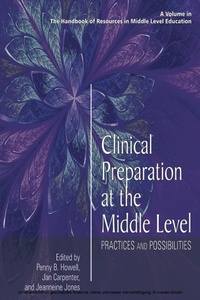
Clinical Preparation at the Middle Level
Practices and Possibilities
1st Edition
Published on 3. January 2016
333 pages
978-1-68123-395-6 (ISBN)
Description

This text highlights partnerships between schools and teacher preparation programs where candidates have opportunities to learn in their coursework alongside teachers in the classroom in clinical settings, bridging the theory?practice divide and helping candidates better understand the simultaneous and multi?dimensional nature of teaching and learning in schools. All of the authors in this text describe how their programs go beyond informal arrangements and include a collaborative relationship between the school and university. As a Handbook of Resources, this text provides details about roles, relationships, expectations, organizational structures, and the challenges of partnerships, which will help those who wish to establish a clinically?based model and move confidently from vision to implementation. The authors of the chapters clearly describe the details of their partnerships so their stories can be a resource for others in similar contexts or situations. In doing so, each chapter highlights the different ways to develop partnerships, as well as provides opportunities for universities, schools, and districts with established partnerships to share their stories, wisdom, and expertise and offer inspiration, encouragement, and ideas. The authors of these chapters acknowledge the tensions inherent in the process of developing, implementing, and sustaining an effective, viable partnership by providing insight into how challenges are addressed at different stages of a partnership and what benefits, successes, and differing perspectives exist in this type of relationship.There are a variety of schools represented in this body of work??rural, suburban, private, public, large research intensive, and small private. By design, we believe any school can find themselves in this text as the authors offer suggestions and ideas that can be implemented in other structures. With that said, we want to emphasize that the examples provided are meant to inspire creativity and possibility as programs develop partnerships rather than offer a wholesale approach or a recipe. Viewing the reader as the expert at their institution, this text offers insights into ways to shape the ideas and structures to fit their context.
All prices
More details
Other editions
Additional editions
Penny B. Howell | Jan Carpenter | Jeanneine Jones
Clinical Preparation at the Middle Level
Practices and Possibilities
Book
03/2016
Information Age Publishing
€70.90
Shipment within 3-4 weeks
Content
- Front Cover
- Clinical Preparation at the Middle Level
- Practices and Possibilities
- A Volume in The Handbook of Resources in Middle Level Education
- Series Editors:
- Steven B. Mertens, Illinois State University Micki M. Caskey, Portland State University
- CONTENTS
- Section I: Beginning and Shaping a Partnership
- 1. Relationships and Context Matter: Tales From a Middle School/University Partnership
- 2. Transforming Teacher Preparation for the Transition Years: A Partnership-Based STEM Residency Program
- 3. Supporting Middle Level Students, Teacher Candidates, and Teachers Through Forming Professional Developmental School Partnerships
- 4. Building the Plane as We Fly It: Essential Elements for a Successful Middle School Program and Partnership
- 5. A Focused Partnership: Targeting Inservice and Teacher Candidate Efficacy in Middle Level Education to Improve Student Outcomes
- Section II: Examining Established Partnership
- 6. Working Hand-in-Hand to Strengthen Preservice Teacher Education: The Development of a Middle Level PDS Partnership in South Carolina
- 7. Coldiron Middle School Field Experience: Lessons From Clinical Experiences and Implications for Practice
- 8. Rowe Middle School/SDEP Partnership: Growing Great Teachers in a Win-Win Arrangement
- 9. Clinical Teacher Education: The Sum and Substance of a Nationally Recognized Program
- 10. The Power of Partnering: Mediated Middle Level Field Experiences
- 11. REAL Girls at Chico Junior High School: Eight Strategies for Enhancing Student Perceptions of Relevance in Clinical Preparation Experiences
- Section III: Sustaining Partnerships
- 12. Maintaining and Sustaining Long-Term Collaborative Partnerships: Illinois State University's Middle Level Teacher Education Program
- 13. Never Give Up: The Power of a Sustained Partnership Built on Vision and Trust
- 14. Engaging the School Community in Teacher Preparation: Clinical Partnerships in Middle Grades Schools
- 15. Considering the Middle Level Field in the Landscape of Teacher Education: Enhancing our Collaboration
- 16. Concluding Thoughts
- The Handbook of Resources in Middle Level Education
- Clinical Preparation at the Middle Level
- Practices and Possibilities
- Edited by
- Penny B. Howell University of Louisville
- Jan Carpenter Maryhurst University
- and
- Jeanneine Jones University of North Carolina at Charlotte
- Information Age Publishing, Inc.
- Charlotte, North Carolina www.infoagepub.com
- DEDCIATION
- Foreword
- James G. Cibulka Founding President, Council for the Accreditation of Educator Preparation, 2010-2015
- References
- Foreword
- John H. Lounsbury Dean Emeritus of the John H. Lounsbury School of Education Georgia College and State University, Milledgeville, Georgia C. Kenneth McEwin Professor Emeritus, Reich College of Education, Appalachian State University, Boone, North Car...
- Acknowledgments
- Introduction
- Penny B. Howell, Jan Carpenter, and Jeanneine Jones
- References
- Section I
- Jan Carpenter
- References
- Figure 1. 1. Conceptual framework for middle grades teaching.
- CHAPTER 1
- Relationships and Context Matter
- P. Gayle Andrews and Katherine F. Thompson University of Georgia
- Background: Middle Grades Teacher Preparation Program
- Background: School/University Partnership
- Fall 2011: Tales from the Learning Cottage
- Fall 2012: Tales From Room 316
- Fall 2013: Tales From a New Cohort, a New Community
- Conclusion
- References
- Figure 1. 2. Levels of PDS involvement.
- Table 1.1. SCMS Tour: Questions to Consider and Teacher Candidates' Responses
- Figure 1. 3. Look & Learn: Student Observation Form.
- Figure 1. 4. Look & Learn: Classroom Environment Observation Form.
- Table 2.1. Key Consideration in the Formation of the Partnership
- Table 2.1. (Continued)
- CHAPTER 2
- Transforming Teacher Preparation for the Transition Years
- Cheryl R. Ellerbrock, Gladis Kersaint, and Jason Jude Smith University of South Florida Rebecca T. Kaskeski Hillsborough County Public Schools
- Rationale for the Program
- Formation of the Partnership
- Identifying Partners/Collaborators
- Obtaining Funding Support
- The Planning Phase: A Collaborative Design
- The Developed Program
- Content Courses
- Methods Courses
- Middle Level Education Courses
- Contemporary Issues in STEM Course
- Early Field Experiences and Practica
- Yearlong Residency
- The Implementation Phase: Ensuring Program Fidelity
- Purposeful Selection of HCPS Collaborating Teachers
- Professional Development for USF and HCPS Personnel
- Challenges, Problem-Solving Processes, and Resolutions
- Planning Phase
- Implementation Phase
- Sustaining the Model
- Recommendations From Lessons Learned
- Conclusion
- References
- Figure 2. 1. Planning phase committees.
- Table 2.2. Objectives for the Planning Effort
- 2. Redesign the internship experiences so that it reflects a collaborative coteaching model between middle school STEM teacher scholars, collaborating teacher, and clinical faculty members.
- Table 2.2. (Continued)
- 3. Develop mechanisms and support systems needed to ensure a seamless transition from teacher candidates to inservice teachers (i.e., the induction years).
- Table 2.3. STEM Teacher Education Program Course Sequence
- Table 2.4. Program Evaluation
- CHAPTER 3
- Supporting Middle Level Students, Teacher Candidates, and Teachers Through Forming Professional Developmental School Partnerships
- Lisa Harrison and Marcy Keifer Kennedy Ohio University
- Overview of the Middle Childhood Education PDS partnership
- Middle Childhood Education PDS Partnership Structure
- Challenges
- Solutions
- Future Plans and Sustaining our Model
- References
- Figure 4. 1. Important elements in the middle school education program.
- CHAPTER 4
- Building the Plane as We Fly It
- Molly Mee and Heather Rogers-Haverback Towson University
- Developing the Major and Establishing the Partnership
- The Middle School Major
- Developing the School-University Partnership
- Unique and Beneficial Features of the Partnership
- Teaching Methods That Address Development Needs of the Young Adolescent
- Challenges and Solutions
- Conclusion
- Appendix A
- 1. A comprehensive mission that is broader in its outreach and scope than the mission of any partner and that furthers the education profession and its responsibility to advance equity within schools and, by potential extension, the broader community
- 2. A school-university culture committed to the preparation of future educators that embraces their active engagement in the school community
- 3. Ongoing and reciprocal professional development for all participants guided by need
- 4. A shared commitment to innovative and reflective practice by all participants
- 5. Engagement in and public sharing of the results of deliberate investigations of practice by respective participants
- 6. An articulation agreement developed by the respective participants delineating the roles and responsibilities of all involved
- 7. A structure that allows all participants a forum for ongoing governance, reflection, and collaboration
- 8. Work by college/university faculty and P-12 faculty in formal roles across institutional settings
- and
- 9. Dedicated and shared resources and formal rewards and recognition structures.
- References
- Table 4.1. Three-Semester Course Sequence
- Table 5.1. Clinical Placement Overview
- CHAPTER 5
- A Focused Partnership
- Katherine Main and Donna Pendergast Griffith University
- Middle Level Education
- Teacher Education and Middle Level Education
- School/University Partnerships
- The Partnership
- Advantages of a Learning Community Partnership
- Current Teaching Staff
- Teacher Candidates
- Combined Benefits of the Partnership
- Stages of the Partnership
- Stage 1
- Stage 2
- Stage 3
- Formalizing the Partnership
- Results of the Partnership
- Improved Student Learning and/or Other Outcomes
- Improved Teacher Candidates' Clinical (Field Based) Experiences
- Improved Outcomes for Teachers
- Sharing of Resources
- Other Important Features of the Partnership
- Inclusiveness
- Sustainability
- Transferability of Processes
- Future Plans
- 1. Making teaching episodes relating to student individual learning gaps available for both students and parents in an online environment
- 2. Providing examples of both teachers and teacher candidates for critical evaluation by both themselves and their peers.
- Conclusion
- ACKNOWLEDGMENT
- References
- Table 5.2. Attendance Data: 2010 to 2013
- Table 5.3. Staff, Student, and Parent Satisfaction Results
- Table 5.4. Student Achievement Data
- Section II
- Penny B. Howell University of Louisville
- CHAPTER 6
- Working Hand-in-Hand to Strengthen Preservice Teacher Education
- Toni M. Williams, David C. Virtue, and Dywanna E. Smith University of South Carolina, Columbia
- The USC School-University Partnership Network
- The PDS Relationship with Hand Middle School
- How the Relationship Began
- Stage of Development of the Relationship
- Key Features of the USC-Hand Middle School Partnership
- Roles and Responsibilities
- Practicums and Internships
- Courses Taught on Site
- Expanding the Model
- Suggestions for Implementing the PDS Model in Middle Grades Settings
- Begin With an Authentic Connection
- Establish Clear, Common Goals
- Emphasize Simultaneous Renewal
- Conclusion
- References
- CHAPTER 7
- Coldiron Middle School Field Experience
- Steven L. Turner with Carie C. Greene Kent State University
- About Coldiron Middle School
- Developing the Partnership
- Creating a Model for Clinical Experiences
- Refining the Clinical Field Experience
- Integrating the Association for Middle Level Education (AMLE)
- University and School Faculty Contributions
- Giving Back to the School: Service Learning
- Challenges, Achievements, and Sustaining the Model
- Challenges
- Funding and Sustaining the Model
- Looking Back and Looking Ahead: Achievements, Advice, and Encouragement
- 1. Teaching is a relationship-oriented profession. Every aspect of teaching depends on the quality of the relationships that are developed- the relationship between student and teacher, mentor and teacher candidate, school and university
- to achiev...
- 2. Mentor teachers are teacher educators. Like teacher education faculty, mentor teachers want teacher candidates to integrate theory and practice, plan engaging, standards-based lessons, practice classroom management, offer support and encouragement...
- References
- Figure 8. 1. Key elements of the Rowe Middle School Learning Lab Partnership.
- CHAPTER 8
- Rowe Middle School/SDEP Partnership
- Barbara Ruben and Larry Becker Portland State University
- When and Why
- Status of the Partnership
- Overview of the Partnership
- Key Elements of the Partnership
- Overview of the Teacher Preparation Program
- Evolving Practices Within the Partnership
- Challenges and Achievements of Our Partnership
- Challenges
- Achievements
- SUSTAINING THE MODEL
- REFERENCES
- Appendix: Secondary Dual Educator Program/ Rowe Middle School Partnership 2011-2013
- Table 9.1. Elementary Education Clinical Experience Sequence
- CHAPTER 9
- Clinical Teacher Education
- Christine A. Hunt, Paula M. Kenneson, and Richard P. Lipka St. Bonaventure University
- History
- Our Partnerships
- Field Block Coursework
- Clinical Faculty
- Collaborations
- Challenges and Achievements
- Challenges
- Achievements
- Sustaining the Model
- Advice and Encouragement
- Acknowledgments
- References
- Table 9.2. Physical Education Clinical Experience Sequence
- Table 9.3. Adolescence/Secondary Education Clinical Experience Sequence
- Figure 10. 1. Mediated partnerships that support teacher candidates.
- CHAPTER 10
- The Power of Partnering
- Heather K. Casey and Michael G. Curran, Jr. Rider University
- Mediated Field Partnerships: Looking Deeper
- Foundations Level
- Methods Level
- Capstone Level
- The Process of Developing and Sustaining Partnerships
- Foundations Level
- Methods Level
- Capstone Level
- Getting Started: A Look inside a Semester of Study at Each Level
- Foundations Level
- Methods Level
- Capstone Level
- A Typical Day
- Foundations Level
- Methods Level
- Capstone Level
- The Triumphs and Challenges of Mediated Middle School Field Experiences at Rider University
- Sustaining Mediated Field Partnerships
- Lessons Learned: Developing Mediated Field Partnerships
- References
- Appendix: Final Evaluation Form developed by Dr. Sylvia Bulgar, Professor, Department of Teacher Education, Rider University
- 1. Arrived on time
- 2. Was well prepared for the day's activities
- 3. Was dressed appropriately
- 4. Was open minded and met new experiences with enthusiasm
- 5. Was willing to assist with classroom tasks
- 6. Demonstrated a respect for classroom diversity
- 7. Modeled behaviors appropriate for a professional educator
- 8. Adapted well to new surroundings and environments
- 9. Participated in reflective practices
- 10. Possessed knowledge of subject matter
- 11. Was a positive influence in the classroom & helpful to the classroom teacher
- 12. Demonstrated an acceptance of teacher input and a willingness to learn
- 13. Took initiative in planning and implementing small and large group lessons
- 14. Interacted with children with warmth and compassion
- 15. Connected course assignments to work in the field
- 16. Took initiative to enhance the classroom environment
- 17. Communicated well with teachers and instructional assistants
- 18. Took advantage of opportunities to learn in the classroom and in the school
- 19. Submitted typed lesson plans in advance of teaching
- 20. Demonstrated keen observation skills
- Table 11.1. Eight Strategies for Enhancing Relevance in Professional Clinical Preparation Experiences
- CHAPTER 11
- REAL Girls at Chico Junior High School
- Michael J. Mann, Patty Haley, Megan L. Smith, and Alfgeir L. Kristjansson West Virginia University
- Practical Origins of Our Approach to Relevance
- Enhancing the Relevance of Clinical Preparation Experiences
- Relevance Enhancing Strategy 1
- Relevance Enhancing Strategy 2
- Relevance Enhancing Strategy 3
- Relevance Enhancing Strategy 4
- Relevance Enhancing Strategy 5
- Relevance Enhancing Strategy 6
- Relevance Enhancing Strategy 7
- Relevance Enhancing Strategy 8
- Applying the Eight Strategies: The REAL Girls as Chico Junior High Partnership and Clinical Experience
- Our School Partnership
- Our Course
- Final Recommendations and Encouragement
- Note About Terminology
- ACKNOWLEDGMENTS
- References
- Section III
- Jeanneine Jones University of North Carolina at Charlotte
- 1. On what organizational model is your partnership based?
- 2. How do practice, content, theory, and pedagogy provide an integrated platform for your work?
- 3. What key challenges have you faced over the years and what tools, processes, and techniques did you employ in addressing them?
- 4. How do you nurture the relationship?
- 5. What advice and encouragement can you share with those of us who are moving our established partnerships into a sustained- over-time relationship?
- REFERENCES
- Table 12.1. Demographics of ISU Partnership Schools
- CHAPTER 12
- Maintaining and Sustaining Long-Term Collaborative Partnerships
- Steven B. Mertens, Ellis Hurd, Doug Hatch, and Gary Weilbacher Illinois State University
- Middle Level Education at Illinois State University
- Partnerships and Clinical Experiences
- ISU Middle Level Clinical Experiences
- Clinical Experiences Prior to Senior Year
- Senior Year Clinical Experiences
- Sustaining the Partnerships and Overcoming the Challenges
- Structural Challenges
- Interpersonal Challenges
- Faculty Challenges
- Future of the Middle Level Program at ISU
- Final Thoughts
- References
- CHAPTER 13
- Never Give Up
- Sheryl Long Salem College Carol A. Pope and Candy M. Beal North Carolina State University
- Overview of History
- Organizational Model
- Integration of Practice, Content, Theory, and Pedagogy
- WolfPack Writing Project
- The Outsiders Project
- WORKING THROUGH CHALLENGES
- Sustaining the Model
- Advice and Encouragement
- References
- Table 14.1. Professional Preparation Core Courses by Semester
- CHAPTER 14
- Engaging the School Community in Teacher Preparation
- Chris M. Cook and Shawn A. Faulkner Northern Kentucky University
- Middle Level Teacher Preparation at Northern Kentucky University
- The Partnership in Action
- Challenges for Effective Clinical Partnerships
- Changes in Leadership
- Other Challenges to Clinical Partnerships
- Sustaining Clinical Partnerships in Northern Kentucky
- Common Philosophy Throughout the Program
- Mutual Benefit for All Partners
- Valued Participation by All Partners
- Points of Pride
- Personal Investment in the Partnership
- Next Generation Partners
- Conclusion
- References
- CHAPTER 15
- Considering the Middle Level Field in the Landscape of Teacher Education
- David Strahan Western Carolina University
- Good Teaching as Responsive Teaching
- 1. How might we enhance our identity within the larger field of teacher education?
- 2. How might we collaborate to advance the quality of middle level teacher education?
- Enhancing our Identity
- Collaborating Toward Transformation
- Collaborating Toward More Powerful Research
- Looking Forward
- References
- CHAPTER 16
- Concluding Thoughts
- Penny B. Howell, Jan Carpenter, and Jeanneine Jones
- REFERENCES
- About the Contributors
- About the Editors
- About the Authors
- About the Contributors
- Back Cover

