

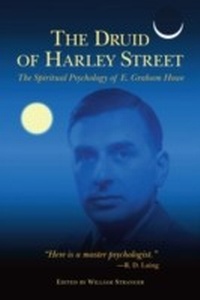
The Druid of Harley Street
Description

In early 20th-century Britain, interest in psychoanalysis was high, leading to the formation of the famous Tavistock Clinic in 1920. E. Graham Howe was one of the clinic's founders and the first to publish articles on psychotherapy. At the same time, he was attacked by the "scientific" psychiatry and psychoanalysis communities because he took concepts derived from spiritual practice and existential phenomenology and applied them to an understanding of psychotherapy. Howe's writings included more than a dozen books and countless articles on a broad range of subjects from schizophrenia to Asian spiritual practices. Through these works he exerted a profound influence on intellectuals such as R. D. Laing, Alan Watts, and Henry Miller, to name a few. Howe also wrote in a simple and clear style, making his work accessible to the general public. The Druid of Harley Street samples the best of his essays, offering timely insights for followers of Jung, Roberto Assagioli, and Mark Epstein; students of somatic therapies; and spiritual and meditation practitioners. The book also offers a fascinating glimpse of a great mind, the notable people in his life, and the heady times in which he lived.
More details
Other editions
Additional editions
Persons
Eric Graham Howe was born in England in 1896. His books include Motives and Mechanisms of the Mind, Morality and Reality, The Open Way, and The Triumphant Spirit. A commissioned BBC radio lecturer during World War II, he died in 1975. Editor William Stranger lives in Cobb, CA.
Content
- Intro
- Title Page
- Copyright
- Contents
- List of Figures
- Foreword by M. Guy Thompson
- Introduction: E. Graham Howe's Psychology of Incarnation by William Stranger
- E. Graham Howe: A Brief Biography by William Stranger
- Prologue: An Experiment
- Part I - Relationship-The Meeting Between Heaven and Earth
- Chapter 1: What Is Reality?
- Chapter 2: The Selves
- Chapter 3: Incarnation
- Chapter 4: What Is Relationship?
- Chapter 5: Relationship, Touch, and Meditation
- Part II - The Anatomy of Incarnation
- Chapter 6: The War of Nerves
- Chapter 7: The Holy Mountain
- Chapter 8: The Psychic Compass
- Chapter 9: The Wheel and the Road
- Chapter 10: Anatomy of the Invisible
- Part III - Separating the Opposites
- Chapter 11: Yes and No
- Chapter 12: Anxiety
- Chapter 13: Instinct and Intuition
- Chapter 14: Feeling and Emotion
- Chapter 15: Aggressiveness
- Chapter 16: Repression
- Chapter 17: Willpower
- Part IV - The Holy Family
- Chapter 18: In the Beginning,. CONSCIOUSNESS
- Chapter 19: Sex: A Problem of Relationship
- Chapter 20: This Woman Business
- Chapter 21: Where Has Father Gone?
- Chapter 22: Marriage
- Chapter 23: The Meaning of Time: Time, Tide, and Rhythm
- Part V - Patterns of Avoidance
- Chapter 24: Hysteria: The Great Reversal
- Chapter 25: The Spoiled Child
- Chapter 26: The Inferiority Complex
- Chapter 27: Compulsion Neurosis
- Chapter 28: Depression
- Chapter 29: Hysteric or Schizoid?
- Chapter 30: Schizophrenia
- Part VI - The Therapeutic Process
- Chapter 31: What Does THAT Mean for Psychiatry?
- Chapter 32: What Is the Therapeutic Process?
- Chapter 33: What Makes a Good Therapist?
- Part VII - The Way of the Spirit
- Chapter 34: The Meaning of Growth
- Chapter 35: The Spirit
- Epilogue - Make the Bells Ring
- Endnotes
- Editor's Acknowledgements
