

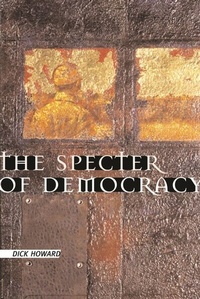
The Specter of Democracy
What Marx and Marxists Haven't Understood and Why
1st Edition
Published on 25. September 2015
368 pages
978-0-231-50522-2 (ISBN)
Description

In this rethinking of Marxism and its blind spots, Dick Howard argues that the collapse of European communism in 1989 should not be identified with a victory for capitalism and makes possible a wholesale reevaluation of democratic politics in the U.S. and abroad. The author turns to the American and French Revolutions to uncover what was truly "revolutionary" about those events, arguing that two distinct styles of democratic life emerged, the implications of which were misinterpreted in light of the rise of communism.
Howard uses a critical rereading of Marx as a theorist of democracy to offer his audience a new way to think about this political ideal. He argues that it is democracy, rather than Marxism, that is radical and revolutionary, and that Marx could have seen this but did not. In Part I, Howard explores the attraction Marxism held for intellectuals, particularly French intellectuals, and he demonstrates how the critique of totalitarianism from a Marxist viewpoint allowed these intellectuals to see the radical nature of democracy. Part II examines two hundred years of democratic political life-comparing America's experience as a democracy to that of France. Part III offers a rethinking of Marx's contribution to democratic politics. Howard concludes that Marx was attempting a "philosophy by other means," and that paradoxically, just because he was such an astute philosopher, Marx was unable to see the radical political implications of his own analyses. The philosophically justified "revolution" turns out to be the basis of an anti-politics whose end was foreshadowed by the fall of European communism in 1989.
Howard uses a critical rereading of Marx as a theorist of democracy to offer his audience a new way to think about this political ideal. He argues that it is democracy, rather than Marxism, that is radical and revolutionary, and that Marx could have seen this but did not. In Part I, Howard explores the attraction Marxism held for intellectuals, particularly French intellectuals, and he demonstrates how the critique of totalitarianism from a Marxist viewpoint allowed these intellectuals to see the radical nature of democracy. Part II examines two hundred years of democratic political life-comparing America's experience as a democracy to that of France. Part III offers a rethinking of Marx's contribution to democratic politics. Howard concludes that Marx was attempting a "philosophy by other means," and that paradoxically, just because he was such an astute philosopher, Marx was unable to see the radical political implications of his own analyses. The philosophically justified "revolution" turns out to be the basis of an anti-politics whose end was foreshadowed by the fall of European communism in 1989.
All prices
More details
Other editions
Additional editions
Book
04/2006
Columbia University Press
€43.33
Shipment within 10-20 days
Book
08/2002
Columbia University Press
€165.89
Article not available at the moment
Person
Dick Howard is Distinguished Professor of Philosophy at the State University of New York at Stony Brook. Among his books are The Marxian Legacy (2nd edition), The Birth of American Political Thought, From Marx to Kant (2nd edition), and Political Judgments. He has also published several books in French, most recently La démocratie à l'épreuve.
Content
Introduction: Why Should We, and How Should We, Reclaim Marx?
Part 1. Marxism and the Intellectuals
1. Marxism in the Postcommunist World
2. Can French Intellectuals Escape Marxism?
3. The Frankfurt School and the Transformation of Critical Theory into Cultural Theory
4. Habermas's Reorientation of Critical Theory Toward Democratic Theory
5. The Anticommunist Marxism of "Socialisme ou Barbarie"
6. Claude Lefort's Passage from Revolutionary Theory to Political Theory
7. From Marx to Castoriadis, and from Castoriadis to Us
8. From the Critique of Totalitarianism to the Politics of Democracy
Part 2. Republican Democracy or Democratic Republics
9. The Burden of French History
10. Intersecting Trajectories of Republicanism in France and the United States
11. Reading U.S. History as Political
12. Fundamentalism and the American Exception
Part 3. Back to Marx?
13. Philosophy by Other Means?
Notes
Index
Part 1. Marxism and the Intellectuals
1. Marxism in the Postcommunist World
2. Can French Intellectuals Escape Marxism?
3. The Frankfurt School and the Transformation of Critical Theory into Cultural Theory
4. Habermas's Reorientation of Critical Theory Toward Democratic Theory
5. The Anticommunist Marxism of "Socialisme ou Barbarie"
6. Claude Lefort's Passage from Revolutionary Theory to Political Theory
7. From Marx to Castoriadis, and from Castoriadis to Us
8. From the Critique of Totalitarianism to the Politics of Democracy
Part 2. Republican Democracy or Democratic Republics
9. The Burden of French History
10. Intersecting Trajectories of Republicanism in France and the United States
11. Reading U.S. History as Political
12. Fundamentalism and the American Exception
Part 3. Back to Marx?
13. Philosophy by Other Means?
Notes
Index

