

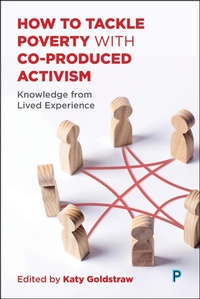
How to Tackle Poverty with Co-Produced Activism
Knowledge from Lived Experience
Policy Press
1st Edition
Published on 19. May 2026
230 pages
978-1-4473-7714-6 (ISBN)
Description

Can we truly address poverty without centring the voices of those who live it? Bringing together voices from academia, grassroots activism, NGOs and the UK voluntary sector, this timely and accessible book explores how participatory approaches to activism can drive genuine, inclusive change.
Through short, focused chapters, the authors critically unpack the contested definitions of 'co-production', 'participation' and 'lived experience' while showcasing practice models from across the globe. Their practical reflections highlight what ethical, impactful collaboration looks like in action.
Led by an established voice in lived-experience anti-poverty activism, this book offers practical insight and principled guidance for anyone seeking to build fairer, more inclusive systems - where those most affected are not only heard, but are leading the way.
Through short, focused chapters, the authors critically unpack the contested definitions of 'co-production', 'participation' and 'lived experience' while showcasing practice models from across the globe. Their practical reflections highlight what ethical, impactful collaboration looks like in action.
Led by an established voice in lived-experience anti-poverty activism, this book offers practical insight and principled guidance for anyone seeking to build fairer, more inclusive systems - where those most affected are not only heard, but are leading the way.
Reviews / Votes
'This is an inspiring collection, bringing together many different groups that have been transforming the way anti-poverty policy, research and activism is done in the UK. It combines hands-on guides for how this work is done, with reflections on the challenges involved, as well as some of the theoretical foundations of this work. It is an invaluable tool for everyone who wants to deepen co-production with people who have lived experience of poverty.' Ben Geiger, King's College London'This thought-provoking and inspiring collection introduces readers to the vibrant landscape of "co-produced activism" shaped by the voices of lived experience. Policy makers - national and local - are among those who would benefit from its insights.' Baroness Lister of Burtersett, House of Lords
'This powerful, philosophically rich book explores the theory behind ethics of practice in anti-poverty and social rights campaign work. It argues for the primacy of voice, self-representation, dignity and political agency, foregrounding the power of intimate knowledge in the ongoing struggle for epistemic justice.' Sharon Clancy, University of Nottingham
More details
Edition
First Edition
Language
English
Place of publication
Bristol
United Kingdom
Publishing group
Bristol University Press
Target group
College/higher education
Product notice
Reflowable
Illustrations
15 s/w Abbildungen
16 Illustrations, black and white
File size
1,95 MB
ISBN-13
978-1-4473-7714-6 (9781447377146)
Copyright in bibliographic data and cover images is held by Nielsen Book Services Limited or by the publishers or by their respective licensors: all rights reserved.
Schweitzer Classification
Other editions
Additional editions
How to Tackle Poverty with Co-Produced Activism
Knowledge from Lived Experience
Book
05/2026
1st Edition
Policy Press
€121.50
Shipment within 15-20 days
How to Tackle Poverty with Co-Produced Activism
Knowledge from Lived Experience
Book
05/2026
1st Edition
Policy Press
€39.50
Shipment within 15-20 days
Persons
Katy Goldstraw is Lecturer in Health and Social Care at Keele University, and an independent academic and activist working with anti-poverty charities.
Content
PART I: A global human rights perspective on lived experience activism - Kartik Raj
1. Introduction: Co-produced activism with people who have lived experience of poverty - Katy Goldstraw
2. RAPAR: a human rights approach to lived experience activism - Rahwa Beyene Gebretatios, Alimany Bangura, Rhetta Ann Moran, Amy Marsden and Grainne McMahon
3. Ethical and collaborative entanglements in creative co-production: photography and the politics of representation - Rebecca Nunes
4. Co-produced participatory lived experience activism through the eyes of the African philosophy of Ubuntu - Robert Chigangaidze
5. Valuing people: how to thank 'experts by experience' for their time and expertise - Rachel Krengel
6. ATD Fourth World: participatory action research - Tom Croft
PART II: Poverty is real - Funmilayo Olaniyan
7. Taking Voice Seriously: addressing poverty with lived experience with APLE Collective - Patricia Bailey, Lynne Ball, Alimany Bangura, Christopher Burns, Amanda Button, Eva Carrillo Roas, Tom Croft, Corrina Eastwood, Dylan Eastwood, Katy Goldstraw, Lara Groves, Justina Heffton, Thomas Mayes, Ryan McMurdo, Caroline Mockford, Philip Parkes, Annon Pedro, Steven Porter, Tracy Porter and Brian Scott
8. Poverty Truth Network: relationships, relationships, relationships - Sam Crowe, Andrew Grinnell, Martin Johnstone, Carrie-Anne Mizen, Erin Simmons, Kidi Teklemariam and Joanna Young
9. Joseph Rowntree Foundation: learning with the Grassroots Poverty Action Group - Aleks Collingwood, Katy Goldstraw, Melanie Lock, Maria McCauley, Kirsten Nott, Stephen Tamblin, Nadine Travers and Emma Wincup
10. Trussell: developing a participation strategy with people who have lived experience of food banks - David Coffin
11. Church Action on Poverty: participatory approaches to addressing poverty with lived experience - Niall Cooper
12. Co-operative Councils Innovation Network: co-operating against poverty in Rochdale - Helen Davies
13. Biddulph Town Council: Biddulph works together - Sarah Haydon and Jill Salt
14. Conclusion - Katy Goldstraw, Robert Chigangaidze, David Coffin, Helen Davies, Rachel Krengel, Helena MacDonald, Grainne McMahon, Rebecca Nunes, Valerie McKie, Annon Pedro and Jill Salt
Epilogue: WE can END poverty - Valerie McKie
1. Introduction: Co-produced activism with people who have lived experience of poverty - Katy Goldstraw
2. RAPAR: a human rights approach to lived experience activism - Rahwa Beyene Gebretatios, Alimany Bangura, Rhetta Ann Moran, Amy Marsden and Grainne McMahon
3. Ethical and collaborative entanglements in creative co-production: photography and the politics of representation - Rebecca Nunes
4. Co-produced participatory lived experience activism through the eyes of the African philosophy of Ubuntu - Robert Chigangaidze
5. Valuing people: how to thank 'experts by experience' for their time and expertise - Rachel Krengel
6. ATD Fourth World: participatory action research - Tom Croft
PART II: Poverty is real - Funmilayo Olaniyan
7. Taking Voice Seriously: addressing poverty with lived experience with APLE Collective - Patricia Bailey, Lynne Ball, Alimany Bangura, Christopher Burns, Amanda Button, Eva Carrillo Roas, Tom Croft, Corrina Eastwood, Dylan Eastwood, Katy Goldstraw, Lara Groves, Justina Heffton, Thomas Mayes, Ryan McMurdo, Caroline Mockford, Philip Parkes, Annon Pedro, Steven Porter, Tracy Porter and Brian Scott
8. Poverty Truth Network: relationships, relationships, relationships - Sam Crowe, Andrew Grinnell, Martin Johnstone, Carrie-Anne Mizen, Erin Simmons, Kidi Teklemariam and Joanna Young
9. Joseph Rowntree Foundation: learning with the Grassroots Poverty Action Group - Aleks Collingwood, Katy Goldstraw, Melanie Lock, Maria McCauley, Kirsten Nott, Stephen Tamblin, Nadine Travers and Emma Wincup
10. Trussell: developing a participation strategy with people who have lived experience of food banks - David Coffin
11. Church Action on Poverty: participatory approaches to addressing poverty with lived experience - Niall Cooper
12. Co-operative Councils Innovation Network: co-operating against poverty in Rochdale - Helen Davies
13. Biddulph Town Council: Biddulph works together - Sarah Haydon and Jill Salt
14. Conclusion - Katy Goldstraw, Robert Chigangaidze, David Coffin, Helen Davies, Rachel Krengel, Helena MacDonald, Grainne McMahon, Rebecca Nunes, Valerie McKie, Annon Pedro and Jill Salt
Epilogue: WE can END poverty - Valerie McKie
