

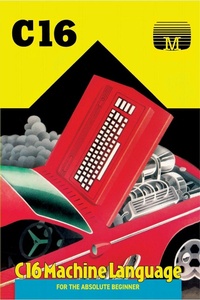
C16 Machine Language for the Absolute Beginner
Published on 31. March 2022
155 pages
978-1-78982-542-8 (ISBN)
Description

First published in 1985, this easy-to-follow guide to the Commodore C16 gives users a crash course introduction to programming in machine code, the best way for aspiring game and utility creators to get the most out of their personal computer. Though the C16 was nowhere near as successful as the much-loved Commodore 64, it still gained many fans, particularly in the European market. Powered by the 7501 (or, in some models, 8501) CPU, the selling point of the machine was its cheap price - US$99 at launch - making it a highly affordable option for families at the time.As the original publisher Melbourne House wrote:*****Compiled exclusively for Commodore 16 users, Commodore 16 Machine Language for the Absolute Beginner offers complete instructions in 7501 machine language - the 7501 CPU is part of the 6502 family and is at the heart of the Commodore 16.If you are frustrated by the limitations of BASIC and want to write faster, more powerful, space-saving programs or subroutines, then this book is for you.Even with no previous understanding of computer languages, the easy-to-understand 'no jargon' format of this book will enable you to discover the power of the Commodore 16's own language. Each chapter includes specific examples of machine language applications which can be demonstrated and used on your own Commodore 16.A full explanation of TEDMON is included, so you can start writing your own machine language programs straight away.Commodore 16 Machine Language for the Absolute Beginner takes you, in logical steps, through a course in machine language programming. This book gives you everything you need to write machine language programs on your Commodore 16.*****Acorn Books is proud to present its Retro Reproductions series, a collection of classic computing works from the 80s and 90s given a new lease of life in the 21st century. From standards of programming reference no self-respecting microcomputer coder would be without, to obscure works unavailable for many years, these modern re-prints are perfect for any connoisseur of retro computing.
More details
Other editions
Additional editions
Melbourne House
C16 Machine Language for the Absolute Beginner
Book
09/2021
Acorn Books
€40.23
No shipping information available
Content
- Cover
- Contents
- Front Matter
- Title Page
- Publisher info
- C16 Machine Language for the Absolute Beginner
- Foreward
- Chapter 1- Introduction to Machine Language
- Using a machine language program
- Memory adressing
- Using memory directly from BASIC
- Machine language as a subroutine
- Summary
- Chapter 2- Basics of Machine Language Programming
- Using memory from machine language
- The registers
- Addressing modes
- Simple program input routine
- Assembly language
- Screen memory
- Summary
- Chapter 3- Introduction to Hexadecimal
- Uses of Hexadecimal
- Binary
- Why hexadecimal?
- Absolute addressing
- Converting hexadecimal to decimal
- Summary
- Chapter 4- Introduction to Tedmon
- Chapter 5- Microprocessor Equipment
- Storing numbers
- The carry flag
- Adding numbers
- Two byte addition
- Subtracting numbers
- Summary
- Chapter 6- Program Control
- Looping using JMP
- Infinite loops
- Comparing numbers
- Branch instructions
- Zero flag
- Relative addressing
- Summary
- Chapter 7- Counting, Looping and Pointing
- Counting to control a loop
- Counting using the accumulator
- Counting using memory
- The X and Y registers
- Using the x register as a counter
- Moving blocks of memory
- Indexed addressing
- Using the X register as an index
- Searching through memory
- Using more than one index
- Zero page indexed addressing
- Summary
- Chapter 8- Using Information Stored in Tables
- Displaying characters as graphics
- Graphics memory
- Indirect indexed addressing
- Register transfer instructions
- Indirect addressing
- Summary
- Chapter 9- Processor Status Codes
- The carry flag
- The zero flag
- Setting the break flag
- The interrupt flag
- The decimal flag
- The negative flag
- The overflow flag
- Summary
- Chapter 10- Logical Operators and Bit Manipulators
- Changing bits within memory
- The logical AND
- The logical OR
- The logical exclusive OR
- The bit instruction
- Rotating bits within a byte
- Rotation with carry
- Clever multipication
- Summary
- Chapter 11- Details of Program Control
- The program counter
- The program counter and subroutines
- The stack control structure
- Subroutines and the stack
- Interrupts
- Summary
- Chapter 12- Commodore 16 Kernal
- Concepts of Kernal and Operating System
- Some useful Kernal routines
- Using Kernal routines
- Summary
- Appendices
- Introduction to the appendices
- 7501 Instruction codes
- 7501 Microprocessor registers
- Hexadecimal to Decimal Conversion table
- Relative branch and two's complement numbering tables
- Detailed memory map of the C-16
- The ted chip register map
- The makings of a good assembler
- ASCII and CHR$ codes
- Screen display codes
- Back Matter
- Glossary
- Also Availables
