

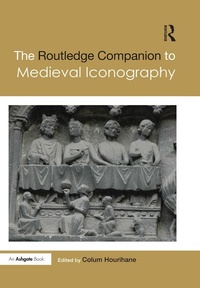
The Routledge Companion to Medieval Iconography
Published on 19. December 2016
588 pages
978-1-315-29836-8 (ISBN)
Description

Sometimes enjoying considerable favor, sometimes less, iconography has been an essential element in medieval art historical studies since the beginning of the discipline. Some of the greatest art historians - including Male, Warburg, Panofsky, Morey, and Schapiro - have devoted their lives to understanding and structuring what exactly the subject matter of a work of medieval art can tell. Over the last thirty or so years, scholarship has seen the meaning and methodologies of the term considerably broadened.
This companion provides a state-of-the-art assessment of the influence of the foremost iconographers, as well as the methodologies employed and themes that underpin the discipline. The first section focuses on influential thinkers in the field, while the second covers some of the best-known methodologies; the third, and largest section, looks at some of the major themes in medieval art. Taken together, the three sections include thirty-eight chapters, each of which deals with an individual topic. An introduction, historiographical evaluation, and bibliography accompany the individual essays. The authors are recognized experts in the field, and each essay includes original analyses and/or case studies which will hopefully open the field for future research.
This companion provides a state-of-the-art assessment of the influence of the foremost iconographers, as well as the methodologies employed and themes that underpin the discipline. The first section focuses on influential thinkers in the field, while the second covers some of the best-known methodologies; the third, and largest section, looks at some of the major themes in medieval art. Taken together, the three sections include thirty-eight chapters, each of which deals with an individual topic. An introduction, historiographical evaluation, and bibliography accompany the individual essays. The authors are recognized experts in the field, and each essay includes original analyses and/or case studies which will hopefully open the field for future research.
More details
Series
Language
English
Place of publication
London
United Kingdom
Publishing group
Taylor & Francis Ltd
Target group
College/higher education
Illustrations
8 Halftones, color; 148 Halftones, black and white; 8 Illustrations, color; 148 Illustrations, black and white
File size
16,20 MB
ISBN-13
978-1-315-29836-8 (9781315298368)
Copyright in bibliographic data and cover images is held by Nielsen Book Services Limited or by the publishers or by their respective licensors: all rights reserved.
Schweitzer Classification
Other editions
Additional editions
Colum Hourihane
The Routledge Companion to Medieval Iconography
Book
06/2019
1st Edition
Routledge
€64.47
Shipment within 15-20 days
Book
12/2016
1st Edition
Routledge
€394.33
Shipment within 10-20 days
Person
Colum Hourihane received his PhD from the Courtauld Institute of Art, University of London, in 1983 for a thesis on the iconography of Gothic art in Ireland, part of which was subsequently published as Gothic Art in Ireland 1169-1550: Enduring Vitality (2003). He was deputy director of the Witt Computer Index in the Courtauld Institute until 1997 before becoming director of the Index of Christian Art, Princeton University, where he was until retirement in 2014. He has edited over twenty volumes of art historical studies and has single-authored five volumes. Among the latter are The Processional Cross in Late Medieval England: The Dallye Cross (2005) and Pontius Pilate, Anti-Semitism, and the Passion in medieval Art (2009). A fellow of the Society of Antiquaries of London, he was elected an honorary fellow of the Royal Irish Academy in 2015.
Content
List of Figures and PlatesPreface
Biographical Notes on the ContributorsMedieval Iconography, An Introduction
Colum Hourihane
Part I
THE GREAT ICONOGRAPHERS
1. Andrea Alciato
Denis L. Drysdall and Peter M. Daly
2. Ripa, the TrincianteCornelia Logemann
3. Adolphe-Napoleon Didron (Paris 1867-Hautvilliers 1906)
Emilie Maraszak
4. Louis Reau
Daniel Russo
5. Emile Male
Kirk Ambrose
6. Aby M. Warburg: Iconographer?
Peter van Huisstede
7. Fritz Saxl: Transformation and Reconfiguration of Pagan Gods in Medieval Art
Katia Mazzucco
8. Erwin Panofsky (1892-1968)
Dieter Wuttke
9. Charles Rufus Morey and the Index of Christian Art
Colum Hourihane
10. Hans van de Waal, A Portrait
Edward Grasman
11. Meyer Schapiro as Iconographer
Patricia Stirnemann
12. Michael Camille's Queer Middle Ages
Matthew M. Reeve
Part II
SYSTEMS AND CATALOGUING TOOLS
13. The Anthropology of Images
Ralph Dekoninck
14. Classifying Image Content in Visual Collections: A Selective History
Chiara Franceschini
15. Library of Congress Subject Headings
Sherman Clarke
16. Iconclass: a Key to Collaboration in the Digital Humanities
Hans Brandhorst and Etienne Posthumus
Section III
THEMES IN MEDIEVAL ART
17. Religious Iconography
Marina Vicelja
18. Liturgical Iconography
Karl F. Morrison
19. Secular Iconography
Harald Wolter-von dem Knesebeck
20. Erotic Iconography
Madeline H. Caviness
21. The Iconography of Narrative
Anne F. Harris
22. Political Iconography and The Emblematic Way of Seeing
Gyoergy E. Szoenyi
23. Picturing the Stars - Scientific Iconography in the Middle Ages
Dieter Blume
24. Medicine's Image
Jack Hartnell
25. Patronage: A Useful Category of Art Historical Analysis
Elizabeth Carson Pastan
26. Royal and Imperial Iconography
Joan A. Holladay
27. The Iconography of Architecture
Elizabeth Valdez del Alamo
28. Heraldic Imagery, Definition, and Principles
Laurent Hablot
29. Medieval Maps and Diagrams
Diarmuid Scully
30. The Iconography of Gender
Sherry C.M. Lindquist
31. Feminist Art History and Medieval Iconography
Martha Easton
32. The Iconography of Color
Andreas Petzold
33. Flowers and Plants, the Living Iconography
Celia Fisher
34. The Iconography of Light
Sharon E. J. Gerstel and Michael W. Cothren
35. The Visual Representation of Music and Sound
Susan Boynton
36. The Other in the Middle Ages, Difference, Identity, and Iconography
Pamela A. Patton
37. Animal Iconography
Debra Higgs Strickland
38. Monstrous Iconography
Asa Simon Mittman and Susan M. Kim
Biographical Notes on the ContributorsMedieval Iconography, An Introduction
Colum Hourihane
Part I
THE GREAT ICONOGRAPHERS
1. Andrea Alciato
Denis L. Drysdall and Peter M. Daly
2. Ripa, the TrincianteCornelia Logemann
3. Adolphe-Napoleon Didron (Paris 1867-Hautvilliers 1906)
Emilie Maraszak
4. Louis Reau
Daniel Russo
5. Emile Male
Kirk Ambrose
6. Aby M. Warburg: Iconographer?
Peter van Huisstede
7. Fritz Saxl: Transformation and Reconfiguration of Pagan Gods in Medieval Art
Katia Mazzucco
8. Erwin Panofsky (1892-1968)
Dieter Wuttke
9. Charles Rufus Morey and the Index of Christian Art
Colum Hourihane
10. Hans van de Waal, A Portrait
Edward Grasman
11. Meyer Schapiro as Iconographer
Patricia Stirnemann
12. Michael Camille's Queer Middle Ages
Matthew M. Reeve
Part II
SYSTEMS AND CATALOGUING TOOLS
13. The Anthropology of Images
Ralph Dekoninck
14. Classifying Image Content in Visual Collections: A Selective History
Chiara Franceschini
15. Library of Congress Subject Headings
Sherman Clarke
16. Iconclass: a Key to Collaboration in the Digital Humanities
Hans Brandhorst and Etienne Posthumus
Section III
THEMES IN MEDIEVAL ART
17. Religious Iconography
Marina Vicelja
18. Liturgical Iconography
Karl F. Morrison
19. Secular Iconography
Harald Wolter-von dem Knesebeck
20. Erotic Iconography
Madeline H. Caviness
21. The Iconography of Narrative
Anne F. Harris
22. Political Iconography and The Emblematic Way of Seeing
Gyoergy E. Szoenyi
23. Picturing the Stars - Scientific Iconography in the Middle Ages
Dieter Blume
24. Medicine's Image
Jack Hartnell
25. Patronage: A Useful Category of Art Historical Analysis
Elizabeth Carson Pastan
26. Royal and Imperial Iconography
Joan A. Holladay
27. The Iconography of Architecture
Elizabeth Valdez del Alamo
28. Heraldic Imagery, Definition, and Principles
Laurent Hablot
29. Medieval Maps and Diagrams
Diarmuid Scully
30. The Iconography of Gender
Sherry C.M. Lindquist
31. Feminist Art History and Medieval Iconography
Martha Easton
32. The Iconography of Color
Andreas Petzold
33. Flowers and Plants, the Living Iconography
Celia Fisher
34. The Iconography of Light
Sharon E. J. Gerstel and Michael W. Cothren
35. The Visual Representation of Music and Sound
Susan Boynton
36. The Other in the Middle Ages, Difference, Identity, and Iconography
Pamela A. Patton
37. Animal Iconography
Debra Higgs Strickland
38. Monstrous Iconography
Asa Simon Mittman and Susan M. Kim
