

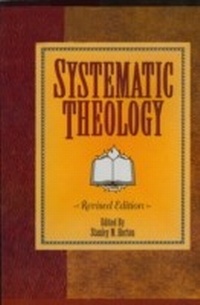
Systematic Theology
Revised Edition
1st Edition
Published on 22. August 2011
701 pages
978-1-60731-122-5 (ISBN)
Description

Twenty respected educators and authors examine the Pentecostal faith while addressing the strengths and weaknesses of various viewpoints. Chapters include: The Holy Trinity, The Saving Work of Christ, The Baptism in the Holy Spirit, Divine Healing, God's Inspired Word, The One True God, Spiritual Gifts, and other areas.
More details
Other editions
Additional editions
Stanley M. Horton
Systematic Theology
Book
01/1994
Gospel Publishing House,U.S.
€58.43
No shipping information available
Content
- Intro
- Title Page
- Copyright
- Contents
- List of Contributors
- Preface
- Chapter One: Historical Background (Gary B. McGee)
- The Continuance of the Charismata
- Pentecostal Theology and Missions
- Divisions over Theological Differences
- Development of Assemblies of God Theology
- Preservation of Doctrine to 1950
- Preservation of Doctrine after 1950
- Conclusion
- Study Questions
- Chapter Two: Theological Foundations (James H. Railey, Jr., Benny C. Aker)
- The Nature of Systematic Theology
- The Concept of Nature
- Types of Religious Authority
- Canonical Authority
- Theological Authority
- Ecclesiastical Authority
- Experience as an Authority
- Human Reason as an Authority
- A Definition of Theology
- Divisions in Theology
- Historical Theology
- Biblical and Exegetical Theology
- Practical Theology
- Protestant Theological Systems
- Calvinism
- Arminianism
- Liberation Theology
- Evangelicalism
- Pentecostalism
- Theological Method
- Exegesis and Biblical Theology as the Matrix
- The Nature and Function of Exegesis
- Biblical Criticism, Interpretation, and Theology
- Presuppositions of the Interpreter and Theologian
- Study Questions
- Chapter Three: God's Inspired Word (John R. Higgins)
- The Revelation of God to Humankind
- Categories of Divine Revelation
- General Revelation
- Human History
- Nature
- Human Nature
- Special Revelation
- Personal
- Understandable
- Progressive
- Recorded
- Transmitted
- The Authority of Scripture
- Rivals of Scripture
- Evidences to the Authenticity of Scripture
- Internal Support
- External Support
- Jesus' View of Scriptures
- The Extent of Biblical Authority
- The Inspiration of Scripture
- The Biblical Basis for Inspiration
- Modes of Inspiration
- Natural Intuition
- Special Illumination
- Dynamic Guidance
- Verbal Plenary
- Divine Dictation
- Formulating a View of Inspiration
- Biblical Inerrancy
- Definition of Inerrancy
- Propositional Revelation
- Preservation of the Truth of Scripture
- The Canon of Scripture
- The Holy Spirit and the Word
- Inspiration
- Regeneration
- Illumination
- The Written Word and the Living Word
- Study Questions
- Chapter Four: The One True God (Russell E. Joyner)
- God's Existence
- God's Constitutional Attributes
- Spirit
- Knowable
- Eternal
- Omnipotent
- Omnipresent
- Omniscient
- Wise
- God's Moral Attributes
- Faithful
- Truthful
- Good
- Patient
- Love
- Gracious and Merciful
- Holy
- Righteous and Just
- God's Names
- Old Testament Names
- New Testament Names
- God's Nature
- God's Activities
- Study Questions
- Chapter Five: The Holy Trinity (Kerry D. McRoberts)
- Biblical Data for the Doctrine
- The Old Testament
- The New Testament
- Historical Formulation of the Doctrine
- Irenaeus against the Gnostics
- Tertullian against Praxeas
- Origen and the Alexandrian School
- Dynamic Monarchianism: The First Wrong Turn
- Modalistic Monarchianism: The Second Wrong Turn
- Arianism: The Third Wrong Turn
- Trinitarian Orthodoxy: Exiting the Maze
- Trinity and the Doctrine of Salvation
- The Theophilosophical Necessity of the Trinity
- Excursus: Oneness Pentecostalism
- Study Questions
- Chapter Six: Created Spirit Beings
- Angels (Carolyn Denise Baker)
- The View of Angels through History
- The Consensus of the Modern Scene
- Biblical Evidence
- The Role of Angels
- Repudiating the Enemy: Satan and Demons (Frank D. Macchia)
- The Call for Discernment
- Satan and Demons in the Old Testament
- Satan and Demons in the New Testament
- God's Sovereignty and Denying the Enemy
- Demonology and Human Responsibility
- The Place of Satan and Demons in Christian Theology
- Study Questions
- Chapter Seven: The Creation of the Universe and Humankind (Timothy Munyon)
- The Creation of the Universe
- God as the Creator
- The Purpose of God's Creative Activity
- The Biblical Cosmogony and Modern Science
- The Gap Theory
- Fiat Creationism
- Progressive Creationism
- Harmonizing the Views
- The Creation and Nature of Human Beings
- The Biblical Terminology for Humankind
- The Origin of Humankind
- The Basic Components of Human Beings
- Trichotomism
- Dichotomism
- Monism
- The Origin of the Soul
- Preexistence Theory
- Creationism Theory
- Traducianism
- The Unity of Humanity
- The Image of God in Human Beings
- Study Questions
- Chapter Eight: The Origin, Nature, and Consequences of Sin (Bruce R. Marino)
- The Beginnings of Sin
- Original Sin: A Biblical Analysis
- Solidarity
- Corruption
- Sinfulness of All
- Liability to Punishment
- Childhood Salvation
- The Adam-Christ Parallel
- Not All like Adam
- One Man's One Sin
- The Cursed Ground
- Christ's Sinlessness
- God's Justice
- Original Sin: A Theological Analysis
- Jewish Conceptions
- Agnosticism
- Pelagianism
- Semipelagianism
- Natural or Genetic Transmission
- Mediate Imputation
- Realism
- Federalism
- An Integrated Theory
- The Existence and Definition of Sin
- Characteristics of Sin
- The Force and Extent of Sin
- The Consequences of Sin
- Study Questions
- Chapter Nine: The Lord Jesus Christ (David R. Nichols)
- Knowledge of Jesus
- The Issues of Methodology
- A New Testament Understanding of Jesus
- Lord and Christ
- Servant and Prophet
- Logos
- Son of Man
- Messiah
- Heresies concerning the Natures of Jesus Christ
- Docetism
- Ebionism
- Arianism
- Apollinarianism
- Monarchianism
- Nestorianism
- Eutychianism
- Systematic Considerations in Christology
- The Virgin Birth
- The Hypostatic Union
- Jesus and the Holy Spirit
- Study Questions
- Chapter Ten: The Saving Work of Christ (Daniel B. Pecota)
- The Meaning of "Salvation"
- The Natures of God and of Humankind
- God's Holiness and Love
- God's Goodness, Mercy, and Grace
- God's Love
- Theories of the Atonement
- The Moral-Influence Theory
- The Ransom Theory
- The Satisfaction Theory
- The Governmental Theory
- The Penal-Substitution Theory
- Aspects of Christ's Saving Work
- Sacrifice
- Reconciliation
- Redemption
- The Extent of the Atoning Work of Christ
- The Order of Salvation
- Election
- Repentance and Faith
- Regeneration
- Justification
- Adoption
- Perseverance
- Study Questions
- Chapter Eleven: The Holy Spirit (Mark D. McLean)
- The Holy Spirit in Scripture
- Titles of the Holy Spirit
- Symbols of the Holy Spirit
- Wind
- Water
- Fire
- Oil
- Dove
- The Work of the Holy Spirit
- Before the Day of Pentecost
- In the Pentecostal Movement
- As Comforter
- As Teacher
- Bearing Witness to Christ
- As a Promise
- Study Questions
- Chapter Twelve: The Holy Spirit and Sanctification (Timothy P. Jenney)
- Definition of Sanctification
- Sanctification in Church History
- Sanctification in the Old Testament
- Terminology
- Qadash and Its Cognates
- T_aher and Its Cognates
- The Cleansing Rituals
- The Prophetic Promise
- Sanctification in the New Testament
- Terminology
- Two Theologies of Sanctification
- The Fulfillment of Prophecy
- Convicting the World
- Cleansing the Believer
- Realizing Righteousness in the Believer
- Empowering the Believer
- Study Questions
- Chapter Thirteen: The Baptism in the Holy Spirit (John W. Wyckoff)
- Separability and Evidences
- The Terminology
- Relationship to Regeneration
- The Theological Import of Historical Materials in the Bible
- Evidences of the Baptism in the Spirit
- Tongues as the Initial Physical Evidence
- Other Evidences of the Baptism
- Availability of the Baptism in the Holy Spirit
- The Purpose of the Baptism in the Holy Spirit
- Reception of the Baptism in the Holy Spirit
- Conclusion
- Study Questions
- Chapter Fourteen: Spiritual Gifts (David Lim)
- The Church through the Expression of Gifts
- Incarnational Nature of Gifts
- Unity and Diversity in the Trinity
- The Diversities of Ministries
- The Message of Wisdom
- The Message of Knowledge
- Faith
- Gifts of Healings
- Miraculous Powers
- Prophecy
- Distinguishing between Spirits
- Tongues and Interpretation
- One Body, Many Members
- Sincere Love
- Ultimate Judgment
- The Functions of Gifts
- The Relationship of the Gifts and the Fruit
- Love
- Joy
- Peace
- Patience
- Kindness
- Goodness
- Faithfulness
- Gentleness
- Self-Control
- The Exercise of the Gifts
- Study Questions
- Chapter Fifteen: Divine Healing (Vernon L. Purdy)
- The Origin and Nature of Sickness
- Sickness in the Old and New Testaments
- Healing in the Old and New Testaments
- Healing as Part of Salvation
- Challenges to the Doctrine of Divine Healing
- Challenges by the Secular World
- Challenges by Christians
- Common Questions about Divine Healing
- 1. Why Are Some Healed and Others Not?
- 2. If Healing Is in the Atonement Why Can't We Be as Assured of Our Healing as We Are of Our Salvation?
- 3. Why Were All New Testament Believers Healed, but Not All Today's Believers Healed?
- 4. Shouldn't Divine Healing Be Considered the Exception rather than the Rule?
- Concluding Remarks
- Study Questions
- Chapter Sixteen: The New Testament Church (Michael L. Dusing)
- The Origin and Development of the Church
- The Church Defined
- Possibilities of Origin
- A Brief History
- The Nature of the Church
- Biblical Terms Applied to the Church
- People of God
- Body of Christ
- Temple of the Spirit
- Other Images
- The Character of the Church
- The Purpose of the Church
- The Organization of the Church
- Organism or Organization?
- Major Forms of Church Government
- The Ministry of the Church
- Priesthood of Believers
- Offices and Functions of Ministry
- The Ordinances of the Church
- Water Baptism
- The Lord's Supper
- Study Questions
- Chapter Seventeen: The Mission of the Church (Byron D. Klaus)
- A Biblical Understanding of the Mission
- Old Testament Foundations
- The Servant of the Lord
- New Testament Foundations
- Power for the Mission
- The Significance of Pentecost
- Luke's Understanding of the Mission
- The Global Connection
- The Vision of the Mission
- Early Theological Reflection
- Approaching the Twenty-First Century
- Ministry to God
- Ministry to the Church
- Ministry to the World
- Study Questions
- Chapter Eighteen: The Last Things (Stanley M. Horton)
- The Believer's Hope
- The Intermediate State of Death
- Old Testament Teaching
- New Testament Teaching
- Other Views of the Afterlife
- The End Times
- Views of the Book of Revelation
- Two Aspects of Christ's Second Coming
- The Tribulation
- The Antichrist
- The Wedding Supper of the Lamb
- The Millennium
- Satan Released
- The Judgments
- The Final State of the Wicked
- The Final State of the Righteous
- Study Questions
- Glossary
- A
- Abba
- Abomination of Desolation
- Adoptionism
- Age of Enlightenment
- Agnosticism
- Albigensians
- Allegory
- Amillennialism
- Ancient of Days
- Angelology
- Animism
- Anthropodicy
- Anthropology
- Antichrist
- Antisupernaturalism
- Apocalyptic
- Apollinarianism
- Apologetics
- Apostle
- Apostles' Creed
- Archaeology
- Arianism
- Arminianism
- Articles of Remonstrance
- Atheism
- Atonement
- Autographs
- B
- Biblical Criticism
- Biblical Theology
- Blasphemy
- C
- Calvinism
- Canon
- Charismata
- Charismatic
- Cherubim
- Christology
- Church Age
- Closed Canon
- Closed Communion
- Cluniacs
- Commercial Theory
- Congregational Government
- Consecrated
- Consubstantiality
- Consubstantiation
- Cosmogony
- Creed (Confession)
- D
- Daniel's Seventieth Week
- Deity
- Diaspora
- Dichotomism
- Didache¯
- Disciple
- Dispensationalism
- Ditheism
- Docetism
- Dominicans
- Dualism
- Dynamic Monarchianism
- E
- Ebionism
- Ecclesiology
- Ecumenical
- Eisegesis
- El Elyon
- El Olam
- El Shaddai
- Elohim
- Episcopal Government
- Epistemology
- Eschatology
- Eunuch
- Eutychianism
- Evangelicalism
- Ex Nihilo
- Exegesis
- Exegetical Theology
- Existential Revelation
- Existentialism
- Expiation
- F
- Faith
- False Prophet
- Federalism
- Fiat Creationism
- Filiation
- Foreknowledge
- Franciscans
- Futurist View
- G
- Gap Theory
- General Revelation
- Genre
- Glossolalia
- Gnosticism
- Governmental Theory
- Grace
- Great Awakening
- H
- Hades
- Hamartiology
- Hellenistic
- Henotheism
- Heresy
- Hermeneutics
- Higher Criticism
- Historical Narrative
- Historical Theology
- Historicist View
- Homoousia Hemin
- Hypostasis
- I
- Idealist View
- Illumination
- Incarnation
- Indigenous Church Principle
- Inerrancy
- Infallibility
- Intertestamental Period
- J
- Judaism
- Judeo-Christian
- Justification
- K
- Karma
- Kenosis
- Keswick
- Kingdom Now Theology
- Koran
- L
- Liberalism
- Liberation Theology
- Limbo
- Literary-Historical Criticism
- Lower Criticism
- M
- Macroevolution
- Manuscripts
- Maranatha
- Mass
- Messiah
- Microevolution
- Midrash
- Mid-tribulation Theory
- Millennium
- Modalism
- Monarchianism
- Monasticism
- Monism
- Monotheism
- Moral Influence Theory
- Moravians
- Mortal Sin
- N
- Narrative
- Neoorthodoxy
- Neoplatonism
- Neouniversalism
- Nestorianism
- Nicene Creed
- O
- Omnipotent
- Omnipresent
- Omniscient
- Oneness Pentecostalism
- Ontological
- Open Communion
- Ordinance
- Orthodox
- P
- Palestine
- Pantheism
- Parousia
- Patriarch
- Patripassianism
- Patristic Era
- Pelagianism
- Penal Substitution Theory
- Pentateuch
- Pentecostal
- Perseverance
- Pharisee
- Philology
- Pietists
- Pluralism
- Pneumatology
- Polemics
- Polytheism
- Postmillennialism
- Post-tribulation Theory
- Practical Theology
- Predestination
- Premillennialism
- Presbyterian Government
- Presupposition
- Preterist View
- Pre-tribulation Theory
- Progressive Creationism
- Propitiation
- Propositional Revelation
- Proselyte
- Providence
- Pseudepigrapha
- Purgatory
- Q
- Qumran
- R
- Ransom Theory
- Rationalism
- Reconciliation
- Redaction Criticism
- Redemption
- Regeneration
- Reincarnation
- Religion
- Repentance
- Restorationism
- Revelation
- S
- Sabellianism
- Sacerdotal
- Sacrament
- Sadducees
- Salvation
- Sanctification
- Sanctify
- Semipelagianism
- Sensus Plenior
- Septuagint
- Seraphim
- Sheol
- Soteriology
- Special Revelation
- Syncretism
- T
- Targumim
- Tenet
- Textual Criticism
- Theodicy
- Theology
- Theonomism
- Torah
- Traducianism
- Transubstantiation
- Tribulation
- Trichotomism
- Tritheism
- Types, Figures, and Shadows
- Typology
- U
- Universalism
- V
- Venial Sin
- Verbal Plenary Inspiration
- W
- Waldensians
- Wesleyan
- X
- Xenolalia
- Y
- Yahweh (Jehovah)
- Yahweh Nissi
- Yahweh Ropheka
- Yahweh Sabaoth
- Yahweh Yireh
- Z
- Zionist
- Selected Bibliography
- General Works
- Chapter 1
- Chapter 2
- Chapter 3
- Chapter 4
- Chapter 5
- Chapter 6
- Chapter 7
- Chapter 8
- Chapter 9
- Chapter 10
- Chapter 11
- Chapter 12
- Chapter 13
- Chapter 14
- Chapter 15
- Chapter 16
- Chapter 17
- Chapter 18
- Scripture Index
- Old Testament
- New Testament
- Subject Index
