

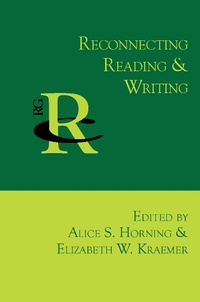
Reconnecting Reading and Writing
Published on 6. September 2013
339 pages
978-1-60235-461-6 (ISBN)
Description

Reconnecting Reading and Writing explores the ways in which reading can and should have a strong role in the teaching of writing in college. Reconnecting Reading and Writing draws on broad perspectives from history and international work to show how and why reading should be reunited with writing in college and high school classrooms. It presents an overview of relevant research on reading and how it can best be used to support and enhance writing instruction.
More details
Other editions
Additional editions
Alice S. Horning | Elizabeth W. Kraemer
Reconnecting Reading and Writing
Book
09/2013
Parlor Press
€36.90
Shipment within 3-4 weeks
Content
- Front cover
- Series page
- Title page
- Copyright page
- Contents
- Series Editors' Preface
- Charles Bazerman, Mary Jo Reiff, and Anis Bawarshi
- Part I: Overview
- 1 Reconnecting Reading and Writing: Introduction and Overview
- Alice S. Horning and Elizabeth W. Kraemer
- Reading Abilities at Entry and Graduation
- Reading at Entry: The ACT Reading Test
- Reading at Graduation: Pew National Survey of America's College Students
- Definitions
- Reading
- Writing
- New Literacies
- Multiliteracies
- Information Literacy
- More Reasons to Reconnect Reading and Writing
- National Commission on Writing
- DEEP Study of College Success
- Qualitative Research Supporting Reconnection: George Mason University and University of Arkansas Students' Reading and Writing
- Organizational Policy Statements
- NCTE and IRA: Redefining the Reading/Writing Connection?
- College English: CCCC and CWPA
- An Overview of the Book
- Part I: Overview
- Part II: Classrooms and Students
- Part III: Contexts and Resources
- 2 A Historical and Theoretical Review of the Literature: Reading and Writing Connections
- Allison L. Harl
- English Studies in the Eighteenth and Nineteenth Centuries: Belles Lettres
- The Twentieth Century
- The Writing Process
- Cognitive Approach
- Expressivist Approaches
- The Turn of the Century: The Social Turn
- The Twenty-First Century: Technology and New Media
- Conclusion
- 3 How Other Nations Approach Reading and Writing
- Jennifer Coon
- Globally Speaking
- Programme for International Student Assessment
- Adult Literacy and Life Skills Survey
- International Reports on Literacy Research
- Reading and Writing Instruction in Italy
- Reading and Writing Instruction in Hong Kong
- Reading and Writing Instruction in Argentina
- Reading and Writing Instruction in Australia
- Conclusion
- Part II: Classrooms and Students
- 4 Writing and Reading Across the Curriculum: Best Practices and Practical Guidelines
- Alice Horning
- Issues and Problems in Teaching Reading with Writing
- The Functions of Reading
- The "Bounce off" Function
- Reading to Imitate
- Reading to Digest and Incorporate
- Monday Morning Goals
- Reading and Writing in Writing Classes Monday Morning
- Strategy One: Understanding Reading
- Strategy Two: Overt Teaching of Critical Reading Skills
- Strategy Three: Modeling by Reading Aloud
- Strategy Four: Intensive Reading Through the Use of Reading Guides
- Strategy Five: Discourse Synthesis
- Reading and Writing Across the Curriculum Monday Morning
- Strategy Six: Scaffolding with Text Apparatus
- Strategy Seven: Scaffolding with Graphic Organizers
- Strategy Eight: Extensive Reading for Practice
- Strategy Nine: Learning to Read in Specific Disciplines
- Strategy Ten: Learning to Read Critically on Screens
- 5 First Year Writers: Forward Movement, Backward Progress
- Kathleen Skomski
- Understanding the Basic Writer
- The Reading/Writing Connection
- Level I: Remembering
- Level II: Understanding
- Level III: Applying
- Level IV: Analyzing
- Level V: Evaluating
- Level VI: Creating
- Now What?
- Classroom Practices and Suggestions
- 6 Second Language Reading-Writing Relations
- William Grabe and Cui Zhang
- The L2 Student in the L1 English Composition Class
- Research on L2 Reading-Writing Integration in the Writing Classroom
- Summary Writing
- Synthesis Writing
- Research Papers
- Contrastive Rhetoric, Socialization, and Plagiarism
- L2 Language Proficiency and the Limits on English L2 Writing Abilities
- Implications from L2 Research on Reading-Writing Relations for Writing Instruction
- 7 The Common Core Standards and Preparation for Reading and Writing in College
- David A. Jolliffe
- History and Goals of the Common Core Standards
- Why Should College and University Faculty Members Be Concerned?
- The Reading Standards: In Isolation and in Relation to Writing
- Key Ideas and Details
- Craft and Structure
- Integration of Knowledge and Ideas
- Range of Reading and Level of Text Complexity
- Key Ideas and Details
- Craft and Structure
- Integration of Knowledge and Ideas
- Range of Reading and Level of Text Complexity
- The Common Core Writing Standards: A Disconnect?
- Issues and Concerns about the Standards in General and about Reading in Particular
- Preparing to Teach the Common Core Standards: Major Challenges for Teachers
- An Observation and a Modest Proposal
- Note
- Part III: Contexts and Resources
- 8 Reading and Writing Connections in College Composition Textbooks: The Role of Textbook Readers
- Jimmy Fleming
- Ways of Reading and First-Year Writing
- The Reading-Writing Connection in Textbooks
- Ways of Seeing Textbook Readers: Reading the Apparatus
- Rhetorical Readers: Reading as Rhetorical Invention
- Thematic Readers: Reading for Meaning and Analysis
- Argument Readers: Reading to Evaluate and Create Meaning
- Writing Across the Curriculum Readers: Reading as Inquiry
- Reading and Writing Text-to-Text: Extending the Conversation
- Reading and Writing Text-to-Text: Literacy and Learning Practices
- Reading and Writing Text-to-Text: Writing about Writing
- Why Use a Reader: The Triangulation of Students, Teachers, and Textbooks
- Author Acknowledgments
- 9 Reuniting Reading and Writing: Revisiting the Role of the Library
- Cynthia R. Haller
- From Bibliographic Instruction to Information Literacy: Changing Views of the Library
- Reading, Research, and Writing: Conceptual and Theoretical Connections
- Critical Literacy: Connecting Reading, Writing, and Disciplinary Content
- Networking-Coordination Approaches
- Coordination-Collaboration Approaches: Libraries and Writing Centers
- Collaborative Approaches: Toward an Integrated Critical Literacy
- Course Integrations of Information Literacy
- Assessment-Based Initiatives
- Sustainable Information Literacy
- Conclusion: Opening a Blind Eye
- Notes
- 10 Undergraduate Research and Information Literacy in the Digital Environment
- Erik D. Drake
- Models of Information Seeking
- Information Seeking and Information Literacy
- Information Seeking in Digital Environments
- Information Seeking by Academic Discipline
- Screen-Based Reading Behaviors
- E-readers, Reading and Writing
- Digital Information Literacy Instruction and Libraries
- Conclusion and Implications for Research
- Appendices
- Appendix A: The Association of College and Research Libraries Information Literacy Competency Standards for Higher Education [Excerpt]
- Appendix B: Research-Based Recommendations for Effective Instruction in 21st-Century Literacies: A Policy Research Brief produced by the National Council of Teachers of English [Excerpt]
- Appendix C: Conference on College Composition and Communication Position Statement on Teaching, Learning, and Assessing Writing in Digital Environments [Excerpt]
- Appendix D: Writing Program Administrators' First Year Writing Outcomes [Excerpt]
- Appendix E: Common Core Standards in English Language Arts [Excerpts]
- Appendix F: Other Writing Textbooks of Note
- Glossary
- References
- Contributors
- About the Editors
- Index
- Back cover
