


Sexual Ethics
Description

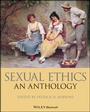
Sexual Ethics: An Anthology addresses conceptual, ethical, and public policy issues about sex, providing a balanced and non-sectarian discussion of many of today's most important and controversial moral topics. Covering a broad range of contemporary sexual ethics issues, this easily accessible textbook includes explications and point/counterpoint pieces on the definition of sex and sexual orientation, sexual harassment and rape law, sexual discrimination, age of consent, marriage and adultery, online affairs, gay marriage, polygamy and polyamory, sexual orientation change therapy, transgender and sex reassignment surgery, intersexed infants and surgery, pornography, prostitution, psychiatric classifications of sexuality disorders, and specific paraphilias. Organized around six broad themes--Consent, Marriage, Homosexuality, Transgender, Commerce, and Paraphilias--Sexual Ethics presents multiple sides of each issue, offering diverse perspectives on critical topics, supported by relevant philosophical arguments, position papers, psychological studies, government regulations, and court rulings.
Sexual Ethics is particularly designed to provide a ready-made course in sexual ethics, with several major elements ideally suited for classroom instructors and students:
* Includes an introductory chapter on key definitional, conceptual, and theoretical issues
* Features "Framing Questions" for each section that address a major moral or policy issue and highlights the pro/con nature of the readings (e.g., How should we define rape? Should pornography be protected as free speech?)
* Features a short summary at the beginning of each reading, including the topic, major points, and conclusion, very helpful for instructor planning
* Features 15 "Discussion Starters" that help students start thinking critically and talking about sexual ethics before doing any reading
* Features 45 brief "Decision Cases" drawn from major media stories especially relevant to the college student context, including college virginity, male rape, child pornography on television, college sexual harassment, faux-bisexuality, fraternity party sex, transgender inclusion, race and sex, asexuality, bromances, campus pride groups, fetishes and kink, online sex, Title IX mandatory reporting, transgender sports competition, religious diversity and sex, sex education, feminists working at sexually exploitative jobs, cancel culture, and robot sex. These cases are ideal for class discussion, class presentations, and research paper topics.
Sexual Ethics: An Anthology is an excellent textbook for undergraduate classes in applied ethics, sexual ethics, and gender studies, as well as related courses in sociology, public policy, marriage and family law, and social work.
More details
Other editions
Additional editions
Person
PATRICK D. HOPKINS is the Jennie Carlisle Golding Chair of Philosophy at Millsaps College and Professor of Psychiatry and Human Behavior and Affiliate Faculty of the Center for Bioethics and Medical Humanities at the University of Mississippi Medical Center. He is the editor of Sex/Machine: Readings in Culture, Gender, and Technology and is the author of numerous articles on bioethics, moral psychology, gender studies, and science and technology studies.
Content
Preface: How This Book Is Organized and How to Use It x
Acknowledgements xiii
Part I Introduction to Sex, Sexuality, and Sexual Ethics 1
1 What is Sex? What is Sexuality? What is Sexual Ethics? 3 patrick d. hopkins
Section 1: What is Sex? 4
1.1 Discussion Starters 4
1.2 The Problem of Definitions 4
1.3 Solutions to the Problem of Definitions 7
1.4 Decision Cases 7
Section 2: What is Sexuality? 12
2.1 Discussion Starters 12
2.2 Definitions 13
2.3 Contextual Categorizations 15
2.4 Decision Cases 16
Section 3: What is Sexual Ethics? 21
3.1 Discussion Starters 21
3.2 Methods of Ethics 22
3.3 Moral Psychology and Analysis 24
3.4 Decision Cases 25
Part II Consent and Coercion 33
How should we define sexual harassment?
2 A Feminist Definition of Sexual Harassment 35 Anita M. Superson
3 Lost Innocence 45 Laurence Thomas
4 Equal Employment Opportunity Commission v. Domino's Pizza, Inc. 53 United States District Court (M.D. Florida, Tampa Division)
5 Oncale v. Sundowner Offshore Services, Inc. 58 United States Supreme Court
How should we define rape?
6 Force, Consent, and the Reasonable Woman 62 Joan Mcgregor
7 Rape and the Reasonable Man 74 Donald Hubin And Karen Healy
8 Revisions to the Uniform Crime Report's Definition of Rape 84 United States Department Of Justice
How should we assess the age of consent?
9 Romeo and Juliet Were Sex Offenders: An Analysis of the Age of Consent and a Call for Reform 86 Steve James
10 A Bee Line in the Wrong Direction: Science, Teenagers, and the Sting to the "Age of Consent" 98 Jennifer Ann Drobac
Part III Marriage and Fidelity 117
Should we provide new options for heterosexual marriage?
11 Covenant Marriage Seven Years Later: Its as Yet Unfulfilled Promise 119 Katherine Shaw Spaht
12 Regulatory Fictions: On Marriage and Countermarriage 129 Elizabeth F. Emens
Should we legalize gay marriage?
13 A Traditionalist Case for Gay Marriage 147 Dale Carpenter
14 A Response to the 'Conservative Case' for Same- Sex Marriage: Same- Sex Marriage and the 'Tragedy of the Commons' 154 Lynn D. Wardles
15 United States v. Windsor, Executor of the Estate of Spyer 167 Supreme Court Of The United States
Should we legalize polygamous marriage?
16 Marriage 170 Marci Hamilton
17 Liberalism and the Polygamy Question 178 Jon Mahoney
18 Multi- Player Option 185 Michelle Chihara
Is adultery necessarily immoral? 19 Is Adultery Immoral? 189 Richard Wasserstrom
20 What's Really Wrong with Adultery? 197 Michael J. Wreen
How should we define adultery?
21 Sex Online: Is This Adultery? 201 Christine Tavella Hall
22 Virtual Adultery: No Physical Harm, No Foul? 211 Kathryn Pfeiffer
Part IV Homosexuality and Policy 221
How should homosexuality be understood?
23 Why Homosexuality Is Abnormal 223 Michael Levin
24 Homosexuality and Nature: Happiness and the Law at Stake 233 Timothy F. Murphy
What should the law be about homosexuality?
25 Bowers v. Hardwick 239 United States Supreme Court
26 Lawrence v. Texas 253 United States Supreme Court
How should we assess attempts to change sexual orientation?
27 Therapies Focused on Attempts to Change Sexual Orientation (Reparative or Conversion Therapies): COPP Position Statement 260 American Psychiatric Association, Committee On Psychotherapy By Psychiatrists (Copp)
28 (A) Can Some Gay Men and Lesbians Change Their Sexual Orientation? 200 Participants Reporting a Change from Homosexual to Heterosexual Orientation - Abstract; (B) Spitzer Reassesses His 2003 Study of Reparative Therapy of Homosexuality 264 Robert L. Spitzer
29 Welch v. Brown, Appellants' Opening Brief (Preliminary Injunction Appeal) 267 Kamala D. Harris, Douglas J. Woods, Tamar Pachter, Daniel J. Powell, Craig J. Konnoth, And Alexandra Robert Gordon
30 Welch v. Brown, Brief Amicus Curiae of Foundation for Moral Law, in Support of Plaintiffs - Appellees Urging Affirmance 277 John A. Eidsmoe And Joshua M. Pendergrass
Part V Transgender and Medicine 283
How should transgender be understood?
31 Gender Identity Disorders in Childhood and Adolescence: A Critical Inquiry 285 Darryl B. Hill, Christina Rozanski, Jessica Carfagnini, And Brian Willoughby
32 Sexual and Gender Identity Disorders: Discussion of Questions for DSM- V (on GID) 297 Robert L. Spitzer
33 Gender Dysphoria 300 American Psychiatric Association
How should we assess sex reassignment surgery?
34 The Psychopathology of "Sex Reassignment" Surgery: Assessing Its Medical, Psychological, and Ethical Appropriateness 302 Richard P. Fitzgibbons, Philip M. Sutton, And Dale O'leary
35 Transsexualism and Gender Reassignment Surgery 314 Heather Draper And Neil Evans
How should intersexed children be medically treated?
36 Surgical Progress is Not the Answer to Intersexuality 322 Cheryl Case
37 The Ethics of Surgically Assigning Sex for Intersex Children 327 Merle Spriggs And Julian Savalescu
Part VI Commerce and Speech 337
Is pornography harmful?
38 The Question of Harm 339 Attorney General's Commission On Pornography, Final Report, 1986
39 The Findings and Recommendations of the Attorney General's Commission on Pornography: Do the Psychological "Facts" Fit the Political Fury? 348 Daniel Linz, Edward Donnerstein, And Steven Penrod
Should pornography be protected as free speech?
40 Pornography and the First Amendment 355 Cass R. Sunstein
41 Ashcroft v. Free Speech Coalition 370 United States Supreme Court
Is prostitution necessarily immoral?
42 What's Wrong with Prostitution? 374 Igor Primoratz
43 Moral Reflections on Prostitution 385 Yolanda Estes
Part VII Paraphilia and Pathology 393
Are some sexual desires a type of disease?
44 DSM- IV- TR and the Paraphilias: An Argument for Removal 395 Charles Moser And Peggy J. Kleinplatz
45 Sexual and Gender Identity Disorders: Discussion of Questions for DSM- V (on Paraphilia) 403 Robert L. Spitzer
46 Paraphilic Disorders 406 American Psychiatric Association
Is sadomasochism necessarily immoral?
47 Rethinking Sadomasochism: Feminism, Interpretation, and Simulation 408 Patrick D. Hopkins
48 Naughty Fantasies 419 John Corvino
Is bestiality necessarily immoral?
49 What (if Anything) Is Wrong with Bestiality? 424 Neil Levy
50 Horse Sense 431 Wesley J. Smith
Is pedophilia necessarily immoral?
51 Pedophilia 434 Igor Primoratz
52 What Really Is Wrong with Pedophilia? 440 Robert Ehman
Index 447
Preface: How This Book Is Organized and How to Use It
History of the Text
Sexual Ethics: An Anthology is an accessible and provocative collection of readings on conceptual, ethical, and policy issues about sex. Designed for students, teachers, and anyone interested in exploring one of the major moral topics of our times, this collection avoids jargon and obscurity in favor of clear, straightforward discussion, covering a wide array of cases from all sides. It is intended to provoke thought, generate discussion, and analytically clarify the definitions, arguments, assumptions, and options of our personal, public, and political treatment of sex.
Unlike many books, which make their way from author to publisher to classroom, this anthology made the trip the other way around. It started in a classroom and then made its way to the publishing house. Now it's coming full circle. Toward the end of the first decade of the 2000s, when I was revamping my department's offerings and putting several applied ethics courses into rotation, I decided to teach a stand-alone course on sexual ethics. Such a course made sense, seeing as how sex was a major moral issue in society, every bit as controversial and publicly debated as medicine, business, and the environment. I assumed, then, that there would be textbooks on sexual ethics, focused on practical problems and organized in the same ways the medical ethics, business ethics, engineering ethics, and environmental ethics books on my shelves were. To my surprise, I found none. There were excellent books on the philosophy of sex and while those included some applied moral and policy articles, they focused mainly on conceptual, ontological, and epistemological issues. There were also quite a few books from particular sectarian perspectives whose aims were largely about doctrinal clarification or religious training. There were also various books on feminist theory and gender studies, which tended to center on conceptual, historical, and theoretical concerns, often using abstruse vocabulary. Finally, there were anthologies on very specific issues, such as entire books on sexual harassment law. While all useful for their purposes, these books did not address the needs of a wide-ranging, non-sectarian, accessible, applied ethics course. So, I created my own reader from the sizable literature on sexual ethics. When the class was a success, I decided to turn that reader into a book anyone could use. This is that book.
Purpose of the Text
Applied ethics courses have been popular on college campuses for years. Delving into subjects from medicine to business to law to technology to the environment, they tap into an interest and a need people have to talk about, think about, write about, and hopefully learn about issues that grip our moral consciousness as well as our legislatures. Somewhat surprisingly, given the popularity of medical, business, and environmental ethics, sexual ethics courses are less common even though society seems seized at times with debate over sex and sexuality. The public controversies over gay marriage, pornography, premarital sex, sexual harassment, and adultery, just to name a few, have been as prominent and intense as those about abortion, healthcare costs, corporate misconduct, climate change, and endangered species. There could be several reasons why this is case. Perhaps it is because we are still embarrassed to talk about issues that feel as personal as sex, whether from a puritan inheritance or from a worry that others will think we must be talking about ourselves. Perhaps it is because the very act of talking about sex is sometimes part of a moral controversy itself - as with sexual harassment - and teachers worry that some discussions might be interpreted as inappropriate. Perhaps it is because sex is the area in which humans are both most literally and uncomfortably similar to animals - driven by the same powerful instinctual physical desires of beasts rutting in the field - and most anxiously and distancingly different from animals - driven to interpret, judge, and question those desires. Whatever the case, we seem to find it easier to talk about euthanasia than homosexuality in the classroom - although oddly, we seem to find much more talk about homosexuality in the media than euthanasia.
One way to address this asymmetry between public controversy and classroom discussion is to recognize that the passions and euphemisms and furor in public debates over sex should be taken seriously and can be discussed clearly, analytically, explicitly, and respectfully. A book that clearly labels sexual ethics as an academic and policy area worthy of focused, practical, attention can help with that.
Organization of the Text
This book is organized into three levels. The first level is a set of broad categories of concepts that shape various specific issues. For example, the concept of consent is crucial in analyzing the morality and legality of numerous sexual acts. Therefore, the broad category of consent and coercion is the rubric under which issues of sexual harassment, rape, and cognitive maturity are grouped. The second level is a set of applied framing questions that situate the broader conceptual problems with reference to specific issues. These questions do not exhaust the moral terrain but focus on the way the concepts work in real-world moral and legal decisions. For example, under the broad category of marriage and fidelity, one framing question asks whether purely online romances should count as adultery. The third level is the set of articles themselves, arguing for one conclusion over another, one judgment over another, and one policy over another. For example, under the broad category of homosexuality and policy, and under the framing question of how we should assess attempts to change sexual orientation, one legal brief argues that "conversion therapy" should be criminalized as malpractice and another argues that it is justified by the right of the therapist to free speech.
With any text like this, the editor has a painful time selecting material. There are often so many good articles on a topic, sometimes only a few good articles on an important topic, and always far too many topics to cover at all. There are hard decisions then, as to what to cover and what to leave for another day. Inevitably, some readers will be disappointed that a topic or article important to them is left out. That is entirely understandable, but limitations of space preclude covering all that would be useful. In choosing the articles for this book, then, I had to decide what selection criteria would guide me. I chose topics I considered to be major issues, but "major" was interpreted in two ways. In one sense, "major" meant "amount of controversy in society." Using that criterion, gay marriage had to be included since it has recently been a monumental cultural focus at the level of individual, city, state, nation, legislature, and supreme court. Interracial marriage, though controversial in its own time and important to look at for the history of sexual ethics, was left out because it currently engenders little public outcry. In another sense, however, "major" meant "getting at the conceptual heart of sexual ethics." Using that criterion, the medical treatment of intersexed infants is included, even though it is a rare condition, and the moral analysis of pedophilia is included, even though there is hardly any public demand for decriminalizing sex with children.
Instructional Benefits of the Text
Having been created in the classroom, for college and law students of all levels and all majors, this book has been deliberately designed to be as user-friendly as possible, always in reference to what makes a text most useful for students, teachers, or anyone who wants a clear direction of where to go and a clear explanation of what to expect. The goal has essentially been to create a ready-to-go course. The specific user-friendly design elements include:
- Categorization: The book is divided into six broad categories that emphasize how conceptual issues shape debates (Consent, Marriage, Homosexuality, Transgender, Commerce, Paraphilia) with a short introduction to the topic at the beginning of the section.
- Framing Questions: Each major section of the book includes specific framing questions that address a major moral or policy issue, not to limit the issues but to show how various concepts are employed in real-world cases (e.g., How should we define rape? Should we legalize gay marriage? Should pornography be protected as free speech?).
- Introduction: The book begins with a concise introductory chapter on concepts and definitions of sex, sexuality, and sexual ethics that brings theoretical issues into clear view, providing the philosophical and scientific background for discussing the readings and explicitly showing how these conceptual issues have direct practical application. For example, definitions of sex are not just intellectual puzzles - definitions legally determine whether or not rape has occurred and thus determine whether or not someone goes to prison. The chapter includes recent empirical research on how people define sex and sexuality and recent empirical research on the moral psychology of emotional reactions to sexual issues.
- Discussion Starters: Each of the three sections in the introductory chapter (what is sex? what is sexuality? what is sexual ethics?) begins with 5 discussion starters, geared toward getting a...
