

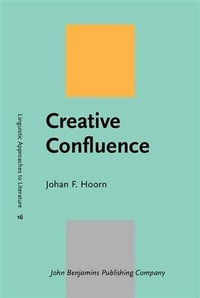
Creative Confluence
Democratic Planning in the 21st Century and Beyond
1st Edition
Published on 22. May 2014
XV, 320 pages
978-90-272-7057-3 (ISBN)
Description

Creative Confluence is a highly original work, building bridges between physics, biology, technology, economy, organizations, neuropsychology, literature, arts, and cultural history. It is an attempt to explain the process of creativity as a universal principle of nature, cutting through the composition of atoms as well as human design of novel combinations. Creative Confluence is yet another impressive book and a sequel to Epistemics of the Virtual, indicating that perception and imagination operate in close contact. In a clear and light tone, the work holds that rational problem-solving strategies are most relevant in deterministic problem spaces whereas creativity is pertinent in more probabilistic situations. Theories of creativity and innovation are explored by means of computer simulations. Conditionals that favor creativity such as diversity, tolerance, and openness are discussed, forwarding a compelling vision of creative leadership.
More details
Other editions
Additional editions
Johan F. Hoorn
Creative Confluence
Book
05/2014
John Benjamins Publishing Co
€111.30
Shipment within 10-15 days
Person
Content
- Creative Confluence
- Editorial page
- Title page
- LCC data
- Dedication page
- Table of contents
- Introduction
- 1. Puzzled
- 2. Urgency of creativity
- 3. Creativity in theory
- 3.1 Creativity in the humanities
- 4. Creativity in application
- 5. Heading for common ground
- 6. The Confluence Theory of Creativity
- 7. About this book
- Acknowledgements
- chapter 1
- Confluence
- 1. Cooling down
- 2. Thermodynamics
- 3. Assembling
- 4. Blind variation, selective retention
- 5. Brain architecture
- 6. Selective attention: Survival or opportunities
- 7. Two types of problem solving
- 8. Cultural history
- 9. Epistemics and perceptual flaws
- 10. The need for transformation
- 11. The creative process
- 12. Conditions of creativity
- 13. Probabilism, determinism, and the rule of rules
- 14. Creative output: Sigmoid accumulation of innovations
- 15. Creative Sigmoid at three scales
- 16. Fractal recursion of the sigmoid
- Acknowledgement
- chapter 2
- Two world views
- 1. A world view follows from what we believe
- 2. Survival versus opportunity thinking
- 2.1 Old brain, young brain
- 3. Ontological classification, epistemic appraisal
- 4. Determinism, probabilism
- 5. Two world views leading to three theories
- 5.1 The ordered universe: A vision of continuity and determinism
- 5.1.1 Analytic decomposition
- 5.1.2 Hierarchical
- 5.1.3 No free will, no heroes, no revolutions
- 5.1.4 Creative drivers
- 5.1.5 Slow evolution
- 5.1.6 Invention is social
- 5.1.7 Copying from others
- 5.1.8 Harmony and perfection
- 5.2 A subversive universe: Discontinuity and the outlier
- 5.2.1 Against dehumanization
- 5.2.2 Deviation and disharmony
- 5.2.3 Genius: the freedom of formidable spirits
- 5.2.4 Iconic heroes
- 5.2.5 Hop, step, jump
- 5.3 Chaos: Coincidence and non-random variance
- 5.3.1 Pure coincidence
- 5.3.2 Mechanized coincidence
- 5.3.3 Serendipity: The human hunch
- 5.3.4 Mean and variance: Playing with partial determinism
- 5.3.5 Fractal recursion
- 6. Classic, Romantic, Chaotic
- 7. Reconciliation: Serendipity in a partly deterministic system
- 8. Creativity on three scales
- 8.1 The breakdown of determinism or why Rutherford was wrong
- 8.2 The law of 'anything can happen' or why Rutherford is sometimes right
- chapter 3
- Problem solving
- 1. The two ways
- 2. Problems are not problematic
- 3. Commonalities
- 4. Convergent and divergent thinking
- 4.1 Conventional computing systems are "convergent"
- 4.2 Humans can do both
- 5. Rational problem solving
- 5.1 Breaking down the problem
- 5.2 Forward and backward reasoning
- 5.3 Difference reduction
- 5.4 Means-end analysis
- 5.5 Problem complexity
- 6. Intelligence and creativity
- 7. Switching perspectives: narrow vs. wide
- 8. The balance between convergence and divergence
- 8.1 Intelligence: first convergence, then divergence
- 8.2 Creativity: first divergence, then convergence
- 9. Analogy: An associative reasoning strategy
- 9.1 Solving an analogy
- 9.2 Limitations of analogy use
- 10. Experts and novices
- 10.1 Experts converge
- 10.2 Novices diverge
- 10.2.1 Alternate uses
- 10.3 Being knowledgeable
- 11. Problem representations: single or multiple?
- 12. Decision making: deterministic - probabilistic
- 13. Decision models
- 14. Individual and group decisions
- 15. Decision-support systems
- 16. Decision support and its place in an organization
- 17. The distribution of innovation power through organizations
- 17.1 Middle management: Pockets of resistance or agents of change?
- chapter 4
- The creative process
- 1. Cross-fertilization
- 2. The symbiogenesis of ideas
- 3. Five steps
- 4. ACASIA
- 5. ACASIA in five steps
- 5.1 Preparation: Familiar but unusual
- 5.2 Incubation: Association and types of features
- 5.2.1 Feature sets, semantic networks, associative models, and statistics
- 5.2.2 Feature types
- 5.3 Flash of insight: Novel combinations
- 5.3.1 Feature matching or correlations
- 5.3.2 Fuzziness
- 5.3.3 Similarity, dissimilarity, complementarity, and perceptual biases
- 5.3.4 The flash of insight and the clash in hindsight
- 5.3.5 Novel, unique, and original
- 5.3.6 Metaphor
- 5.3.7 'As if' but not figurative
- 5.4 Evaluation 1
- 5.5 Elaboration
- 5.5.1 Closing physical distance
- 5.5.2 Abstraction
- 5.5.3 Integration
- 5.5.4 Adaptation
- 5.5.5 Priming and framing reduce connection possibilities
- 5.6 Evaluation 2
- 6. Organic creativity
- 7. Outline of a creativity process model
- 7.1 ACASIA process
- 8. Requirements on a creative simulator
- 8.1 Database with crisp and fuzzy ontology
- 8.2 Adaptable association generator
- 8.3 Random feature generation and connection
- 8.4 Familiarity measure
- 8.5 Associative distance estimator
- 8.6 Feature matchmaker
- 8.7 Unipolar estimators of similarity and dissimilarity
- 8.8 Metaphor and analogy production units
- 8.9 Signal detection and decision making
- 8.10 Information abstraction
- 8.11 Detection of void addresses
- 8.12 Search and destroy
- 8.13 Adaptation devices
- 8.14 Integration tool
- 8.15 A measure of physical distance
- 8.16 A frequency counter of combinations relative to sample size
- 9. Creativity calculus
- 10. Creativity simulation
- 10.1 Under construction
- 10.2 The Creator Simulator
- 10.3 How the Circle of the CobraSpoon came into being
- 10.4 Gible the land shark
- Acknowledgements
- chapter 5
- The Creative Sigmoid
- 1. The forces that drive the sigmoid
- 2. Creative development
- 3. Creative combinatorics
- 4. The shape innovation takes
- 5. The sigmoid growth curve of cumulative change
- 5.1 The bandwidth of behaviors
- 5.2 Surfing up the sigmoids
- 5.2.1 Jump size depends on narrow-mindedness
- 5.3 Many means merging
- 6. Autocatalysis of creativity
- 7. ACASIA propels the Creative Sigmoid
- 8. Snakes at the pyramid
- 9. Requirements on a rule for creative development
- 9.1 Complexity
- 9.2 Random information flow and differentiation maximization
- 9.3 Sigmoid growth
- 9.4 Bandwidth tweaking
- 9.5 Scale-independent invariance between nearly self-similar sigmoids
- 9.6 Scale-dependent variability within sigmoids
- 9.7 Multiplicity
- 9.8 Serendipity
- 9.9 Combinatory resolution
- 9.10 Autocatalytic propulsion
- 9.11 Evolution and disruption
- 9.12 Innovation diffusion (downward, upward)
- 10. A rudimentary model of ACASIA
- 10.1 Inventing the motorhome
- 11. Simulation of the Creative Sigmoid
- 11.1 Simulation 1: Disruption on plateau
- 11.2 Simulation 2: Postponed acceleration
- 11.3 Simulation 3: Evolution within the boundaries
- 11.4 Simulation 4: Dead culture
- 11.5 Simulation 5: Lacking good fortune
- 11.6 Simulation 6: Increasing the chances for luck to strike
- 11.7 Simulation 7: Daring creativity
- 11.8 Simulation 8: Must be original
- 11.9 Simulation 9: Expanding the information universe
- 11.10 Simulation conclusions: As luck would have it
- 12. Simulations including selection and adaptation
- 12.1 Comparability of sigmoids
- 12.2 Including adaptation
- 12.3 Including selection
- 12.4 Including selection and adaptation
- 12.5 Organic creativity outperforms physical creativity
- 13. Fractal recursion
- 13.1 Theory alluding to fractality
- 13.2 Abstracted into sigmoids
- 13.3 Eyeball inspection of simulation output
- Acknowledgement
- chapter 6
- Conditions of creativity
- 1. Contexts of creativity
- 2. Moderators of creativity
- 2.1 Culture
- 2.2 Politics
- 2.3 Economy
- 2.3.1 Coordinated and liberal markets
- 2.3.2 Protectionism
- 2.3.3 A new economy
- 2.4 Organizations
- 2.5 Social sphere
- 2.5.1 Judges and juries
- 2.6 Families
- 2.7 Personality
- 2.8 Brain
- 3. Negative world view, positive world view
- 3.1 Moderation or balance?
- 3.2 Old brain survival
- young brain opportunities
- 4. Openness and universal access
- 4.1 Increasing serendipity: Influx of diverse information
- 4.2 Determinism and rules, probabilism and creativity
- 5. I-shaped people, hyphens, and T-shaped people
- 6. Leadership styles
- 6.1 Management is valuable
- leadership priceless
- 6.2 Tidy management
- 6.3 Creative leadership
- 6.4 Creative leadership at the sigmoid
- 7. Changing conditions of creativity
- 7.1 At infancy
- 7.2 Early acceleration
- 7.3 Halfway acceleration
- 7.4 Just before stagnation
- 7.5 At maturity
- 7.6 Decline
- 8. A hard reset
- Acknowledgements
- chapter 7
- Creation
- The virtuality of epistemics
- 1. Epistemics of the virtual
- 2. Creation, fiction, and truth
- 3. Creator as first perceiver
- 4. Second perceivers and co-creators
- 5. Epistemics of the Virtual and ACASIA
- 5.1 Fictional characters and the mystification of genius
- 6. Epistemics of the Virtual, ACASIA, and the Creative Sigmoid
- 6.1 Creative confluence: Creating the "as if"
- 7. The Virtuality of Epistemics
- Make - Take
- References
- List of referenced figures
