

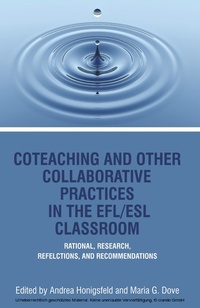
Co-Teaching and Other Collaborative Practices in The EFL/ESL Classroom
Rationale, Research, Reflections, And Recommendations
1st Edition
Published on 1. May 2012
319 pages
978-1-61735-688-9 (ISBN)
Description

Much has been written about the cognitive and academic language needs of those learning English as a new language (be it a second language in the United States or other English-speaking countries or as a foreign language in all other parts of the world). Many guidebooks and professional development materials have been produced on teacher collaboration and co-teaching for special education, inclusive classrooms. Similarly, much has been published about effective strategies teachers can use to offer more culturally and linguistically responsive instruction to their language learners. However, only a few resources are available to help general education teachers and ESL (English-as-a-second-language) specialists, or two English-as-aforeign-language (EFL) teachers (such as native and nonnative English speaking) teachers to collaborate effectively.
With this volume, our goal is to offer an accessible resource, long-awaited by educators whose individual instructional practice and/or institutional paradigm shifted to a more collaborative approach to language education. Through this collection of chapters, we closely examine ESL/EFL co-teaching and other collaborative practices by (a) exploring the rationale for teacher collaboration to support ESL/EFL instruction, (b) presenting current, classroom-based, practitioner-oriented research studies and documentary accounts related to co-teaching, co-planning, co-assessing, curriculum alignment, teacher professional development, and additional collaborative practices, and (c) offering authentic teacher reflections and recommendations on collaboration and co-teaching. These three major themes are woven together throughout the entire volume, designed as a reference to both novice and experienced teachers in their endeavors to provide effective integrated, collaborative instruction for EFL or ESL learners. We also intend to help preservice and inservice ESL/EFL teachers, teacher educators, professional developers, ESL/EFL program directors, and administrators to find answers to critical questions.
All prices
More details
Other editions
Additional editions
Andrea Honigsfeld | Maria G. Dove
Coteaching and Other Collaborative Practices in the Efl/ESL Classroom
Rationale, Research, Reflections, and Recommendations
Book
02/2012
Information Age Publishing
€122.80
Article not available at the moment
Content
- Cover
- Coteaching and Other Collaborative Practices in the EFL/ESL Classroom: Rationale, Research, Reflections, and Recommendations
- Coteaching and Other Collaborative Practices in the EFL/ESL Classroom: Rationale, Research, Reflections, and Recommendations
- Copyright Page
- Dedication
- Contents
- Foreword
- NOTE
- REFERENCES
- Preface
- WHY THIS BOOK IS NEEDED
- WHAT IS OUR GOAL
- WHAT IS UNIQUE ABOUT THIS BOOK
- HOW IS THE VOLUME ORGANIZED
- CONCLUSION
- REFERENCES
- Acknowledgments
- I. CONCEPTUAL FRAMEWORKS AND MODELS OF COLLABORATION
- 1. Bilingual Students Within Integrated Comprehensive Services: Collaborative Strategies
- DISCIPLINE-SPECIFIC PROGRAM MODELS VERSUS INTEGRATED SERVICE DELIVERY MODELS
- COLLABORATIVE PRACTICES THAT PROMOTE INCLUSIVE SERVICE DELIVERY FOR BILINGUAL STUDENTS
- Cultivating Language Proficiency
- Ensuring Access to Quality Teaching and Learning Environments
- Sociocultural Integration
- ICS for Bilingual Students: An Illustrative Vignette
- CONCLUSION
- REFERENCES
- 2. Mainstream and ELL Teacher Partnerships: A Model of Collaboration
- THE CHALLENGE OF COLLABORATION
- THE STUDY
- A Model of Collaboration
- Rationale
- Core Phenomenon
- Contextual Conditions
- Barriers
- Practices
- Outcomes
- IMPLICATIONS FOR PRACTICE
- CONCLUSION
- REFERENCES
- 3. Inclusion or Intrusion? Reculturing Schools for Collaborative ESL Instruction
- SCHOOL CULTURE AND COLLABORATION
- RECULTURING OF SCHOOLS FOR TRUE COLLABORATION
- Prerequisites
- PEDAGOGICAL SUPPORT FOR MAINSTREAM TEACHERS
- CONCLUSION
- REFERENCES
- 4. Fixing the Implementation Gap: Creating Sustainable Learning Spaces for Successful Coteaching and Collaboration
- LARGE SCALE IMPLEMENTATION OF COTEACHING
- CHANGING THE MIND-SET
- DATA AS A STARTING POINT
- Common Pitfalls in Implementing Initiatives
- The Human Factor
- Deficit Thinking
- Not Recognizing Complexity
- Reactive Rather Than Proactive
- STRATEGIES FOR SUCCESS
- The Narrative: Understanding the Uniqueness of Each Collaboration and Context
- The Task: Creating a Culture of Collaboration
- Building Capacity: The Fuel Enabling Meaningful Action
- Momentum: Tracking and Feeding Progress
- Intentional Tracking of Progress
- Feeding Progress
- Naming Progress
- SUMMARY AND CONCLUSION
- REFERENCES
- 5. Collaborative Interdisciplinary Team Teaching: A Model for Good Practice
- THE COLLABORATIVE INTERDISCIPLINARY TEAM TEACHING APPROACH
- RESEARCH ON COLLABORATIVE INTERDISCIPLINARY TEAM TEACHING
- Students' Perspectives
- Teachers' Perspectives
- THE THREE-MODE MODEL
- Information Mode
- Instruction Mode
- Management Mode
- APPLICATIONS OF THE THREE-MODE MODEL
- CONCLUSION
- REFERENCES
- 6. Coteaching for English Language Learners: Recommendations for Administrators
- THE COMPLEXITIES OF COTEACHING
- THE ROLE OF ADMINISTRATORS
- THE COTEACHING OBSERVATION PROTOCOL
- CONCLUSIONS
- ACKNOWLEDGMENT
- APPENDIX: CO-TEACHING OBSERVATION PROTOCOL, CO-TOP
- REFERENCES
- II. DOCUMENTARY ACCOUNTS OF COLLABORATIVE INSTRUCTIONAL AND LEADERSHIP PRACTICES
- 7. Collaborative Conversations
- ACCESSIBLE INSTRUCTION
- Formative Assessment
- The Conversation Begins
- An Integrated Approach
- EXPLICIT LANGUAGE INSTRUCTION
- The Importance of Language Objectives
- Understanding Vocabulary Instruction
- Tiering Vocabulary
- INCREASING INTERACTION WITH LANGUAGE AND CONTENT
- Promoting Cooperative Strategies
- TEACHER ROLES IN COLLABORATION
- REFERENCES
- 8. Barn Raising in New England: Working Together on Sheltering Spaces
- BACKGROUND
- THE CHALLENGE
- THE COLLABORATIVE PROJECT
- Framing
- Building
- Making Room
- RESULTS
- RECOMMENDATIONS
- REFERENCES
- 9. Double-Teaming: Teaching Academic Language in High School Biology
- THE THEORETICAL BACKGROUND FOR COTEACHING
- THE STUDENTS, THE TEAM, AND THE PROCESS
- Merging Roles and Responsibilities
- Moving Toward Academic Language
- Resources Developed
- Changes in Instruction
- Writing Like Scientists: Improvement in Academic Language
- REFLECTIONS AND IMPLICATIONS FOR PRACTICE
- REFERENCES
- 10. E-Collaboration: Connecting ESL Teachers Across Contexts
- ELECTRONIC COMMUNICATION IN TEACHING AND LEARNING COMMUNITIES
- A SCHEMA FOR E-COLLABORATION
- THE LOCAL EDUCATIONAL CONTEXT
- OUTCOMES OF E-COLLABORATION
- Student Participation and Language Use
- Student Engagement and Language Production
- Efficient Organization
- Prior Knowledge and Personal Connections
- Differentiated Instruction
- Comprehensible Input and Focused Language Objectives
- Higher-Order Thinking Skills (HOTS)
- CONCLUSION
- REFERENCES
- 11. Collaboration to Teach Elementary English Language Learners: ESOL and Mainstream Teachers Confronting Challenges Through Shared Tools and Vision
- CONTEXT
- MEETING CHALLENGES THROUGH COLLABORATIVE TOOLS
- Challenge 1: Lack of Time
- Challenge 2: Lack of Clarity About Shared Teaching and Learning Goals
- Challenge 3: Issues of Ownership, Division of Space, Labor, and Responsibility for Students
- ENVISIONING SUCCESSFUL COLLABORATION
- IMPLICATIONS AND OUTCOMES FROM COLLABORATIVE TEACHING
- REFERENCES
- 12. Sharing Vocabulary and Content Across the Disciplines
- RESEARCH ON COLLABORATION
- SOLUTIONS FROM THE FIELD
- A COLLABORATIVE APPROACH TO EXPAND CONTEXTUAL SCAFFOLDING
- Implementation Structure and Process
- Outcomes
- RECOMMENDATIONS: DEVELOPING MULTIDISCIPLINARY COLLABORATIONS
- ACKNOWLEDGMENT
- APPENDIX: SAMPLE PROJECT-PREDATORS, PREY, AND THEIR BIOMES
- PROJECT DESCRIPTION SUMMARIES: PREDATORS, PREY AND THEIR BIOMES
- REFERENCES
- 13. Voices From the Field: Teachers' Reflection on Coteaching Experiences
- WHAT IS COTEACHING?
- ESOL PRACTITIONER VOICES
- Data Collection
- Coteaching Practices
- Coteaching Implementation
- Administrative Support
- Coteaching Instruction Formats
- Levels of Collaborative Practice
- SUMMARY AND FUTURE DIRECTIONS
- REFERENCES
- 14. Assuring ELLs' Place in the Learning Community: Leadership for Inclusive ESL
- TWO SCHOOLS COMMITTING TO INCLUSIVE ESL SERVICES
- PROFESSIONAL DEVELOPMENT
- Bay Creek
- Green Tree
- INCLUSIVE CLASS COMPOSITION
- Bay Creek
- Green Tree
- COMMUNITY BUILDING
- Bay Creek
- Green Tree
- INVOLVING FAMILIES
- Bay Creek
- Green Tree
- CONCLUSION: WHAT CAN LEADERS LEARN FROM THESE SCHOOLS?
- ACKNOWLEDGMENT
- NOTE
- REFERENCES
- III. EMPIRICAL STUDIES ON COLLABORATION
- 15. Understanding by Design as a Tool for Collaborative Planning
- METHODOLOGY
- Setting
- Participants
- Procedure for Data Collection and Analysis
- IMPLEMENTATION OF UBD TRAINING FOR ESL TEACHER CANDIDATES
- Phase 1: Introduction to UbD
- Phase 2: Bring on the Content
- Phase 3. Bring Back the Language
- EFFECTIVENESS OF UBD AS A COMMON PLANNING TOOL
- Preparing ESL Teachers to Plan Content-Rich Units
- Providing a Structure that Guides Independent Planning
- Building Capacity for Planning With Content Teachers
- IMPLICATIONS FOR FUTURE EXPLORATIONS
- RECOMMENDATIONS
- ACKNOWLEDGMENTS
- REFERENCES
- 16. Does the Devil Laugh When Team Teachers Make Plans?
- CONTEXT
- TEAM TEACHING WORKSHOP
- ADMINISTRATIVE SUPPORT
- STUDENT SURVEYS
- TEACHER DATA COLLECTED LATER IN THE SEMESTER
- LESSONS LEARNED
- Who's the Boss?
- Who Has the Time?
- DO WE HAVE A CHOICE?
- CONCLUSIONS
- REFERENCES
- 17. Summer Book Clubs for English Language Learners: Teacher Collaboration for Promoting Academic Achievement
- SUMMER PROGRAMS FOR ELLS
- METHODOLOGY
- Setting
- Participants
- Instructional Intervention
- Research Procedure
- RESULTS
- Effects from Book Clubs on ELLs' Pass Rate in English
- Other Outcomes From the Summer Book Clubs
- FINDINGS
- DISCUSSION
- IMPLICATIONS FOR RESEARCH
- RECOMMENDATIONS
- CONCLUSIONS
- ACKNOWLEDGMENTS
- NOTE
- REFERENCES
- 18. Power Differentials: Pseudo-Collaboration Between ESL and Mainstream Teachers
- PSEUDO-COLLABORATION BETWEEN MAINSTREAM AND ESL TEACHERS
- PSEUDO-COLLABORATION IN A SCIENCE CLASSROOM
- PSEUDO-COLLABORATION IN MATH AND SOCIAL STUDIES
- IMPLICATIONS
- REFERENCES
- 19. Barriers to Collaboration Between English as a Second Language and Content Area Teachers
- THE STUDY
- The Participants
- Data Collection and Analysis
- RESULTS AND DISCUSSION
- Lack of Administration and Staff Support as a Barrier to Collaboration
- Lack of Time for Collaboration Between ESL and Content Area Teachers
- Negative and Misinformed Attitudes Toward ESL as Barriers to Collaboration
- REFERENCES
- 20. Pulling Away From Pull-Out: Coteaching ELLs in the New Latino South
- DEMOGRAPHIC AND INSTRUCTIONAL TRENDS
- CONTEXT AND METHODS
- Data Sources
- COTEACHING ELLS AT WESTSIDE ELEMENTARY SCHOOL
- Team Teaching
- Validating Language and Culture Through Coteaching
- CELEBRATION AND HESITATION
- CONCLUSION
- REFERENCES
- IV. COLLABORATIVE PRACTICES TO SUPPORT MENTORING AND PROFESSIONAL DEVELOPMENT
- 21. Coteaching as Professional Development
- OUR CHANGING CONTEXT
- TWENTIETH VERSUS TWENTY-FIRST CENTURY MODELS
- COTEACHING AS PROFESSIONAL DEVELOPMENT
- MAKING MEANING AS A DEPARTMENT
- Taking Ownership
- Lessons Learned
- CONCLUSION
- REFERENCES
- 22. Peer Group Mentoring: Preservice EFL Teachers' Collaborations for Enhancing Practices
- LOCAL CONTEXT
- CHALLENGES IN MENTORING
- THEORETICAL GROUND
- Context for Peer Group Mentoring (PGM)
- FINDINGS AND DISCUSSION
- Changes in Teaching Methods
- Changes in Work Practices
- Sources of Emotional Support
- IMPLICATIONS AND RECOMMENDATIONS FOR PRACTICE
- Facilitating PGM
- CONCLUSION
- REFERENCES
- 23. Shared Competence: Native and Nonnative English Speaking Teachers' Collaboration That Benefits All
- NEST AND NNEST WORKING RELATIONSHIPS
- What Makes it or Breaks it?
- COLLABORATION PROMOTING SHARED COMPETENCE
- What is Shared Competence?
- Team Teaching: Developing Teaching Skills
- Collaborative Production: Developing Curriculum and Materials
- CONCLUSION
- REFERENCES
- 24. In Our School, We All Teach ESL: The Impact of the Collaborative Work of a Teacher Study Group
- A LESSON LEARNED FROM A STUDENT
- ALL TEACHERS AS ESL TEACHERS
- THE ROAD TO COLLABORATIVE WORK
- WHY WORK IN COLLABORATION?
- A Framework for the Teacher Study Group
- A Teacher Study Group Format
- The Impact of Collaborative Study
- Coteaching and Collaboration
- "I Been Knowin' That A Long Time"
- FINAL THOUGHTS
- REFERENCES
- 25. Building Communities of Practice: Support and Challenge Through Mentoring Networks
- BACKGROUND
- PROGRAM FOCUS
- EVOLVING CONCEPTUALIZATIONS OF LEARNING TO TEACH
- THE MENTOR PREPARATION PROGRAM
- SUCCESSES AND CHALLENGES
- IMPLICATIONS AND RECOMMENDATIONS FOR PRACTICE
- The Need to Involve All Stakeholders
- The Need to Critically Assess our Teaching Practices
- The Need to Embrace Change as a Paradigm
- CONCLUSIONS
- REFERENCES
- 26. Synergizing Professional Development Through Video Recording, Critical Reflection, and Peer Feedback
- THEORETICAL BACKGROUND UNDERPINNING PD
- Teacher Development Through Self-Awareness
- VIDEO RECORDING OF LESSONS
- Collaborative Reflection
- OUR COLLABORATIVE REFLECTION PROJECT
- Awareness Raising Through Disciplined Cooperation
- Metareflection: Reflecting on the Critical Feedback Model
- 1. Self-Reflection (Immediate and Intuitive)
- 2. Self-Reflection (Video-Assisted)
- 3. Peer Feedback (Video-Assisted)
- 4. Student Feedback (Questionnaire)
- 5. Collegial Feedback (Video-Assisted)
- 6. Collaborative Consultation
- CONCLUSION
- REFERENCES
- About the Contributors
- ABOUT THE EDITORS
- ABOUT THE AUTHORS

