

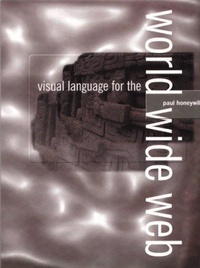
Visual Language for the World Wide Web
1st Edition
Published on 1. January 1999
192 pages
978-1-84150-862-7 (ISBN)
Description

In this digital age, are there cultural lessons for us in looking to the earliest kinds of communications? The icons used in ancient Mayan and Sumerian language systems are presented here as direct cultural links to the visual presentation of World Wide Web pages on the Internet. The book shows how the development of digital screens has caused visual human communication to come full circle from the earliest representations. The in-depth analysis demonstrates how these visual languages now serve as a rich source for renewed study for the development of meaningful computer icons. Readers are also invited to become involved in ongoing investigations through participating in a WWW site that will synthesise all the research and current data.
More details
Edition
1. Auflage
Language
English
Place of publication
Bristol
United Kingdom
Publishing group
Intellect
Target group
Professional and scholarly
ISBN-13
978-1-84150-862-7 (9781841508627)
Copyright in bibliographic data and cover images is held by Nielsen Book Services Limited or by the publishers or by their respective licensors: all rights reserved.
Schweitzer Classification
Other editions
Additional editions
Paul Honeywill
Visual Language for the World Wide Web
Book
05/1999
Intellect Books
€49.65
Article not available at the moment
Content
- Front Cover
- Preliminaries
- Table of Contents
- Acknowledgements
- Trademarks
- Introduction to a Visual Language for the World Wide Web
- Chapter 1: Learning from the Past to Inform the Present: Maya Hieroglyphic Writing
- Overall Reading Order of a Complete Maya Text
- Verb First in the Maya Sentence Structure
- Verb First within Computer Syntax
- Individual Hieroglyphs and Computer Icons
- Reusing Hieroglyph and Computer Icon Elements
- Organising Maya Hieroglyphs into Three Distinct Categories
- Representational Hieroglyphs
- Phonetic Hieroglyphs
- Maya Hieroglyphs which use a Mixture of Representational and Phonetic Elements
- Conclusion
- Chapter 2: Simple Words and Visual Metaphors
- Partial Writing Systems
- Isotype
- Standardising Symbols
- Base Lexical Icon Elements
- Conclusion
- Chapter 3: Designing Icons for the Graphical User Interface
- Visual Reading Order within a Compound Icon
- Conflict, Contrast or Harmony within a Compound Icon
- Using Space within a Compound Icon
- Using Type within a Compound Icon
- Reusing an Icon Element within a Compound
- Conclusion
- Chapter 4: Computer Compound Icons and their Families
- Consistent Use of Symbols
- Case Studies
- Case Study 1: Marine Security Limited
- The First Element: Background Circle
- The Second Element: M
- The Third Element: Underlining the M
- The Fourth Element: S
- Case Study 2: Print and Publish Belize
- Changing a Letterform into a Symbol Element
- Computer Compound Icons and their Families
- Conclusion
- Chapter 5: Evaluating Representative and Abstract Computer Compound Icons
- The ABC's of Graphic Symbols
- The ARC Interface
- ARC Evaluation
- Returned Data from the Report Logs
- Conclusion
- Chapter 6: Navigating Interfaces
- User Goals and Sub-goals
- Interfaces that use Real World Metaphors
- Icons from around the World
- Africa
- Asia
- Australasia
- Europe
- Europe - United Kingdom
- North America excluding USA
- United States of America
- South America
- Conclusion
- Bibliography
- Index
- Back Cover
