

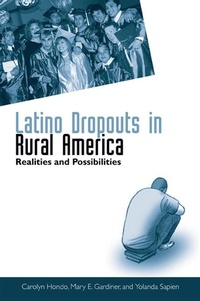
Latino Dropouts in Rural America
Description

This book affords Latino high school dropouts from rural communities in Idaho the opportunity to tell their stories in their own words. It candidly reveals students' school experiences, explores why students leave school, and looks at the impact of the No Child Left Behind Act (2001). Four of the nine students interviewed for the book passed NCLB-mandated state graduation tests, two others passed two of three sections, and all were capable of achieving success in school. The decision to leave school was connected with students' seeking personal satisfaction and to reduce the social-psychological pain of schooling. In certain cases principals and teachers blamed the Latino students for disadvantaging the school. Latino Dropouts in Rural America presents a systematic approach for addressing the main problem: a lack of cultural responsiveness in school curriculum, instruction, policies, and practices. The leadership plan recommended by the authors will help educators to understand the lives of rural Latino youth and to critique their own schools.
Carolyn Hondo is Principal of Oakley Elementary School in Idaho. Mary E. Gardiner is Professor of Educational Leadership at the University of Idaho at Boise and is the author of Parent-School Collaboration: Feminist Organizational Structures and School Leadership and the coauthor (with Ernestine Enomoto and Margaret Grogan) of Coloring outside the Lines: Mentoring Women into School Leadership, both also published by SUNY Press. Yolanda Sapien teaches English as a Second Language at Burley High School in Idaho.
More details
Other editions
Additional editions
Persons
Carolyn Hondo is Principal of Oakley Elementary School in Idaho. Mary E. Gardiner is Professor of Educational Leadership at the University of Idaho at Boise and is the author of Parent-School Collaboration: Feminist Organizational Structures and School Leadership and the coauthor (with Ernestine Enomoto and Margaret Grogan) of Coloring outside the Lines: Mentoring Women into School Leadership, both also published by SUNY Press. Yolanda Sapien teaches English as a Second Language at Burley High School in Idaho.
Content
Preface: Getting On and Off the Yellow School Bus
Acknowledgments
1. The High School Dropout Phenomenon
2. Research Methods
3. Inside Three Rural Schools and Communities
4. Case Studies: Latina Youth Experiences In and Out of School
5. Case Studies: Latino Youth Experiences In and Out of School
6. Composite Analysis: Latina/o Students Seeking Satisfaction
7. A Leadership Plan for Culturally Responsive Schools
References
Index
Appendix A: A Phenomenology
Appendix B: Interview Guides
Appendix C: Recommendations for Superintendents and Policy Makers
Appendix D: Cultural Responsiveness in Standards for School Leaders
Appendix E: Resources for Culturally Responsive Teaching and Leadership
Appendix F: Professional Development Activities for Cultural Responsiveness
