

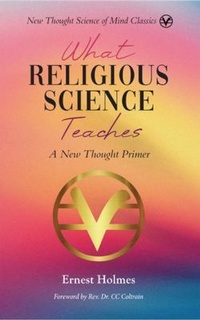
What Religious Science Teaches
Description

In What Religious Science Teaches, Science of Mind founder Ernest Holmes references the great spiritual texts of the world, from the Upanishads to the Kabbala, showing us how we are the masters of our own fate. "Shorn of dogmatism, freed from superstition, and always ready for greater illumination," Religious Science offers students of life the best that the world has so far discovered. See how Science of Mind ideas have been addressed by Taoism, Hindu scriptures, the Koran, the Talmud, and other great world teachings.
About the Author
Dr. Ernest Holmes(1887-1960) is known to millions as a great leader and teacher; and to even more as the author of many inspirational books and tapes, such as "Creative Mind," "This Thing Called Life" and "The Science of Mind." A teacher, writer and lecturer; Dr. Holmes founded the Science of Mind philosophy in 1927 and regularly appeared on television and radio. His signature saying, "There is a power greater than you in the universe, and you can use it," became well known over the years. By taking a clear and simple approach in researching the wisdom of the ages from many disciplines, Ernest Holmes developed a practical, spiritual approach to living an abundant life and created the Science of Mind. Since early 1900s, "The Science of Mind" textbook has been the cornerstone to Religious Science churches around the world.
More details
Content
Foreword ix
Foreword by Dr. CC Coltrain xi
The Search for Truth 1
Spiritual Experience 3
The Immanence of God 5
A Practical Message 7
Science and Religion 9
The Discovery of Religion 11
The End of Fear 13
Our Declaration of Principles 21
The Perfect Way 51
Appendix: Quoted Sources 75
About the Author 79
