

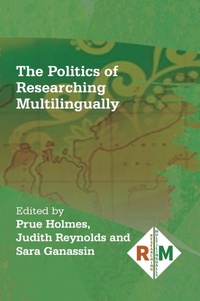
The Politics of Researching Multilingually
Published on 21. February 2022
392 pages
978-1-80041-016-9 (ISBN)
Description

This book offers a unique understanding of how researchers' linguistic resources, and the languages they use in the research process, are often politically and structurally shaped and constrained, with implications for the reliability of the research. The chapters are written by both experienced and novice researchers, who examine how they negotiated the use of their own, and others', linguistic and communicative resources when undertaking their research in politically-charged, and linguistically and culturally diverse contexts. The contributing authors are either from the Global South, or engaged in work which is contextualised within the Global South; or they face linguistic structural hegemonies in the Global North which challenge their research processes. They utilise diverse theoretical, methodological and disciplinary approaches to produce a collection of engaging and accessible accounts of researching multilingually in their contexts. These accounts will help readers to make theoretically and methodologically informed choices about the political dimensions of languages in their own research when researching multilingually.
Reviews / Votes
In its ambitious, cosmopolitan sweep, this book offers fascinating reflections on multilingualism as glossodiversity in applied linguistic research. By focusing on hegemonic structures, power relations and decolonizing ways of understanding both language and research, the authors offer unique insights into the political dimensions of what it means to 'research multilingually' in various corners of the globe. * Claire Kramsch, University of California, Berkeley, USA * This book is a tour de force. It departs from a celebratory approach and moves to a critical and reflexive approach in researching multilingualism. It opens up debates on hidden hierarchies and power relations, and explores space for decolonisation and change. It is a must read for anyone who wants to research about and through multilingualism. * Zhu Hua, Institute of Education, University College London, UK *More details
Series
Language
English
Place of publication
Bristol
United Kingdom
Target group
College/higher education
Product notice
Reflowable
Dimensions
Height: 234 mm
Width: 156 mm
ISBN-13
978-1-80041-016-9 (9781800410169)
Copyright in bibliographic data and cover images is held by Nielsen Book Services Limited or by the publishers or by their respective licensors: all rights reserved.
Schweitzer Classification
Other editions
Additional editions
Prue Holmes | Judith Reynolds | Sara Ganassin
The Politics of Researching Multilingually
Book
02/2022
Multilingual Matters
€62.00
Shipment within 10-20 days
Persons
Prue Holmes is Professor of Intercultural Communication and Education in the School of Education, Durham University, UK. She is the editor of The Cultural and Intercultural Dimensions of English as a Lingua Franca (with Fred Dervin, 2016, Multilingual Matters).
Judith Reynolds is Lecturer in Intercultural Communication in the Centre for Translation and Intercultural Studies at the University of Manchester, UK. Her research focuses on how language and culture intersect, and how both shape identities, in professional and workplace settings in particular.
Sara Ganassin is Lecturer in Applied Linguistics and Communication in the School of Education, Communication and Language Sciences, Newcastle University, UK. She is the author of Language, Culture and Identity in Two Chinese Community Schools: More than One Way of Being Chinese? (2020, Multilingual Matters).
Judith Reynolds is Lecturer in Intercultural Communication in the Centre for Translation and Intercultural Studies at the University of Manchester, UK. Her research focuses on how language and culture intersect, and how both shape identities, in professional and workplace settings in particular.
Sara Ganassin is Lecturer in Applied Linguistics and Communication in the School of Education, Communication and Language Sciences, Newcastle University, UK. She is the author of Language, Culture and Identity in Two Chinese Community Schools: More than One Way of Being Chinese? (2020, Multilingual Matters).
Content
Acknowledgements
Contributors
Alison Phipps: Foreword: Towards a Reparatory Politics of Researching Multilingually
Prue Holmes, Judith Reynolds and Sara Ganassin: Introduction: The Imperative for the Politics of 'Researching Multilingually'
Part 1: Hegemonic Structures
Chapter 1. Wine Tesseur: Linguistic Hospitality and Listening through Interpreters: Critical Reflections and Recommendations on Linguistic Power Relationships in Multilingual Research
Chapter 2. Shameem Oozeerally: Multilingualism, Shifting Paradigms and the 21st Century: Negotiating Multilingual Research in Teams through the Lens of Complexity
Chapter 3. Lamia Nemouchi and Prue Holmes: Multilingual Researching, Translanguaging and Credibility in Qualitative Research: A Reflexive Account
Chapter 4. Adam Wilson: Publish or perish, publier ou perir? How Research Publication Language Choice is Shaped Among Linguistics Early Career Researchers in France
Part 2: Power Relations
Chapter 5. Alexandra Georgiou: Conducting Multilingual Classroom Research with Refugee Children in Cyprus: Critically Reflecting on Methodological Decisions
Chapter 6. Helina Hookoomsing: Voice and Power Relations: Researching Multilingually with Multilingual Children in Mauritian Pre-primary Schools
Chapter 7. Olga Camila Hernandez Morales and Anne-Marie de Mejia: Challenges for Researchers Investigating Coloniality Multilingually in Complex Linguistic Contexts in the Caribbean
Chapter 8. Jessica Chandras: Speaking Marathi Like a Punekar: Learning Class and Caste in India
Part 3. Decolonizing Methodologies
Chapter 9. Julie S. Byrd Clark and Sylvie Roy: Multilingual Research for New Social Realities: Towards a Transdisciplinary Approach
Chapter 10. Erika Kalocsanyiova and Malika Shatnawi: Transcribing (Multilingual) Voices: From Fieldwork to Publication
Chapter 11. Bridget Backhaus: Interpreting Cognitive Justice: A Framework for Interpreters as Co-researchers in Postcolonial Multilingual Research
Chapter 12. Michael Richardson: Bilingual Theatre in British Sign Language and English: A Reflection on the Challenges Faced During a Doctoral Applied Theatre Project
Part 4: Decolonizing Languages
Chapter 13. Rebekah R. Gordon: Translanguaging Pedagogy as Methodology: Leveraging the Linguistic and Cultural Repertoires of Researchers and Participants to Mutually Construct Meaning and Build Rapport
Chapter 14. Rosa Alejandra Medina Riveros and Theresa Austin: Decolonizing Research through Translanguaging: Negotiating Practices with Multilingual Teachers in Colombia
Chapter 15. Liliane Meyer Pitton and Larissa Semiramis Schedel: The (Hidden) Politics of Language Choice in Research on Multilingualism: Moments of (Dis)Empowerment
Chapter 16. Christiana Holsapple: Speaking 'No Language?': Reflections on (Il)Legitimate Multilingualism from Fieldwork in Gagauzia
Prue Holmes, Judith Reynolds and Sara Ganassin: Afterword
Index
Contributors
Alison Phipps: Foreword: Towards a Reparatory Politics of Researching Multilingually
Prue Holmes, Judith Reynolds and Sara Ganassin: Introduction: The Imperative for the Politics of 'Researching Multilingually'
Part 1: Hegemonic Structures
Chapter 1. Wine Tesseur: Linguistic Hospitality and Listening through Interpreters: Critical Reflections and Recommendations on Linguistic Power Relationships in Multilingual Research
Chapter 2. Shameem Oozeerally: Multilingualism, Shifting Paradigms and the 21st Century: Negotiating Multilingual Research in Teams through the Lens of Complexity
Chapter 3. Lamia Nemouchi and Prue Holmes: Multilingual Researching, Translanguaging and Credibility in Qualitative Research: A Reflexive Account
Chapter 4. Adam Wilson: Publish or perish, publier ou perir? How Research Publication Language Choice is Shaped Among Linguistics Early Career Researchers in France
Part 2: Power Relations
Chapter 5. Alexandra Georgiou: Conducting Multilingual Classroom Research with Refugee Children in Cyprus: Critically Reflecting on Methodological Decisions
Chapter 6. Helina Hookoomsing: Voice and Power Relations: Researching Multilingually with Multilingual Children in Mauritian Pre-primary Schools
Chapter 7. Olga Camila Hernandez Morales and Anne-Marie de Mejia: Challenges for Researchers Investigating Coloniality Multilingually in Complex Linguistic Contexts in the Caribbean
Chapter 8. Jessica Chandras: Speaking Marathi Like a Punekar: Learning Class and Caste in India
Part 3. Decolonizing Methodologies
Chapter 9. Julie S. Byrd Clark and Sylvie Roy: Multilingual Research for New Social Realities: Towards a Transdisciplinary Approach
Chapter 10. Erika Kalocsanyiova and Malika Shatnawi: Transcribing (Multilingual) Voices: From Fieldwork to Publication
Chapter 11. Bridget Backhaus: Interpreting Cognitive Justice: A Framework for Interpreters as Co-researchers in Postcolonial Multilingual Research
Chapter 12. Michael Richardson: Bilingual Theatre in British Sign Language and English: A Reflection on the Challenges Faced During a Doctoral Applied Theatre Project
Part 4: Decolonizing Languages
Chapter 13. Rebekah R. Gordon: Translanguaging Pedagogy as Methodology: Leveraging the Linguistic and Cultural Repertoires of Researchers and Participants to Mutually Construct Meaning and Build Rapport
Chapter 14. Rosa Alejandra Medina Riveros and Theresa Austin: Decolonizing Research through Translanguaging: Negotiating Practices with Multilingual Teachers in Colombia
Chapter 15. Liliane Meyer Pitton and Larissa Semiramis Schedel: The (Hidden) Politics of Language Choice in Research on Multilingualism: Moments of (Dis)Empowerment
Chapter 16. Christiana Holsapple: Speaking 'No Language?': Reflections on (Il)Legitimate Multilingualism from Fieldwork in Gagauzia
Prue Holmes, Judith Reynolds and Sara Ganassin: Afterword
Index
