

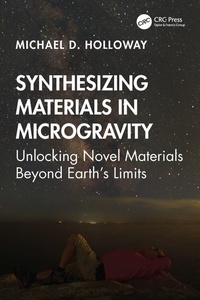
Synthesizing Materials in Microgravity
Unlocking Novel Materials Beyond Earth's Limits
Published on 13. October 2025
222 pages
978-1-040-43666-0 (ISBN)
Description

Synthesizing Materials in Microgravity: Unlocking Novel Materials Beyond Earth's Limits reveals how space-based environments unlock breakthroughs in material design by eliminating Earth's gravitational constraints. On Earth, gravity induces convection, sedimentation, and pressure gradients that compromise material quality during crystallization, solidification, polymerization, and sintering. In microgravity, such as aboard the ISS, these forces are minimized, enabling precise control of atomic arrangements, phase transitions, and microstructure formation. The result: materials with superior structural, electrical, and thermal properties once thought unattainable.
This book presents cutting-edge experiments from space, bridging theoretical foundations with real-world case studies across alloys, ceramics, semiconductors, and polymers. With high-quality visuals, it demystifies complex phenomena and highlights future commercial and scientific frontiers. A vital resource for scientists, engineers, and innovators seeking new material horizons.
This book presents cutting-edge experiments from space, bridging theoretical foundations with real-world case studies across alloys, ceramics, semiconductors, and polymers. With high-quality visuals, it demystifies complex phenomena and highlights future commercial and scientific frontiers. A vital resource for scientists, engineers, and innovators seeking new material horizons.
More details
Series
Language
English
Place of publication
London
United Kingdom
Publishing group
Taylor & Francis Ltd
Target group
College/higher education
Professional and scholarly
File size
2,05 MB
ISBN-13
978-1-040-43666-0 (9781040436660)
Copyright in bibliographic data and cover images is held by Nielsen Book Services Limited or by the publishers or by their respective licensors: all rights reserved.
Schweitzer Classification
Other editions
Additional editions
Michael D. Holloway
Synthesizing Materials in Microgravity
Unlocking Novel Materials Beyond Earth's Limits
Book
10/2025
1st Edition
CRC Press
€207.50
Shipment within 15-20 days
Person
President of 5th Order Industry which provides training, failure analysis, and designed experiments, 40 years' experience in industry starting with research and product development for Olin Chemical and WR Grace, Rohm & Haas, GE Plastics, and reliability engineering and analysis for NCH, ALS, and SGS, a subject matter expert in failure analysis, reliability engineering, and designed experiments for science and engineering, an I hold 16 professional certifications, a patent, a MS Polymer Engineering, BS Chemistry, BA Philosophy, authored 12 books, contributed to several others, cited in over 1000 manuscripts and several hundred master's theses and doctoral dissertations.
Content
I. Introduction
* A. Background and Context
o The role of gravity in material synthesis on Earth
o Limitations posed by gravity in producing uniform and defect-free materials
* B. Significance of Microgravity Research
o Unique physical and chemical phenomena in microgravity
o Potential for novel material properties and structures
* C. Objective
o Explore the synthesis of organics, ceramics, alloys, and polymers in microgravity
o Highlight advancements, challenges, and future opportunities
II. Theoretical Basis of Material Synthesis in Microgravity
* A. Fundamental Effects of Microgravity on Material Behavior
o Reduced buoyancy-driven convection
o Absence of sedimentation
o Enhanced diffusion-dominated processes
* B. Thermodynamics and Kinetics in Zero Gravity
o Heat and mass transfer considerations
o Phase separation and crystallization behavior
III. Synthesis of Organic Materials in Microgravity
* A. Overview of Organic Material Synthesis
o Types of organic compounds synthesized in space
* B. Microgravity Effects on Organic Synthesis
o Uniform polymerization and crystallization
o Reduced defect formation
* C. Case Studies and Experiments
o Protein crystal growth in microgravity
o Organic semiconductor synthesis
IV. Synthesis of Ceramic Materials in Microgravity
* A. Challenges in Terrestrial Ceramic Synthesis
o Gravity-induced defects and phase separation
* B. Microgravity Techniques for Ceramic Fabrication
o Vapor deposition methods
o Controlled sintering processes
* C. Applications of Microgravity-Synthesized Ceramics
o High-performance optical materials
o Advanced thermal barrier coatings
V. Synthesis of Metallic Alloys in Microgravity
* A. Alloy Solidification Under Gravity vs. Microgravity
o Gravity-induced segregation and crystal defects
* B. Techniques for Alloy Synthesis in Microgravity
o Electromagnetic levitation
o Containerless processing
* C. Case Studies and Results
o Ti-Al and Ni-based superalloys
o Amorphous metal formation
* D. Applications of Space-Synthesized Alloys
o Aerospace components
o High-strength, lightweight materials
VI. Synthesis of Polymers in Microgravity
* A. Effects of Gravity on Polymerization Processes
o Density gradients and phase separation
* B. Microgravity-Enabled Polymerization Techniques
o Emulsion polymerization
o Controlled radical polymerization
* C. Unique Properties of Space-Synthesized Polymers
o Enhanced structural homogeneity
o Tailored thermal and mechanical properties
* D. Applications in Medicine, Aerospace, and Electronics
o Biomedical implants
o Conductive polymers for space electronics
VII. Experimental Facilities and Platforms for Microgravity Research
* A. International Space Station (ISS)
* B. Parabolic Flights and Drop Towers
* C. Space-Based Research Laboratories and Satellites
* D. Technological Challenges and Innovations
VIII. Challenges and Limitations in Space Material Synthesis
* A. Cost and Logistics of Space Missions
* B. Limited Experimental Time and Resources
* C. Scale-Up Challenges for Terrestrial Applications
* D. Safety and Environmental Concerns
IX. Future Prospects and Emerging Technologies
* A. Automation and AI in Space Manufacturing
* B. Additive Manufacturing and 3D Printing in Microgravity
* C. Long-Term Vision: Space-Based Factories
* D. Potential for Commercialization and Market Impact
X. Conclusion
* A. Summary of Key Findings
* B. Implications for Material Science and Engineering
* C. Final Thoughts on the Future of Space-Based Material Synthesis
XI. References
* Peer-reviewed articles, books, and reports on microgravity materials science
XII. Appendices
* Glossary of Key Terms
* Additional Data Tables or Diagrams
* A. Background and Context
o The role of gravity in material synthesis on Earth
o Limitations posed by gravity in producing uniform and defect-free materials
* B. Significance of Microgravity Research
o Unique physical and chemical phenomena in microgravity
o Potential for novel material properties and structures
* C. Objective
o Explore the synthesis of organics, ceramics, alloys, and polymers in microgravity
o Highlight advancements, challenges, and future opportunities
II. Theoretical Basis of Material Synthesis in Microgravity
* A. Fundamental Effects of Microgravity on Material Behavior
o Reduced buoyancy-driven convection
o Absence of sedimentation
o Enhanced diffusion-dominated processes
* B. Thermodynamics and Kinetics in Zero Gravity
o Heat and mass transfer considerations
o Phase separation and crystallization behavior
III. Synthesis of Organic Materials in Microgravity
* A. Overview of Organic Material Synthesis
o Types of organic compounds synthesized in space
* B. Microgravity Effects on Organic Synthesis
o Uniform polymerization and crystallization
o Reduced defect formation
* C. Case Studies and Experiments
o Protein crystal growth in microgravity
o Organic semiconductor synthesis
IV. Synthesis of Ceramic Materials in Microgravity
* A. Challenges in Terrestrial Ceramic Synthesis
o Gravity-induced defects and phase separation
* B. Microgravity Techniques for Ceramic Fabrication
o Vapor deposition methods
o Controlled sintering processes
* C. Applications of Microgravity-Synthesized Ceramics
o High-performance optical materials
o Advanced thermal barrier coatings
V. Synthesis of Metallic Alloys in Microgravity
* A. Alloy Solidification Under Gravity vs. Microgravity
o Gravity-induced segregation and crystal defects
* B. Techniques for Alloy Synthesis in Microgravity
o Electromagnetic levitation
o Containerless processing
* C. Case Studies and Results
o Ti-Al and Ni-based superalloys
o Amorphous metal formation
* D. Applications of Space-Synthesized Alloys
o Aerospace components
o High-strength, lightweight materials
VI. Synthesis of Polymers in Microgravity
* A. Effects of Gravity on Polymerization Processes
o Density gradients and phase separation
* B. Microgravity-Enabled Polymerization Techniques
o Emulsion polymerization
o Controlled radical polymerization
* C. Unique Properties of Space-Synthesized Polymers
o Enhanced structural homogeneity
o Tailored thermal and mechanical properties
* D. Applications in Medicine, Aerospace, and Electronics
o Biomedical implants
o Conductive polymers for space electronics
VII. Experimental Facilities and Platforms for Microgravity Research
* A. International Space Station (ISS)
* B. Parabolic Flights and Drop Towers
* C. Space-Based Research Laboratories and Satellites
* D. Technological Challenges and Innovations
VIII. Challenges and Limitations in Space Material Synthesis
* A. Cost and Logistics of Space Missions
* B. Limited Experimental Time and Resources
* C. Scale-Up Challenges for Terrestrial Applications
* D. Safety and Environmental Concerns
IX. Future Prospects and Emerging Technologies
* A. Automation and AI in Space Manufacturing
* B. Additive Manufacturing and 3D Printing in Microgravity
* C. Long-Term Vision: Space-Based Factories
* D. Potential for Commercialization and Market Impact
X. Conclusion
* A. Summary of Key Findings
* B. Implications for Material Science and Engineering
* C. Final Thoughts on the Future of Space-Based Material Synthesis
XI. References
* Peer-reviewed articles, books, and reports on microgravity materials science
XII. Appendices
* Glossary of Key Terms
* Additional Data Tables or Diagrams
