Our Little Monitor
Description

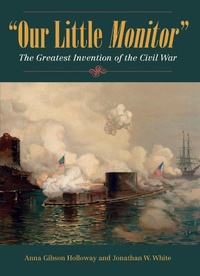
On March 9, 1862, the USS Monitor and CSS Virginia met in the Battle of Hampton Roads-the first time ironclad vessels would engage each other in combat. For four hours the two ships pummeled one another as thousands of Union and Confederate soldiers and civilians watched from the shorelines. Although the battle ended in a draw, this engagement would change the nature of naval warfare by informing both vessel design and battle tactics. The "wooden walls" of navies around the world suddenly appeared far more vulnerable, and many political and military leaders initiated or accelerated their own ironclad-building programs.
Americans did not initially have much faith in the Monitor. Few believed that this strange little vessel could hold her own against the formidable Confederate ironclad Virginia, which had been built on the bones of the scuttled USS Merrimack in Portsmouth, Virginia. The Virginia, seemingly relentless and unstoppable, had ravaged the U.S. Navy in Hampton Roads on March 8, just before the Monitor arrived. Yet the following day, the "cheesebox on a raft" proved her Union mettle, becoming a national hero in her own right.
For the remainder of the Civil War the Union Navy used dozens of monitor-style vessels on inland waters as well as at sea. But there would always be only one first Monitor, and she became affectionately known to many throughout the nation as "Our Little Monitor." Her loss off Cape Hatteras on December 31, 1862, was mourned as keenly in the press as the loss of 16 of her men that night.
Using the latest archaeological finds from the USS Monitor Center in Newport News, Virginia, as well as untapped archival material, Anna Gibson Holloway and Jonathan W. White bring "Our Little Monitor" to life once more in this beautifully illustrated volume. In addition to telling her story from conception in 1861 to sinking in 1862, as well as her recent recovery and ongoing restoration, they explain how fighting in this new "machine" changed the experience of her crew and reveal how the Monitor became "the pet of the people"-a vessel celebrated in prints, tokens, and household bric-a-brac; a marketing tool; and a prominent feature in parades, Sanitary Fairs, and politics.
More details
Other editions
Additional editions