

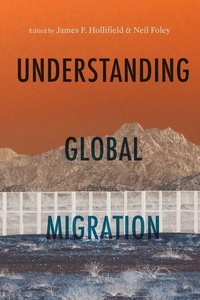
Understanding Global Migration
Published on 1. March 2022
520 pages
978-1-5036-2958-5 (ISBN)
Description

Understanding Global Migration offers scholars a groundbreaking account of emerging migration states around the globe, especially in the Global South.
Leading scholars of migration have collaborated to provide a birds-eye view of migration interdependence. Understanding Global Migration proposes a new typology of migration states, identifying multiple ideal types beyond the classical liberal type. Much of the world's migration has been to countries in Asia, Africa, the Middle East, and South America. The authors assembled here account for diverse histories of colonialism, development, and identity in shaping migration policy.
This book provides a truly global look at the dilemmas of migration governance: Will migration be destabilizing, or will it lead to greater openness and human development? The answer depends on the capacity of states to manage migration, especially their willingness to respect the rights of the ever-growing portion of the world's population that is on the move.
Leading scholars of migration have collaborated to provide a birds-eye view of migration interdependence. Understanding Global Migration proposes a new typology of migration states, identifying multiple ideal types beyond the classical liberal type. Much of the world's migration has been to countries in Asia, Africa, the Middle East, and South America. The authors assembled here account for diverse histories of colonialism, development, and identity in shaping migration policy.
This book provides a truly global look at the dilemmas of migration governance: Will migration be destabilizing, or will it lead to greater openness and human development? The answer depends on the capacity of states to manage migration, especially their willingness to respect the rights of the ever-growing portion of the world's population that is on the move.
Reviews / Votes
"All nations today must balance tradeoffs between markets, rights, security, and culture to manage the international mobility of people successfully. Understanding Global Migration gathers together leading scholars to explain how these tradeoffs differ from nation to nation and why getting the balance right is essential for maintaining peace and prosperity."-Douglas S. Massey, Princeton University "The contributors to Understanding Global Migration have been at the forefront of expanding our understanding of the role migration plays in the international system. This is a welcome addition to the field of migration studies."-Terri E. Givens, McGill University "Written by leading scholars in the field, this book provides a huge breakthrough. It is unique in providing a genuinely global view of how states-liberal and illiberal, Western and non-Western-deal with migration. Understanding Global Migration is essential reading for anyone desiring a fundamental understanding of migration politics."-Hein de Haas, Amsterdam University "This multidisciplinary collection of essays broadens the analysis of migration from the handful of cases that dominate popular discussion and scholarly literature-typically to do with migration to Europe from the Middle East and Africa and migration to the United States from Latin America. It adopts a global perspective, describing how countries in both the global North and the global South deal with migration."-Barry Eichengreen, Foreign Affairs "[James] Hollifield and Neil Foley have brought together prominent migration scholars who contribute their expertise on various countries and regions.... This book will undoubtedly receive a wide audience because of its ambition and the incisive analyses of migration policy on a global scale."-Jeannette Money, International Affairs "Theoretically rich chapters are matched by accessible empirical data. The authors are delightfully candid in evaluating migration governance and holes in understanding. Highly recommended."-R. A. Harper, CHOICE "[Understanding Global Migration] promises to generate a vibrant discussion which will engage scholars of migration for generations to come. The rich details of individual cases coupled with an accessible theoretical framework makes this co-edited volume a uniquely valuable resource for political scientists and IR specialists, whose agenda Tsourapas perceptively notes, has been long neglected. But it is an indispensable read for all students of migration and human mobility, as well as for those interested in the nature of the state in a global order."-Gallya Lahav, Perspectives on PoliticsAll prices
More details
Edition
New edition
Language
English
Place of publication
Palo Alto
United States
Target group
Professional and scholarly
Edition type
New edition
Illustrations
30 tables, 40 figures
ISBN-13
978-1-5036-2958-5 (9781503629585)
Copyright in bibliographic data and cover images is held by Nielsen Book Services Limited or by the publishers or by their respective licensors: all rights reserved.
Schweitzer Classification
Other editions
Additional editions
James F. Hollifield | Neil Foley
Understanding Global Migration
Book
03/2022
Stanford University Press
€182.50
Shipment within 15-20 days
James F. Hollifield | Neil Foley
Understanding Global Migration
Book
03/2022
Stanford University Press
€42.00
Shipment within 15-20 days
Persons
James F. Hollifield is Ora Nixon Arnold Professor of International Political Economy and Director of the Tower Center at SMU. His other books include Controlling Immigration (Stanford, 4th edition forthcoming).Neil Foley is Robert H. and Nancy Dedman Chair of History at SMU, where he is the Associate Director of the Clements Center for Southwest Studies. He is the author of Mexicans in the Making of America (2017), among others.
Content
1. "Migration Interdependence and the State"
-James F. Hollifield and Neil Foley
2. "The Southern African Migration System"
-Audie Klotz
3. "Illiberal Migration Governance in the Arab Gulf"
-Helene Thiollet
4. "The Illiberal Paradox and the Politics of Migration in the Middle East"
-Gerasimos Tsourapas
5. "Migration and Development in North and West Africa"
-Yves Charbit
6. "The Developmental Migration State in East Asia"
-Erin Aeran Chung
7. "International Migration and Development in Southeast Asia, 1990-2010"
-Charles Hirschman
8. "The Indian Migration State"
-Kamal Sadiq
9. "The Development of the US Migration State: Nativism, Liberalism, and Durable Structures of Exclusion"
-Daniel Tichenor
10. "Who Belongs? Politics of Immigration, Nativism, and Illiberal Democracy in Postwar America"
-Neil Foley
11. "Canada: The Quintessential Migration State?"
-Phil Triadafilopoulos and Zack Taylor
12. "Migration and Economic Development: North American Experience"
-Philip L. Martin
13. "International Migration and Refugee Movements in Latin America"
-Miryam Hazan
14. "The Migration State in South America"
-Charles P. Gomes
15. "Migration Governance in Turkey"
-Fiona Adamson
16. "Beyond the Migration State: Western Europe since World War II"
-Leo Lucassen
17. "Migration and the Liberal Paradox in Europe"
-James F. Hollifield
18. "How Immigrants Fare in European Labor Markets"
-Pieter Bevelander
19. "The European Union: Shaping Migration Governance in Europe and Beyond"
-Andrew Geddes
-James F. Hollifield and Neil Foley
2. "The Southern African Migration System"
-Audie Klotz
3. "Illiberal Migration Governance in the Arab Gulf"
-Helene Thiollet
4. "The Illiberal Paradox and the Politics of Migration in the Middle East"
-Gerasimos Tsourapas
5. "Migration and Development in North and West Africa"
-Yves Charbit
6. "The Developmental Migration State in East Asia"
-Erin Aeran Chung
7. "International Migration and Development in Southeast Asia, 1990-2010"
-Charles Hirschman
8. "The Indian Migration State"
-Kamal Sadiq
9. "The Development of the US Migration State: Nativism, Liberalism, and Durable Structures of Exclusion"
-Daniel Tichenor
10. "Who Belongs? Politics of Immigration, Nativism, and Illiberal Democracy in Postwar America"
-Neil Foley
11. "Canada: The Quintessential Migration State?"
-Phil Triadafilopoulos and Zack Taylor
12. "Migration and Economic Development: North American Experience"
-Philip L. Martin
13. "International Migration and Refugee Movements in Latin America"
-Miryam Hazan
14. "The Migration State in South America"
-Charles P. Gomes
15. "Migration Governance in Turkey"
-Fiona Adamson
16. "Beyond the Migration State: Western Europe since World War II"
-Leo Lucassen
17. "Migration and the Liberal Paradox in Europe"
-James F. Hollifield
18. "How Immigrants Fare in European Labor Markets"
-Pieter Bevelander
19. "The European Union: Shaping Migration Governance in Europe and Beyond"
-Andrew Geddes

