Alles über E-Books | Antworten auf Fragen rund um E-Books, Kopierschutz und Dateiformate finden Sie in unserem Info- & Hilfebereich.
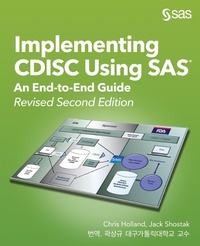
For decades researchers and programmers have used SAS to analyze, summarize, and report clinical trial data. Now Chris Holland and Jack Shostak have updated their popular
Implementing CDISC Using SAS, the first comprehensive book on applying clinical research data and metadata to the Clinical Data Interchange Standards Consortium (CDISC) standards.
Implementing CDISC Using SAS: An End-to-End Guide, Second Edition, is an all-inclusive guide on how to implement and analyze the Study Data Tabulation Model (SDTM) and the Analysis Data Model (ADaM) data and prepare clinical trial data for regulatory submission. Updated to reflect the 2017 FDA mandate for adherence to CDISC standards, this new edition covers creating and using metadata, developing conversion specifications, implementing and validating SDTM and ADaM data, determining solutions for legacy data conversions, and preparing data for regulatory submission. The book covers products such as Base SAS, SAS Clinical Data Integration, and the SAS Clinical Standards Toolkit, as well as JMP Clinical. Topics included in this new edition include an implementation of the Define-XML 2.0 standard, new SDTM domains, validation with Pinnacle 21 software, event narratives in JMP Clinical, and of course new versions of SAS and JMP software.
Any manager or user of clinical trial data in this day and age is likely to benefit from knowing how to either put data into a CDISC standard or analyzing and finding data once it is in a CDISC format. If you are one such person--a data manager, clinical and/or statistical programmer, biostatistician, or even a clinician--then this book is for you.
Edition
Language
Place of publication
Edition type
File size
ISBN-13
978-1-64295-222-3 (9781642952223)
Schweitzer Classification
CHRIS HOLLAND has been a SAS user since 1990 in a variety of settings ranging from academia, contract research organizations, regulatory agencies, and both small and large pharmaceutical and biotechnology companies. He was first introduced to CDISC while working as a statistical reviewer at the Center for Drug Evaluation and Research in the U.S. Food and Drug Administration. There he served as the technical lead for the SDTM/ADaM Pilot Project FDA review team and invented an early version of the MAED Service, an adverse event review tool that made use of data standards and is currently in production at the FDA. Since leaving the FDA, Holland continues to be active in the CDISC community, particularly with the ADaM team. He received an MS in statistics from the University of Virginia, a BS in statistics from Virginia Tech, and is an Accredited Professional Statistician by the American Statistical Association.