
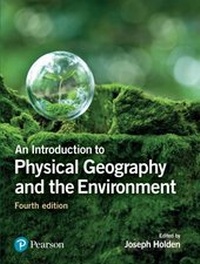
Introduction to Physical Geography and the Environment, An
Description
Alles über E-Books | Antworten auf Fragen rund um E-Books, Kopierschutz und Dateiformate finden Sie in unserem Info- & Hilfebereich.
This highly respected and best-selling textbook provides an accessible, engaging and comprehensive introduction to the major topics within physical geography. It focuses on understanding the inter-linkages between processes, places and environments and is comprehensively illustrated to demonstrate how the physical environment works.
Now in its fourth edition, the book has been thoroughly updated throughout to contain the latest research. Between them, the contributors have researched in detail every environment on the planet, providing an unrivalled source of rich information from around the world for both undergraduate and postgraduate study in the field of physical geography.
An Introduction to Physical Geography and the Environment is accompanied by a rich and extensive range of electronic support resources including updated weblinks relevant for each chapter, an extended and annotated further reading list for each chapter, multiple choice questions, fieldwork exercises and interactive models.
All prices
More details
Other editions
Additional editions
Person
Joseph Holden is Professor of Physical Geography at the School of Geography and also the Dean of Research for the Faculty of Environment, University of Leeds.
Content
- Chapter 1. Approaching physical geography
- Chapter 2. Earth geology and tectonics
- Chapter 3. Oceans
- Chapter 4. The Pleistocene
- Chapter 5. The Holocene
- Chapter 6. Atmospheric processes
- Chapter 7. Contemporary climate change
- Chapter 8. Global climate and weather
- Chapter 9. Regional and local climates
- Chapter 10. The biosphere
- Chapter 11. Ecosystem processes
- Chapter 12. Freshwater ecosystems
- Chapter 13. Vegetation and climate change
- Chapter 14. Weathering
- Chapter 15. Slope processes and landform evolution
- Chapter 16. Sediments and sedimentation
- Chapter 17. Soils
- Chapter 18. Catchment hydrology
- Chapter 19. Fluvial geomorphology and river management
- Chapter 20. Solutes and water quality
- Chapter 21. Drylands
- Chapter 22. Coasts
- Chapter 23. Glaciers and ice sheets
- Chapter 24. Permafrost and periglaciation
- Chapter 25. Monitoring environmental change
- Chapter 26. Dealing with hazards and environmental change

System requirements
File format: PDF
Copy-Protection: Adobe-DRM (Digital Rights Management)
System requirements:
- Computer (Windows; MacOS X; Linux): Install the free reader Adobe Digital Editions prior to download (see eBook Help).
- Tablet/smartphone (Android; iOS): Install the free app Adobe Digital Editions or the app PocketBook before downloading (see eBook Help).
- E-reader: Bookeen, Kobo, Pocketbook, Sony, Tolino and many more (only limited: Kindle).
The file format PDF always displays a book page identically on any hardware. This makes PDF suitable for complex layouts such as those used in textbooks and reference books (images, tables, columns, footnotes). Unfortunately, on the small screens of e-readers or smartphones, PDFs are rather annoying, requiring too much scrolling.
This eBook uses Adobe-DRM, a „hard” copy protection. If the necessary requirements are not met, unfortunately you will not be able to open the eBook. You will therefore need to prepare your reading hardware before downloading.
Please note: We strongly recommend that you authorise using your personal Adobe ID after installation of any reading software.
For more information, see our eBook Help page.
File format: PDF
Copy protection: Watermark-DRM (Digital Rights Management)
System requirements:
- Computer (Windows; MacOS X; Linux): Use the free software Adobe Reader, Adobe Digital Editions, or any other PDF viewer of your choice (see eBook Help).
- Tablet/Smartphone (Android; iOS): Install the free app Adobe Digital Editions or another reading app for eBooks, e.g., PocketBook (see eBook Help).
- E-reader: Bookeen, Kobo, Pocketbook, Sony, Tolino and many more (only limited: Kindle).
The file format PDF always displays a book page identically on any hardware. This makes PDF suitable for complex layouts such as those used in textbooks and reference books (images, tables, columns, footnotes). Unfortunately, on the small screens of e-readers or smartphones, PDFs are rather annoying, requiring too much scrolling.
This eBook uses Watermark-DRM, a „soft” copy protection. This means that there are no technical restrictions to prevent illegal distribution. However, there is a personalised watermark embedded in the eBook that can be used to identify the purchaser of the eBook in the event of misuse and to provide evidence for legal purposes.
For more information, see our eBook Help page.