

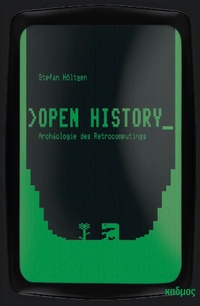
Open History
Archäologie des Retrocomputings
Published on 20. May 2022
416 pages
978-3-96750-045-5 (ISBN)
Description

>OPEN HISTORY_ versteht sich als Eingrenzung eines interdisziplinären Forschungsfeldes zwischen Informatik, Medienwissenschaft, Linguistik, Geschichtswissenschaft, Museumskunde und -pädagogik. Frühe Mikrocomputer der 1970er- und 1980er-Jahre bilden hierfür >die Medien<, denn an ihnen kann gezeigt werden, worin gemeinsame wissenschaftliche Interessen dieser Disziplinen bestehen könnten. Hierzu bedarf es jedoch einer spezifischen Methode, der Computerarchäologie, die sich als Forschungsmethode zwischen einer kritischen Geschichtsschreibung, medienarchäologischer und informatischer Analyse digitaler Medientechnologien in Vergangenheit und Gegenwart darstellt und neue Schreibweisen von Computergeschichte fordert. Detaillierte technische Sachverhalte werden dabei ebenso berücksichtigt wie die Tatsache, dass sich operative Computer Historisierungsversuchen konsequent entziehen. Gegenstand dieser Analyse ist das Retrocomputing, bei dem frühe Mikrocomputer von Hobbyisten gesammelt, repariert, erweitert und in ihren technischen und historischen Facetten erforscht werden. Mit eigenen Projekten, realisiert innerhalb akademischer Lehrveranstaltungen und mit Hobbyisten, stellt >OPEN HISTORY_ archäologische Forschung als Hands-on-Theorienentwicklung und Informatikdidaktik vor. Stefan Höltgen hat Germanistik, Philosophie, Soziologie und Medienwissenschaft studiert und im Fach Medienwissenschaft promoviert. Mit >OPEN HISTORY_ hat er an der Informatik eine zweite Promotion absolviert. Er arbeitet als Medienwissenschaftler, Publizist und Journalist, organisiert Retrocomputing-Ausstellungen und ist wissenschaftlicher Beirat des Oldenburger Computermuseums.
More details
Other editions
Additional editions
Book
07/2022
1st Edition
Kulturverlag Kadmos Berlin
€34.80
Shipment within 5-7 days
Person
Stefan Höltgen hat Germanistik, Philosophie, Soziologie und Medienwissenschaft studiert und im Fach Medienwissenschaft promoviert. Mit >OPEN HISTORY_ hat er an der Informatik eine zweite Promotion absolviert. Er arbeitet als Medienwissenschaftler, Publizist und Journalist, organisiert Retrocomputing-Ausstellungen und ist wissenschaftlicher Beirat des Oldenburger Computermuseums.
Content
- Intro
- Titel
- Impressum
- Inhalt
- Vorwort
- 1. Einleitung
- 1.1 Fragestellung
- 1.2 Gegenstand
- 1.3 Methoden-Überblick
- 1.4 Aufbau
- 2. Forschungsstand
- 2.1 Formen des Geschichtsbezugs
- 2.2 Preservation und Emulation
- 2.3 Szenen und Protagonisten
- 3. Computerarchäologie
- 3.1 Methoden der Computer-Geschichtsschreibung
- 3.1.1 Zeit-, Sozial- und Mentalitätsgeschichte: Hackers
- 3.1.2 Unternehmer-Geschichte: The Homecomputer Wars
- 3.1.3 Computergeschichte als Wirtschaftsgeschichte: A History of Modern Computing
- 3.1.4 Interaktive Software-Geschichte(n)
- 3.2 Geschichtskritik
- 3.2.1 Die Poetologie der Computergeschichte(n)
- 3.2.2 Foucaults Archäologie der Diskurse
- 3.2.3 Medienarchäologie des Non-Diskursiven
- 3.3 Computerarchäologie als Methode
- 3.3.1 Informatikgeschichte und Retrocomputing
- 3.3.2 Archäologie der (Computer-)Gegenwart
- 3.3.3 Der (sogenannte) Computer
- 3.3.4 Fixing (the history of) E.T.
- 3.4 Zusammenfassung
- 4. Retrocomputing als Archäographie
- 4.1 Demonstration, Simulation und Codierung
- 4.1.1 Analogien
- 4.1.1.1 Ball im Kasten
- 4.1.1.2 Tennis for Two und Tennis für Drei
- 4.1.2 Metaphern
- 4.1.3 Mimikrys
- 4.1.4 Computerphilologie I: Menschen lesen Code
- 4.1.5 Computerphilologie II: Maschinen lesen Code
- 4.1.6 Zusammenfassung
- 4.2 Computerspiele und Simulationen
- 4.2.1 Simulation
- 4.2.2 Games of Life and Death
- 4.2.3 Game of Memories
- 4.2.4 Pixelspiele
- 4.2.5 Unconventional Computing
- 4.2.6 Toy Computing
- 4.2.7 Zusammenfassung
- 4.3 Software Preservation und Emulation
- 4.3.1 Emulation
- 4.3.2 Retrogame Development
- 4.3.3 Das VC4000MultiROM
- 4.3.4 Epistemologische Aspekte der Emulation
- 4.3.5 Retrofitting
- 4.3.6 Zusammenfassung
- 4.4 Hardware und Knowledge Preservation
- 4.4.1 Computer als historische Artefakte
- 4.4.2 Computer als Hardware
- 4.4.3 Werkstattbericht
- 4.4.4 Reparieren als Spiel
- 4.4.5 Historische Computer als epistemische Dinge
- 4.4.6 Der Computer als Diagramm
- 4.4.7 Zusammenfassung
- 5. Retrocomputing als Wissenspraxis
- 5.1 Die Archäologie des Wissen(wollen)s
- 5.2 Computer-Autodidaktik
- 5.2.1 Autodidaktik
- 5.2.2 Selbstlernkompetenz
- 5.2.3 Methoden des Selbstlernens
- 5.3 Homecomputing
- 5.3.1 Das Handbuch des Schneider CPC6128
- 5.3.2 C16-BASIC-Kurs
- 5.3.3 Spielend Programmieren lernen
- 5.3.4 Mein Heimcomputer selbstgebaut
- 5.4 Retrocomputing
- 5.4.1 Das Computerspiel Rock (Berthold Fritz)
- 5.4.2 Das Betriebssystem SymbOS (Jörn Mika)
- 5.4.3 Der Emulator JavaCPC (Markus Hohmann)
- 5.5 Zusammenfassung
- 6. Schluss
- 6.1 Zusammenfassung
- 6.2 Möglichkeiten und Grenzen
- 6.2.1 Interdisziplinarität
- 6.2.2 Retro-Didaktik
- 6.2.3 Reichweite
- 6.2.4 Beschreibungs(in)kompetenz
- 6.2.5 Software/Hardware Preservation
- 6.3 Ausblick
- Bibliografie
- Abbildungsverzeichnis
- Anhang
- A. Programmlisting »16KRA Long Memory Test Programm«
- B. Interview mit Marius Groth
- C. Sourcecode des Programms Game of Memories
- D. Interview mit Dr. Martin Wendt
- E. Interview mit James Jacobs
- F. Linkverzeichnis
- G. Register
