

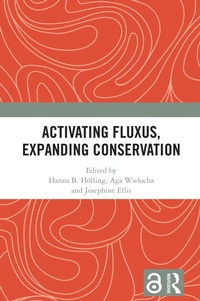
Activating Fluxus, Expanding Conservation
Published on 22. January 2026
400 pages
978-1-040-54602-4 (ISBN)
Description

This is the first book to address the care and preservation of Fluxus works, reimagining the afterlife of Fluxus by positioning conservation as an evolving, interpretative and generative framework.
Fluxus radically transformed artistic practice by challenging the entrenched preconception that artworks endure unchanged and confined to a singular physical manifestation. Moving beyond conventional, object-based approaches, this interdisciplinary volume brings together artists, scholars, conservators and curators from diverse cultural and theoretical perspectives to explore how the ephemeral, participatory and intermedial forms of Fluxus demand an expanded vision of conservation-one grounded in activation. By reframing conservation as a critical, decolonial and creative inquiry, Activating Fluxus, Expanding Conservation redefines Fluxus as a living force continually remade through acts of care, interpretation and participation. It ultimately calls for a fundamental shift in how we preserve, interpret and transmit the experimental art practices of the recent past.
Offering fresh ways to engage with the legacy of Fluxus through the intersecting lenses of conservation, art history, performance studies and museology, this book will appeal to academics and students across these fields, as well as to curators and practitioners invested in the futures of contemporary art.
Fluxus radically transformed artistic practice by challenging the entrenched preconception that artworks endure unchanged and confined to a singular physical manifestation. Moving beyond conventional, object-based approaches, this interdisciplinary volume brings together artists, scholars, conservators and curators from diverse cultural and theoretical perspectives to explore how the ephemeral, participatory and intermedial forms of Fluxus demand an expanded vision of conservation-one grounded in activation. By reframing conservation as a critical, decolonial and creative inquiry, Activating Fluxus, Expanding Conservation redefines Fluxus as a living force continually remade through acts of care, interpretation and participation. It ultimately calls for a fundamental shift in how we preserve, interpret and transmit the experimental art practices of the recent past.
Offering fresh ways to engage with the legacy of Fluxus through the intersecting lenses of conservation, art history, performance studies and museology, this book will appeal to academics and students across these fields, as well as to curators and practitioners invested in the futures of contemporary art.
More details
Language
English
Place of publication
London
United Kingdom
Publishing group
Taylor & Francis Ltd
Target group
College/higher education
Professional and scholarly
Illustrations
61 Halftones, black and white; 61 Illustrations, black and white
File size
31,31 MB
ISBN-13
978-1-040-54602-4 (9781040546024)
Copyright in bibliographic data and cover images is held by Nielsen Book Services Limited or by the publishers or by their respective licensors: all rights reserved.
Schweitzer Classification
Other editions
Additional editions
Hanna B. Hoelling | Aga Wielocha | Josephine Ellis
Activating Fluxus, Expanding Conservation
Book
approx. 01/2026
1st Edition
Routledge
€213.20
Not yet published
Persons
Hanna B. Hoelling is a Research Professor and Principal Investigator at the Bern University of the Arts, where she leads research in her area of expertise. She is also a Senior Fellow at Collegium Helveticum/ETH Zuerich and an Honorary Fellow in the Department of History of Art at University College London (UCL).
Aga Wielocha is a researcher, collection care professional, and conservator specializing in modern and contemporary art, having earned her PhD from the University of Amsterdam in 2021. Her doctoral research, conducted as part of the project New Approaches in the Conservation of Contemporary Art (NACCA), explored the lives and futures of contemporary art within museum collections, particularly focusing on works that are variable and unfold over time
Josephine Ellis is a Ph.D. candidate in the Studies in the Arts (SINTA) program of the Faculty of Humanities of the University of Bern and the Bern Academy of the Arts. Her research interests are situated at the intersections of histories and philosophies of art, science, and conservation. She received her B.A in History from the University of Durham and her M.A in History of Art from University College London.
Aga Wielocha is a researcher, collection care professional, and conservator specializing in modern and contemporary art, having earned her PhD from the University of Amsterdam in 2021. Her doctoral research, conducted as part of the project New Approaches in the Conservation of Contemporary Art (NACCA), explored the lives and futures of contemporary art within museum collections, particularly focusing on works that are variable and unfold over time
Josephine Ellis is a Ph.D. candidate in the Studies in the Arts (SINTA) program of the Faculty of Humanities of the University of Bern and the Bern Academy of the Arts. Her research interests are situated at the intersections of histories and philosophies of art, science, and conservation. She received her B.A in History from the University of Durham and her M.A in History of Art from University College London.
Content
On Modes of Activity and Activation-An Introduction - Hanna B. Hoelling and Josephine Ellis; I. Conserving, Curating and Archiving Fluxus: Politics, Challenges and Strategies; 1. Fluxus Forms of Activation - Natilee Harren; 2. I Loved the Work and Wanted to Make it Visible: Ken Friedman in Conversation with Hanna B. Hoelling, Aga Wielocha and Josephine Ellis - Ken Friedman; 3. Fluxus Fetish: Conservation, Desire and Affect - Hanna Hoelling; 4. Displays in Flux: Multisensory Fluxus and Decolonial Display Practices - Inbal Strauss; 5. "... Treating with a Flux:" How the Gilbert and Lila Silverman Fluxus Collection Has Evolved Stewardship Practice at The Museum of Modern Art - Danielle Johnson, Kate Lewis and Peter Oleksik; II. Multiplication and Reinterpretation: The Many Lives of Fluxus Art; 6. The Multiple as Agential Object: Daniel Spoerri's Logic of the Multiple - Josephine Ellis; 7. Reinterpreting Ay-O's Tactile Boxes Through Touchless Haptics in Ay-O's Happy Rainbow Hell (2023) - Kit Brooks; 8. Almost-Replica: Robert Filliou's The Futile Box (1977) - Emilie Parendeau; 9. Continuing Intermedia Chart (1995): An Activation - Patrizio Peterlini; 10. On Ever-Changing Appearance-A Conversation with Sally Kawamura - Mieko Shiomi; III. Fluxus Narratives: Storytelling, Memory and Transmission; 11. Story-Telling Fluxus - Aga Wielocha; 12. All We Need is to Keep a Sense of Humor-A Conversation with Hanna B. Hoelling, Aga Wielocha and Josephine Ellis - Ann Noel; 13. On Change, Confusion and Amazement - A Conversation with Hanna B. Hoelling, Aga Wielocha and Josephine Ellis - Eric Andersen; 14. "I have confidence in you:" Activating Eric Andersen's Opus 51 - Rasmus Holmboe and Magnus Kaslov; 15. On Fluxus, Folklore and Collecting Butterflies - A Conversation with Aga Wielocha, Josephine Ellis and Hanna B. Hoelling - Bengt af Klintberg; IV. Preserving the Fluxus Network: Continuities, Connections and Evolutions; 16. Now That You're Ready for the Real Thing - Hannah B Higgins; 17. On Creativity as Discovery-A Conversation with Hanna B. Hoelling, Aga Wielocha and Josephine Ellis - Philip Corner; 18. Fluxus East and the Dead Letter - Maggie Hire; 19. Fluxus.Gram - Johannes Hedinger and Marcus Gossolt (Com&Com); 20. Musee d'art Naif and Culture - Ben Vautier.
