

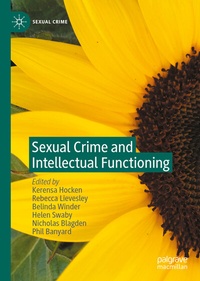
Sexual Crime and Intellectual Functioning
Description

This book explores sexual crime and intellectual functioning. Drawing on expertise from clinical practice and applied research, the volume begins with an exploration of the theoretical and historical background to the interest in links between sexual offending and intellectual functioning. The authors then move on to discuss assessment of intellectual functioning in prison, interventions for low intellectual functioning, autistic spectrum and personality disorder. This book offers a rare insight into the phenomenon of high IQ and sexual offending, a much neglected aspect of the sexual crime literature, and includes novel research that unpacks this link. It further offers an extraordinary insight into the experiences of a person of superior IQ in the criminal justice system for a sexual offence.
The book is relevant not only to psychologists, criminologists, social workers and students, but also to practitioners, researchers and the general public with an interest in learning about sexual offending and intellectual functioning.
More details
Other editions
Additional editions
Persons
Rebecca Lievesley is Lecturer in Psychology at Nottingham Trent University, UK and has conducted research within the criminal justice system for many years.
Belinda Winder is Professor of Forensic Psychology and Head of the Sexual Offences, Crime and Misconduct Research Unit at Nottingham Trent University, UK.
Helen Swaby is Lecturer in Counselling at Bishop Grosseteste University, UK. She has a background in Forensic Psychology and is a trainee Integrative Psychotherapist.
Nicholas Blagden is Associate Professor and co-leads the Sexual Offences, Crime and Misconduct Research Unit at Nottingham Trent University, UK.
Phil Banyard is Head of the Psychology Department at Nottingham Trent University, UK. He is a recipient of the British Psychological Society's Award for Distinguished Contributions to Psychology Education.
