

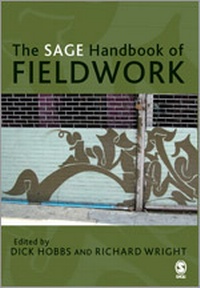
The SAGE Handbook of Fieldwork
1st Edition
Published on 5. January 2006
416 pages
978-1-4462-0696-6 (ISBN)
Description

'This is an excellent collection of papers which celebrates the best of traditional approaches to fieldwork, whilst also looking to its future. The Handbook will quickly become essential reading for the novice and experienced fieldworker across many of the social sciences' - Chris Pole, University of Leicester
Fieldwork is widely practiced but little written about, yet accounts of the exotic, mundane, complex and often dangerous are central to not only sociology and anthropology but also geography, social psychology and criminology. In all these - increasingly overlapping - fields, experience underlies any comprehensive understanding of social life.
The SAGE Handbook of Fieldwork presents the first major overview of this method in all its variety, introducing the reader to the strengths, weaknesses, and 'real world' applications of fieldwork techniques. Its 22 carefully chosen chapters are each based on a substantive field of empirical enquiry, written by an acknowledged expert in the field. The range is impressive: from the traditional to the virtual, concerning subjects as diverse as emotion, sexuality, sport, embodiment, identity, self-narrative, fieldwork in organizations, science and technology.
Specifically intended for use in undergraduate and postgraduate courses in qualitative research design and methodology in sociology, anthropology, criminology, urban studies, social geography, public health and education, the handbook will also prove beneficial to academic researchers in these and other disciplines.
Fieldwork is widely practiced but little written about, yet accounts of the exotic, mundane, complex and often dangerous are central to not only sociology and anthropology but also geography, social psychology and criminology. In all these - increasingly overlapping - fields, experience underlies any comprehensive understanding of social life.
The SAGE Handbook of Fieldwork presents the first major overview of this method in all its variety, introducing the reader to the strengths, weaknesses, and 'real world' applications of fieldwork techniques. Its 22 carefully chosen chapters are each based on a substantive field of empirical enquiry, written by an acknowledged expert in the field. The range is impressive: from the traditional to the virtual, concerning subjects as diverse as emotion, sexuality, sport, embodiment, identity, self-narrative, fieldwork in organizations, science and technology.
Specifically intended for use in undergraduate and postgraduate courses in qualitative research design and methodology in sociology, anthropology, criminology, urban studies, social geography, public health and education, the handbook will also prove beneficial to academic researchers in these and other disciplines.
Reviews / Votes
`While aimed at students and new researchers, even an experienced fieldworker can find inspiration in this volume.'- The Journal of the Royal Anthropoogical Institute
'...Peter Manning's important contribution locates the transitions that have occurred in ethnography at the turn of the 21st century, juxtaposed against studies of organized crime. Nick Fox creatively situates postmodern fieldwork within the context of medical sociology.'
- Qualitative Research Journal
'The book will be particularly valuable for students or those approaching fieldwork for the first time. It provides a useful overview of current issues and debates for those familiar with fieldwork methods.'
- Field Methods Journal
All prices
More details
Edition
First Edition
Language
English
Place of publication
London
United Kingdom
Target group
Professional and scholarly
ISBN-13
978-1-4462-0696-6 (9781446206966)
Copyright in bibliographic data and cover images is held by Nielsen Book Services Limited or by the publishers or by their respective licensors: all rights reserved.
Schweitzer Classification
Other editions
Additional editions

Dick Hobbs | Richard Wright
The SAGE Handbook of Fieldwork
Book
01/2006
1st Edition
SAGE Publications Inc
€201.00
Shipment within 15-20 days
Persons
Dick Hobbs is Professor of Sociology. He worked in a number of manual and clerical jobs before training as a schoolteacher and working in London schools. He undertook postgraduate work at the LSE and the University of Surrey, and worked at the Centre for Criminological Research at the University of Oxford, and briefly at the Polytechnic of Central London, before taking up a post at Durham University in 1990 where he worked in both the Sociology and Law Departments. He joined the LSE in September 2005.
His interests focus on ethnographic work, working class entrepreneurship, the sociology of deviance, professional and organized crime, violence, drug markets, and the night-time economy. Dick Hobbs is currently working on a book looking at the sociology of organized crime in the UK. He is also working on a 4 volume edited collection on ethnography, and a collaborative book on the policing and security implications of the 2012 Olympics. Richard Wright is Curators' Professor of Criminology and Criminal Justice at the University of Missouri-St. Louis and Editor-in-Chief of Oxford Bibliographies [Criminology]. He has been studying active urban street criminals, especially residential burglars, armed robbers, carjackers, and drug dealers for twenty-plus years. He is the author or co-author of five books and seventy scholarly articles and book chapters, including Armed Robbers in Action and Burglars on the Job, which won the 1994-95 Outstanding Scholarship in Crime and Delinquency Award from the Society for the Study of Social Problems. In addition, he has written widely for the popular press, locally, nationally, and internationally. He has appeared on numerous nationally broadcast TV news programs in the US and Great Britain, and he has been interviewed twice on NPR's Fresh Air with Terry Gross. His research has been funded by the National Science Foundation, National Institute of Justice, Harry Frank Guggenheim Foundation, Icelandic Research Council, National Consortium on Violence Research, and Irish Research Council for the Humanities and Social Sciences.
His interests focus on ethnographic work, working class entrepreneurship, the sociology of deviance, professional and organized crime, violence, drug markets, and the night-time economy. Dick Hobbs is currently working on a book looking at the sociology of organized crime in the UK. He is also working on a 4 volume edited collection on ethnography, and a collaborative book on the policing and security implications of the 2012 Olympics. Richard Wright is Curators' Professor of Criminology and Criminal Justice at the University of Missouri-St. Louis and Editor-in-Chief of Oxford Bibliographies [Criminology]. He has been studying active urban street criminals, especially residential burglars, armed robbers, carjackers, and drug dealers for twenty-plus years. He is the author or co-author of five books and seventy scholarly articles and book chapters, including Armed Robbers in Action and Burglars on the Job, which won the 1994-95 Outstanding Scholarship in Crime and Delinquency Award from the Society for the Study of Social Problems. In addition, he has written widely for the popular press, locally, nationally, and internationally. He has appeared on numerous nationally broadcast TV news programs in the US and Great Britain, and he has been interviewed twice on NPR's Fresh Air with Terry Gross. His research has been funded by the National Science Foundation, National Institute of Justice, Harry Frank Guggenheim Foundation, Icelandic Research Council, National Consortium on Violence Research, and Irish Research Council for the Humanities and Social Sciences.
Content
PART ONE: LOCATING FIELDWORK
The Fieldwork Tradition - George J McCall
Praxical Reasoning and the Logic of Field Research - Gary Shank
PART TWO: SITUATING FIELDWORK
Jelly's Place - Elijah Anderson
An Ethnographic Memoir
Your Place or Mine - Michael Stein
The Geography of Social Research
PART THREE: SITUATING THE RESPONDENTS
Fieldwork with the Elite - Mary Dodge and Gilbert Geis
Interviewing White-Collar Criminals
Entering the Field - C H Browner and H Mabel Preloran
Recruiting Latinos for Ethnographic Research
PART FOUR: FIELDWORK AS A REFLEXIVE ENTERPRISE
Self-Narratives and Ethnographic Fieldwork - Ben Crewe and Shadd Maruna
`You Don't Do Fieldwork, Fieldwork Does You' - Bob Simpson
Between Subjectivation and Objectivation in Anthropological Fieldwork
PART FIVE: THE FIELD OF EMOTION
Aural Sex - Christine Mattley
The Politics and Moral Dilemmas of Studying the Social Construction of Fantasy
The Case for Dangerous Fieldwork - Bruce Jacobs
PART FIVE: FIELDWORK AND SEXUALITIES
Fieldwork on Urban Male Homosexuality in Mexico - Joseph Carrier
Knowing Sexuality - Chris Haywood and Mairtin Mac an Ghaill
Epistemologies of Research
Researching Sex Work - Teela Sanders
Dynamics, Difficulties and Decisions
PART SEVEN: EMBODIMENT AND IDENTITY
Fieldwork and the Body - Lee F Monaghan
Reflections on an Embodied Ethnography
Sport Ethnography - Susan Brownell
A Personal Account
Hidden Identities and Personal Stories - Jennifer Hargreaves
International Research About Women in Sport
PART EIGHT: FIELDWORK IN ORGANIZATIONS
Policework and Fieldwork - Nigel Fielding
An Ethnographer's Tale - Robert G Burgess
A Personal View of Educational Ethnogrpahy
PART NINE: FIELDWORK, SCIENCE AND TECHNOLOGY
Software and Fieldwork - Susanne Friese
Seeking Science in the Field - Steve Fuller
Life Beyond the Laboratory
PART TEN: LOCATING FRESH FIELDS
Postmodern Fieldwork in Health Research - Nick J Fox
Fieldwork in Transition - Peter Kirby Manning
The Fieldwork Tradition - George J McCall
Praxical Reasoning and the Logic of Field Research - Gary Shank
PART TWO: SITUATING FIELDWORK
Jelly's Place - Elijah Anderson
An Ethnographic Memoir
Your Place or Mine - Michael Stein
The Geography of Social Research
PART THREE: SITUATING THE RESPONDENTS
Fieldwork with the Elite - Mary Dodge and Gilbert Geis
Interviewing White-Collar Criminals
Entering the Field - C H Browner and H Mabel Preloran
Recruiting Latinos for Ethnographic Research
PART FOUR: FIELDWORK AS A REFLEXIVE ENTERPRISE
Self-Narratives and Ethnographic Fieldwork - Ben Crewe and Shadd Maruna
`You Don't Do Fieldwork, Fieldwork Does You' - Bob Simpson
Between Subjectivation and Objectivation in Anthropological Fieldwork
PART FIVE: THE FIELD OF EMOTION
Aural Sex - Christine Mattley
The Politics and Moral Dilemmas of Studying the Social Construction of Fantasy
The Case for Dangerous Fieldwork - Bruce Jacobs
PART FIVE: FIELDWORK AND SEXUALITIES
Fieldwork on Urban Male Homosexuality in Mexico - Joseph Carrier
Knowing Sexuality - Chris Haywood and Mairtin Mac an Ghaill
Epistemologies of Research
Researching Sex Work - Teela Sanders
Dynamics, Difficulties and Decisions
PART SEVEN: EMBODIMENT AND IDENTITY
Fieldwork and the Body - Lee F Monaghan
Reflections on an Embodied Ethnography
Sport Ethnography - Susan Brownell
A Personal Account
Hidden Identities and Personal Stories - Jennifer Hargreaves
International Research About Women in Sport
PART EIGHT: FIELDWORK IN ORGANIZATIONS
Policework and Fieldwork - Nigel Fielding
An Ethnographer's Tale - Robert G Burgess
A Personal View of Educational Ethnogrpahy
PART NINE: FIELDWORK, SCIENCE AND TECHNOLOGY
Software and Fieldwork - Susanne Friese
Seeking Science in the Field - Steve Fuller
Life Beyond the Laboratory
PART TEN: LOCATING FRESH FIELDS
Postmodern Fieldwork in Health Research - Nick J Fox
Fieldwork in Transition - Peter Kirby Manning
