New Models for Ecosystem Dynamics and Restoration
Description

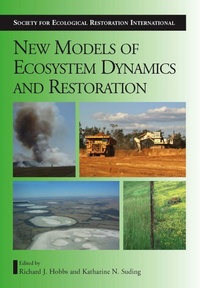
As scientific understanding about ecological processes has grown, the idea that ecosystem dynamics are complex, nonlinear, and often unpredictable has gained prominence. Of particular importance is the idea that rather than following an inevitable progression toward an ultimate endpoint, some ecosystems may occur in a number of states depending on past and present ecological conditions. The emerging idea of "restoration thresholds" also enables scientists to recognize when ecological systems are likely to recover on their own and when active restoration efforts are needed. Conceptual models based on alternative stable states and restoration thresholds can help inform restoration efforts. New Models for Ecosystem Dynamics and Restoration brings together leading experts from around the world to explore how conceptual models of ecosystem dynamics can be applied to the recovery of degraded systems and how recent advances in our understanding of ecosystem and landscape dynamics can be translated into conceptual and practical frameworks for restoration. In the first part of the book, background chapters present and discuss the basic concepts and models and explore the implications of new scientific research on restoration practice. The second part considers the dynamics and restoration of different ecosystems, ranging from arid lands to grasslands, woodlands, and savannahs, to forests and wetlands, to production landscapes. A summary chapter by the editors discusses the implications of theory and practice of the ideas described in preceding chapters. New Models for Ecosystem Dynamics and Restoration aims to widen the scope and increase the application of threshold models by critiquing their application in a wide range of ecosystem types. It will also help scientists and restorationists correctly diagnose ecosystem damage, identify restoration thresholds, and develop corrective methodologies that can overcome such thresholds.
More details
Other editions
Additional editions